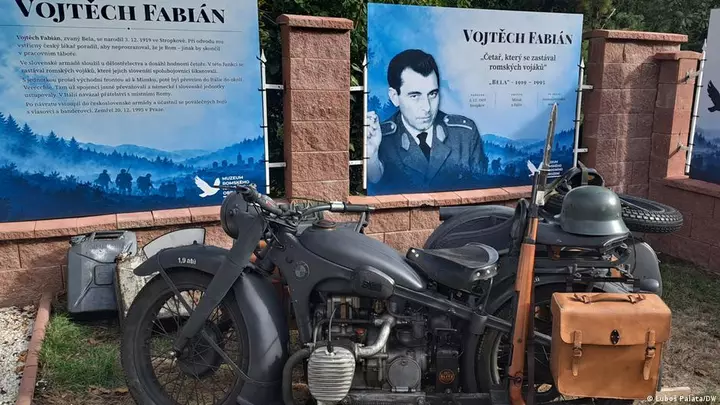
For more than half a million Roma in Czechia and Slovakia, October 15, 2026, marks an important milestone. That day, an exhibition on a largely forgotten chapter of Czech history opened at the Museum of the Romani National Revival in Prague. The exhibit explores the role of Czech and Slovak Romani resistance fighters during the Nazi German occupation and the dismantling of Czechoslovakia from 1938 to 1945.
Until now, Czech and Slovak Roma appeared in the history of World War II almost exclusively as victims of the Holocaust against Roma and Sinti. In the so-called Protectorate of Bohemia and Moravia, Nazi Germany murdered approximately 90% of the Czech Roma during World War II. However, what is less well known is that a large number of Czech and Slovak Roma fought against the German occupiers as partisans in resistance groups and as soldiers in the Czechoslovak Underground Army, or Defense of the Nation, ON.
The exhibition at the Museum of the Roma National Movement therefore marks a turning point in how the Roma are viewed during World War II. At least that is the hope of museum director Emil Scuka, a lawyer, former prosecutor and one of the best-known Czech Roma activists. "We were not only victims; we were also heroes," Scuka said in his speech to several hundred attendees at the exhibition opening, most of whom were Roma from Czechia and Slovakia.
"Many people, not even among the Roma themselves, are aware that we Roma fought against Nazism," he noted. In his view, "organizing and opening the exhibition was something my generation owed to these Roma heroes and today we are repaying that debt." Scuka called on those present: "Bring your children and grandchildren here so they can see for themselves and realize that the Roma have heroes too!" He also pointed out that this topic had been completely marginalized in Czech and Slovak historical writing for decades and that the Roma had therefore decided on their own to document the fates of their war heroes. The exhibition presents the detailed life stories of 100 of the most significant Roma partisans and Roma soldiers from the Czech underground army and resistance groups who fought against the Nazis.
"We found over 1,400 Romani fighters in the archives. From among them, we selected the 100 most interesting stories for this exhibition," said exhibition curator Radoslav Scuka at the opening. To view this video please enable JavaScript, and consider upgrading to a web browser that supports HTML5 video Among these figures is Anton Facuna, a sergeant in the American intelligence agency Office of Strategic Services (OSS), who was flown to Slovakia in October 1944 on a secret mission.
Slovakia had been a puppet state of Hitler from 1939 to 1945. Another is Josef Serinek, known by the nickname "Black Partisan from Vysocina," who managed to escape from the Nazi concentration camp for Roma in Lety and subsequently founded and commanded the large Capajev-Cerny partisan unit in the Bohemian-Moravian Highlands. In 2022, Czech President Milos Zeman posthumously awarded him the Medal for Heroism.
Extract — continue reading at the source.