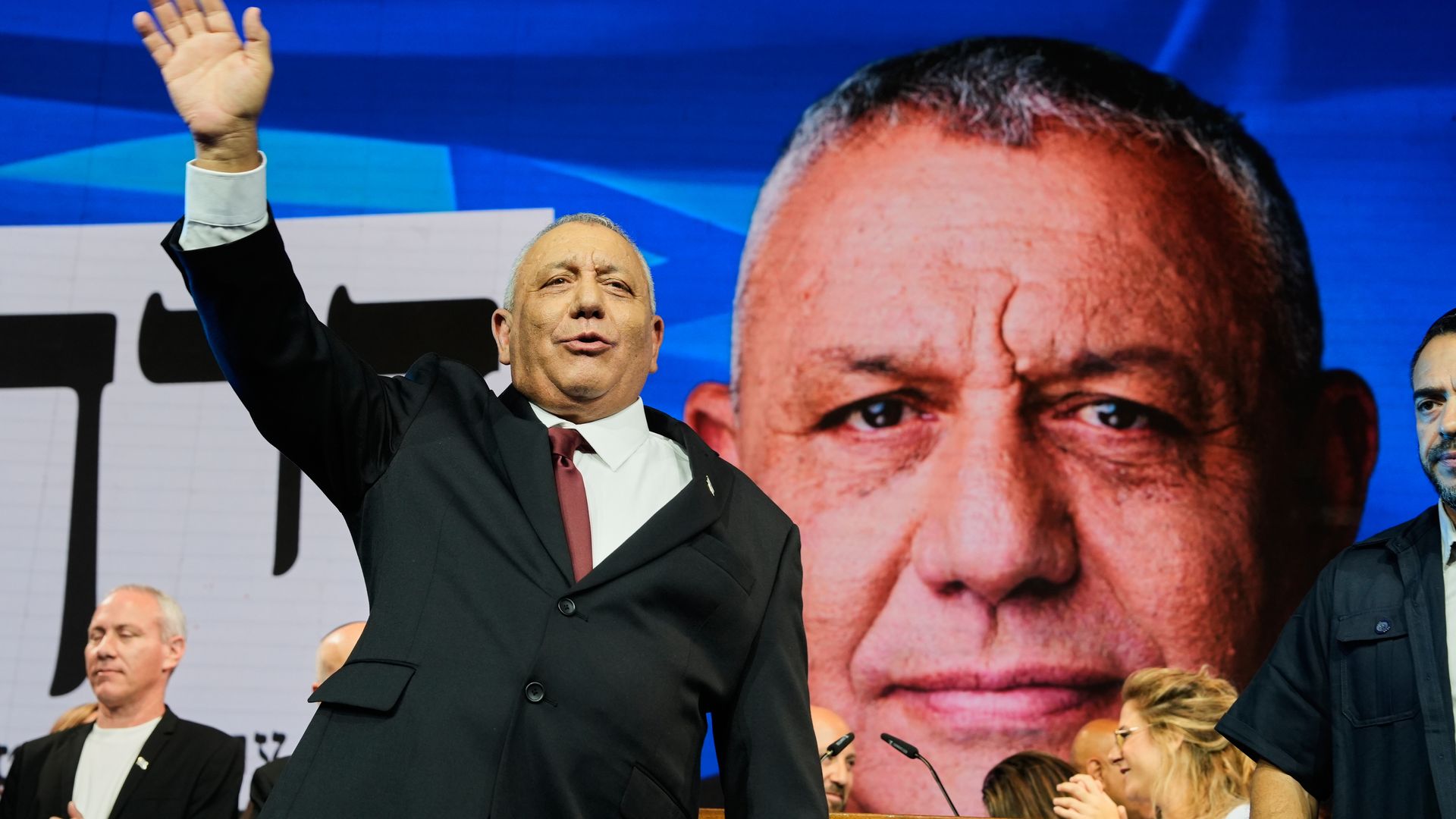
Israeli President Isaac Herzog must decide who gets the first attempt at forming a government, after an inconclusive election left both Prime Minister Benjamin Netanyahu and his main rival, former army chief Gadi Eisenkot, short of a parliamentary majority. Herzog has said he will task a candidate with forming a government on Sunday. Eisenkot has received the endorsement of a majority of lawmakers – but only thanks to parties representing Palestinian citizens of Israel, which won a record 19 seats in October’s election, but whom Eisenkot has ruled out bringing into government.
During consultations between party heads and Herzog, which ended on Thursday, 67 out of 120 Knesset members endorsed Eisenkot, while only 46 endorsed Netanyahu. Netanyahu’s endorsements fell seven short of his bloc’s 53 seats after United Torah Judaism, one of his longtime allies, withheld endorsements over his coalition’s failure to exempt ultra-Orthodox Israelis from military service. Herzog has not publicly committed to either side, saying that while the numbers may look clear, “mutual vetoes between the blocs and within the blocs themselves” made it hard to tell who could build a coalition.
Prior to the October 27 elections, reports emerged that the president wanted to push for a national unity government between Netanyahu and Eisenkot’s rival parties to avoid another election. No bloc has secured the 61 seats needed to form a majority government. Netanyahu’s right-wing and religious alliance has 53, four Jewish-led parties backing Eisenkot hold 48, and the Arab-led parties hold 19.
Eisenkot has ruled out forming a government with the Arab-led parties, which would give him a 67-seat bloc. Winning over the two ultra-Orthodox parties, United Torah Judaism and Shas, would give him exactly 61 seats. United Torah Judaism has signalled that its support was available for the right price, but Shas endorsed Netanyahu on Wednesday.
Netanyahu, meanwhile, would need to lure an opposition party to his side. A unity government with the two men rotating as prime minister – and excluding Arab-led parties from government – is another option, but many Netanyahu rivals have ruled out serving under him. So far, it seems unlikely that they will.
The Arab-led parties are the Joint List, an alliance of three parties, and the United Arab List (Ra’am). They hold 11 and eight seats, respectively. Ra’am says it is willing to join an Eisenkot-led government, while the Joint List has ruled out joining but offered to help put him in office from the outside.
Extract — continue reading at the source.