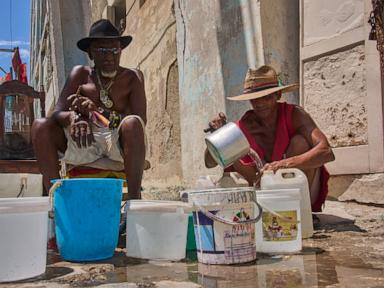
The psychological toll of daily life in Cuba is pushing many to their breaking point on the Caribbean island of nearly 10 million people HAVANA -- Sweltering nights. Water and power shortages. Dwindling fuel and crumbling homes.
Limited public transportation and weak cellphone signals. Yomeidis Felicó Riverón said. The children were learning how to make gift bags and perfume, a free workshop that offered them a brief respite from Cuba’s realities.
Instead, she distracts him: “Let’s go play, let’s go to the park. We’ll come back another day.” Dianne Tamayo was among the mothers present that day. The workshop served as an oasis for her and her daughter.
Tamayo socialized and temporarily forgot what awaited at home. Tears fell as she confided that she doesn’t have anything in her life that relaxes her, and that she has never questioned how to release her feelings about life in Cuba. President Donald Trump announced in late January that he would impose tariffs on any country that sells or provides oil to the Caribbean country.
Longtime U.S. sanctions also have taken their toll, Cuba's government said. From March 2025 to the end of February, “the U.S. policy of economic strangulation” amounted to more than $8 billion, “a record figure,” according to Cuban Foreign Affairs Minister Bruno Rodríguez. Island-wide blackouts have increased this year, and daily outages now surpass 24 hours.
As a result, water is often scarce, and small protests have erupted, despite the fear of being detained, as anger and frustration boil over. The situation has worsened to a point that the U.S. Embassy recently issued two public health alerts.
Extract — continue reading at the source.