Research on adolescents’ digital media use has largely focused on risks and negative mental health outcomes, while comparatively little attention has been paid to digital well-being, defined as individuals’ subjective experience of the benefits and drawbacks of digital engagement. Empirical validation of digital well-being measures remains scarce, particularly among adolescents receiving psychiatric care and in non-Western contexts. This study aimed (a) to examine the construct validity, internal reliability, and gender invariance of the Perceived Digital Well-being Scale (PDWS) and the Digital Well-being Questionnaire (DWBQ) in a clinical adolescent sample, and (b) to assess their convergent validity, including associations with problematic social media use.
A total of 481 Turkish adolescents (aged 14–18 years) receiving psychiatric care completed self-report measures of digital well-being (PDWS, DWBQ), problematic social media use (Bergen Social Media Addiction Scale), anxiety and depression (PHQ-4), and life satisfaction (KIDSCREEN-10). Confirmatory factor analyses were conducted to test factorial structure and gender invariance. Internal consistency was assessed using Cronbach’s alpha and McDonald’s omega and other indicators; convergent validity was examined via correlation analyses.
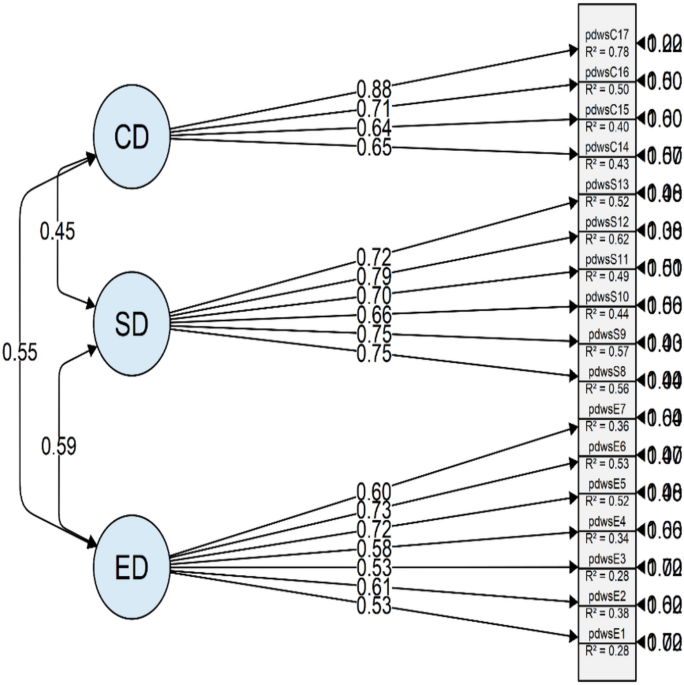
Confirmatory factor analyses supported the proposed multidimensional structures of both the PDWS and the DWBQ, with good/excellent model fit indices. All dimensions demonstrated satisfactory internal reliability. Gender invariance analyses indicated stable factor structures across male and female participants.
Mean digital well-being scores were above the scale mid-points, despite participants’ clinical status. PDWS and DWBQ dimensions were positively intercorrelated and most dimensions were significantly and negatively associated with problematic social media use, supporting convergent validity. The findings demonstrate that digital well-being can be reliably and validly assessed among adolescents receiving psychiatric care.
Results challenge deficit-oriented assumptions about clinical adolescents’ digital lives and support a more nuanced understanding of digital engagement that integrates both risks and resources. A substantial body of research has documented associations between intensive digital media use and adverse outcomes, including anxiety, depression, and problematic social media use. However, this deficit-oriented perspective has increasingly been challenged1,2,3,4,5,6,7,8.
Increasingly, research suggests that digital engagement can also provide meaningful opportunities for social connection, positive emotional experiences, and cognitive functioning. For example, Sun et al.9 found that social interactions and social media use helped individuals remain connected and were associated with better well-being during the COVID-19 lockdown. More recently, Sun et al.10 showed that being socially active, including through digital interactions, was associated with greater momentary positive emotions, which in turn contributed to higher psychological well-being.
Extract — continue reading at the source.


