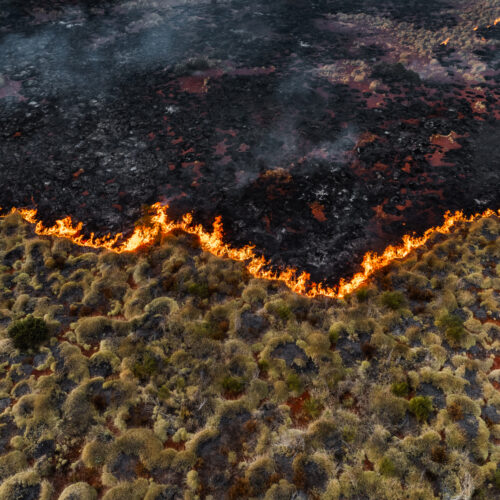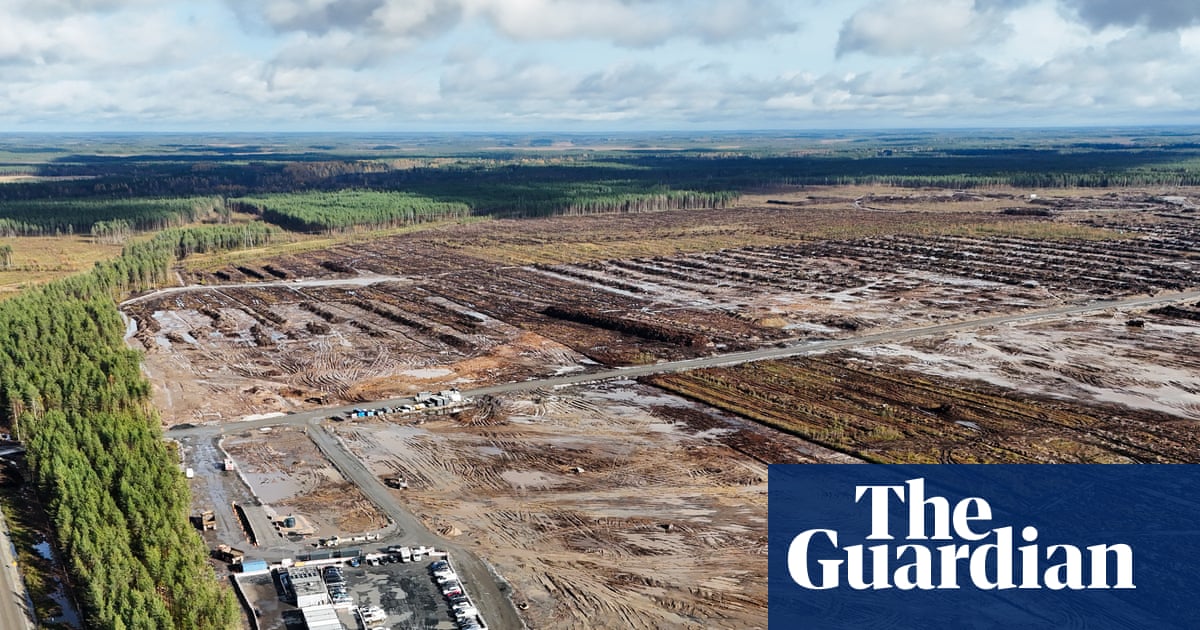
Before Google’s arrival a few months ago, an estimated quarter of a million trees occupied the 330 hectares (815 acres) of forest near the town of Muhos in rural northern Finland. After the tech company illegally stripped the entire area to build a datacentre – taking even the top soil with it – all that remains is a vast expanse of mud indented with the trail marks of machinery, puddles and mounds of earth, roots and branches. Residents say that brown water flowing off the site is going into a stream that feeds the Oulujoki River.
It goes on and on,” says Mari Annala, an ecologist from the Finnish Association for Nature Conservation (SLL), looking at drone footage of the former forest from the perimeter. With 145 new datacentres at various stages of planning, Finland has found itself at the forefront of the tech companies’ latest push. As well as its relative geopolitical and geological stability and abundance of land, the cool climate makes it especially attractive for saving on energy costs.
Earlier this month, Google was ordered by the Finnish Licensing and Supervision Authority (LVV) to temporarily stop work on Muhos and another site about 100km south-east in the village of Otanmäki after it failed to complete the necessary environmental impact assessments before clearcutting the land. The news has prompted widespread outcry and a national reckoning over what role, if any, the country should play in the global rush to build datacentres to keep up with rapid AI development. Last week, Google’s Finland country manager, Antti Järvinen, apologised for the forest clearings but claimed the company had acted “on the best understanding we had of the legislation at the time”.
Muhos and Otanmäki are part of a €13bn AI infrastructure project by Google that has attracted criticism from Donald Trump, who would rather the centres were built in the US and has publicly called for the company to reconsider. It is the biggest ever project of its kind in the Nordic country. The Finnish government, which has presided over deep spending cuts, has encouraged the investment.
Last month, when the Google plans were announced, the country’s prime minister, Petteri Orpo, said attracting investment was a “top priority” and “the value of the data economy extends far beyond direct investment”. He said the Google deal would “deliver lasting benefits for both parties”. But the revelations over Google’s misconduct have prompted public concern over what these deals mean for nearby communities, energy prices for Finnish households and Finland’s natural environment, a national source of pride.
The datacentre push is likely to become a key election issue when Finns go to the polls in April. In addition to the 250,000 trees felled at Muhos, Annala estimates that an additional 150,000 trees were felled at Otanmäki. Because the trees have been felled illegally, she says wood from the two sites cannot be sold to wood-processing plants.
Extract — continue reading at the source.