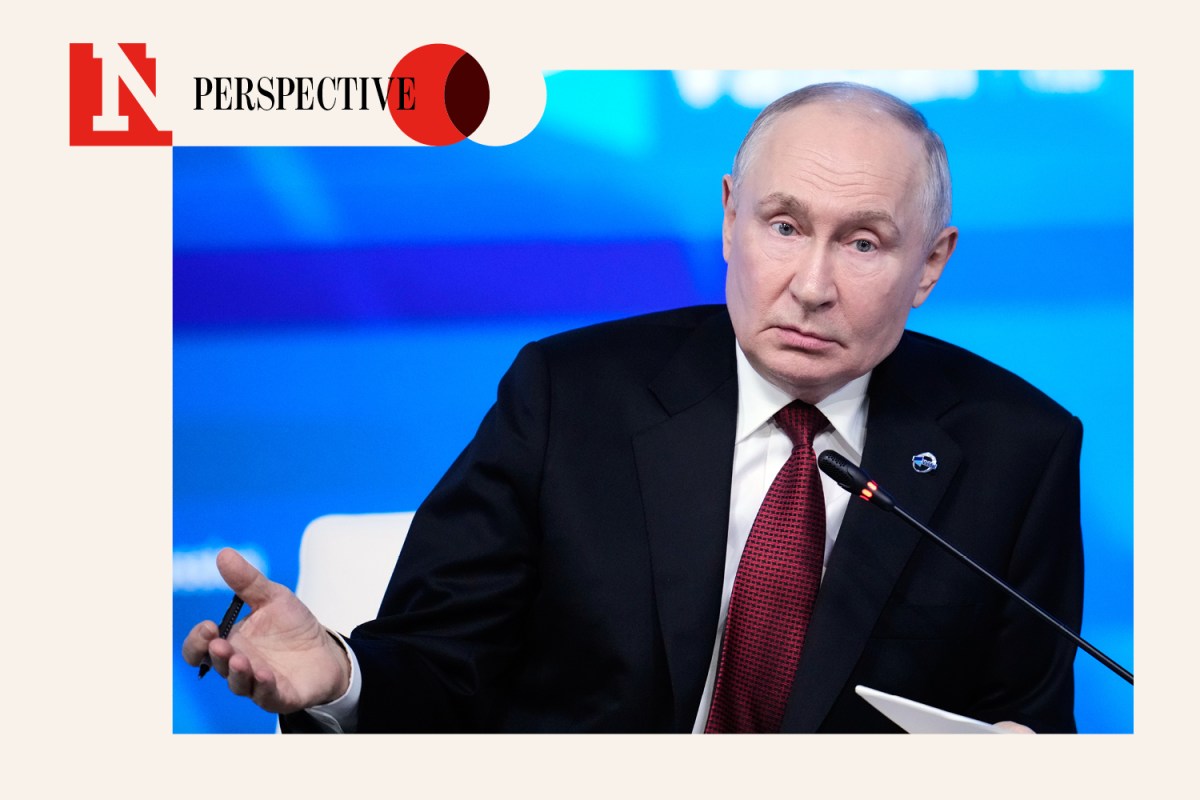
Russia has spent four and a half years proving it can live without the West as it demolishes Ukraine. Washington wants Russian President Vladimir Putin to imagine what life might look like if it no longer had to. That sounds perverse, with Russian troops claiming Ukrainian soil as jet-powered drones scream overhead to batter civilian buildings.
Yet the Trump administration is taking a carrot-and-stick approach to the Kremlin: tightening the vice on Moscow while welcoming Putin’s envoys to discuss prospective energy deals and economic cooperation once a ceasefire has been settled. It’s a bet with extremely long odds, and one that Ukrainian President Volodymyr Zelensky won’t like one bit. But America knows Russia can survive out in the cold.
The White House is hoping it might still look twice at the sight of a hot drink and a fire crackling in the window. Russian envoy Kirill Dmitriev spent Monday in Washington discussing not only how Russia's war in Ukraine might end, but what the relationship between Moscow and Washington could look like afterward. Dmitriev, who also heads Russia’s sovereign wealth fund, met representatives of the U.S.
Treasury and Energy departments for talks that reportedly covered a possible peace settlement and the potential for U.S.-Russia energy initiatives and economic deals once an agreement is signed in Ukraine. The meeting fits a broader pattern. Earlier in September, U.S.
President Donald Trump’s golden boys Steve Witkoff and Jared Kushner spent more than three hours with Putin in Moscow, during which Witkoff laid it on thick, telling the Russian president: “When we retire, we’ll have all these incredible stories and incredible memories, and yours will be right at the top of it all.” It’s not difficult to understand why residents of Kyiv might not be best pleased about this, given that Putin’s invasion order produced a war that has killed and wounded hundreds of thousands, driven millions from their homes, and left Ukraine with close to $600 billion in reconstruction and recovery needs. Drones continue to demolish Ukrainian cities and slaughter innocent civilians—Moscow’s forces launched more than 3,100 jet-powered UAVs into Ukraine in September, according to a British government assessment. Viewed from Ukraine, any action perceived as favorable to Russia is unjustifiable.
After the EU removed several Russian businessmen from its sanctions list in September, Zelensky himself criticized the move as “self-defeating and counterproductive,” arguing that wars end through “resolve and strength, not concessions.” But dangling a carrot in front of Putin’s nose doesn’t make a stroke from the stick any less painful. Nor do discussions over future collaboration amount to a great Russia reset at Kyiv’s expense. Treasury Secretary Scott Bessent made that abundantly clear at the G20 summit in August when Russian Finance Minister Anton Siluanov reportedly tried to start a discussion on areas of mutual interest.
Extract — continue reading at the source.