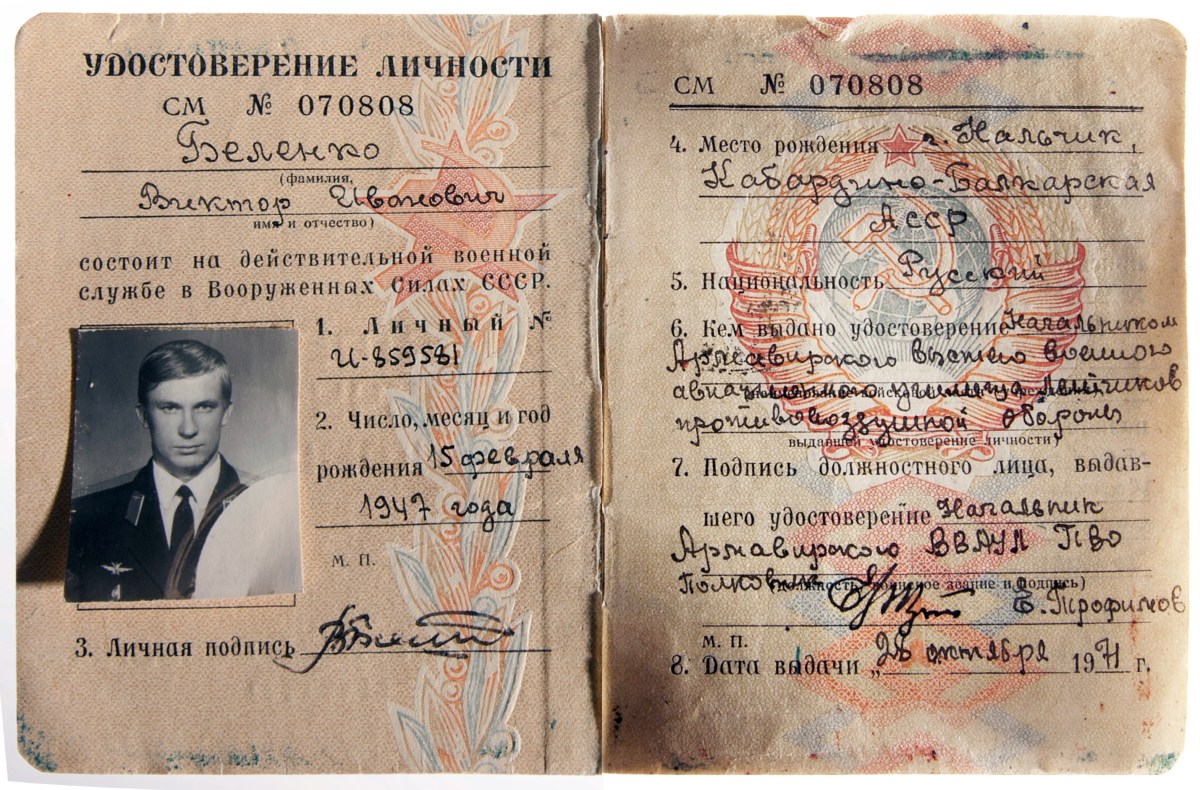
Fifty years ago today, Soviet fighter pilot Viktor Belenko got out of bed, strapped on his helmet, and went to work as normal. By early afternoon, he’d handed the United States one of the greatest intelligence gifts of the Cold War. The 29-year-old lieutenant was flying a routine training sortie from Chuguyevka Airbase near Vladivostok on the morning of September 6, 1976, when he suddenly peeled off from his wingmen, forced the nose of his MiG-25 Foxbat into a steep dive to avoid radar, and made a beeline for Japan.
He made it with 30 seconds of fuel left, crash-landing at a civilian runway on the island of Hokkaido. When stupefied construction workers rushed toward the extraordinary aircraft that had just appeared in front of them, they were confronted by Belenko climbing out of the cockpit, brandishing his service pistol. Then-CIA Director George H.
Bush called the episode an “intelligence bonanza," and Belenko was granted political asylum and later citizenship. He spent the rest of his days living the American dream, working for the U.S. government and aerospace companies before retiring and regularly attending air shows until he died in 2023. Today, Russian President Vladimir Putin might reasonably be wondering whether he is due a Belenko moment of his own.
Since Putin launched the full-scale invasion of Ukraine, an unusual collection of wealthy businessmen, diplomats, soldiers and security officers have abandoned the system they once served. Granted, none turned up at a NATO airfield in a top-secret fighter jet, but some brought considerable expertise. Certainly the grandest of them was Anatoly Chubais.
An architect of Russia's 1990s economic reforms, former Kremlin chief of staff, boss of state technology company Rosnano and eventually Putin's special representative to international organizations, Chubais had spent decades in the halls of Russian power. One month after Russian helicopters were sent soaring over the Ukrainian border, he resigned his post and promptly fled the country—though not into the welcoming arms of the West. Instead, he chose Israel as his new home, where he set up the Center for Russian Studies at Tel Aviv University.
Moscow has not exactly forgotten him. Russian courts this year ordered Chubais and other former Rosnano executives to pay billions of rubles over failed projects, while former colleagues have faced criminal prosecutions. Earlier this year, he denounced the cases as “repressions” and “a mockery of the law” in a statement published on his website.
Extract — continue reading at the source.