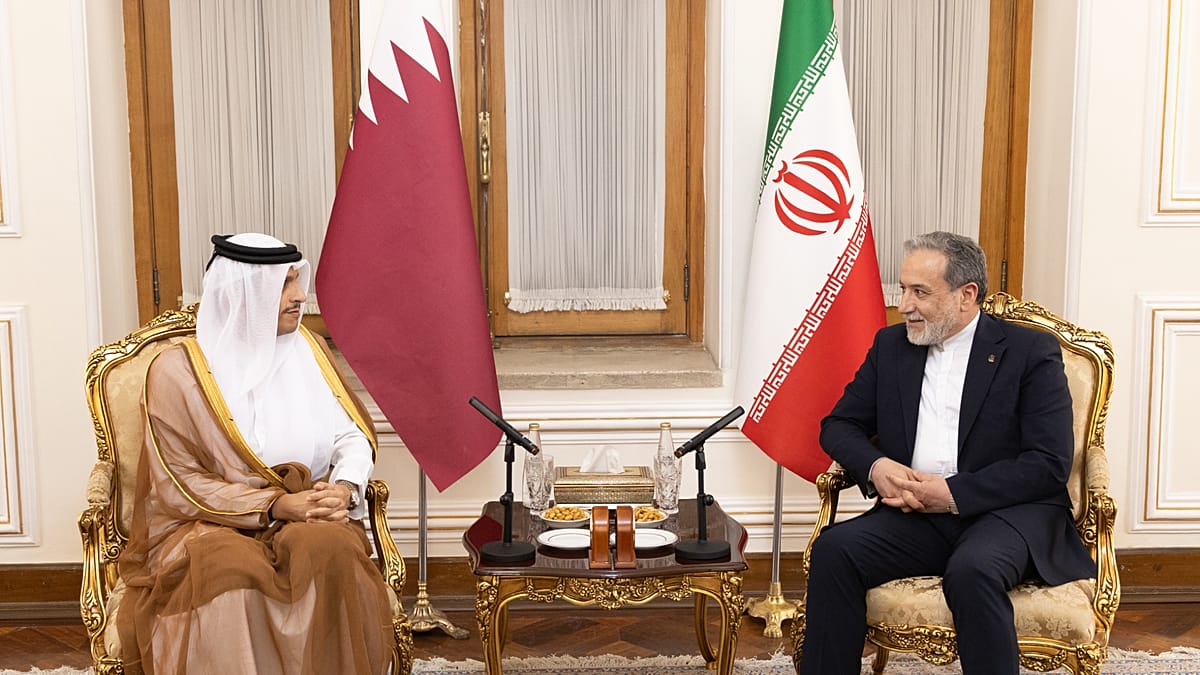
Qatar’s Prime Minister Sheikh Mohammed bin Abdulrahman Al Thani visited Tehran on Thursday as Doha stepped up efforts to revive diplomacy and ease tensions around the Strait of Hormuz. Sheikh Mohammed, who also serves as Qatar’s foreign minister, held talks with Iran’s Foreign Minister Abbas Araghchi in the first high-level Qatari visit to Tehran since the war began on 28 February. The talks focused on efforts to reduce tensions and create conditions for renewed dialogue between Iran and the US, according to Qatar’s state news agency QNA.
The two officials also discussed ongoing talks on a proposed phased plan for the Strait of Hormuz, including a temporary shipping corridor and a joint project to clear mines from the waterway. Sheikh Mohammed stressed the need to respect the sovereignty of neighbouring countries and freedom of navigation, and called for diplomatic efforts to continue resolving differences through dialogue. Araghchi thanked Qatar for its mediation efforts and continued support for dialogue.
The visit comes nearly six months into the war, with direct fighting largely paused but no diplomatic breakthrough in sight. Qatar, a US ally that hosts the US military’s Al Udeid Air Base and shares the world’s largest gas field with Iran, has played a key role as a mediator between Washington and Tehran and helped broker the June ceasefire that briefly halted the fighting. The war and disruption to shipping have come at a high cost.
Industry data show Qatar exported just 18 LNG cargoes over the past six months, compared with 509 in the same period a year earlier. Before the war, Qatar supplied about one-fifth of global LNG. The Strait of Hormuz remains one of the main issues holding up a broader agreement between Iran and the US.
Before the war, about one-fifth of global oil supplies passed through the narrow waterway between Iran and Oman each day. Oil flows through the strait have since fallen sharply, dropping to around five million barrels per day on Monday from roughly 20 million barrels per day before the war. Shipping risks also remain, with another tanker hit by an unidentified projectile in the strait this week.
Its crew was reported safe. Qatar has repeatedly called for navigation to return to the situation that existed before 28 February. The issue is particularly important for Doha, which relies on the strait to export LNG to global markets.
Extract — continue reading at the source.