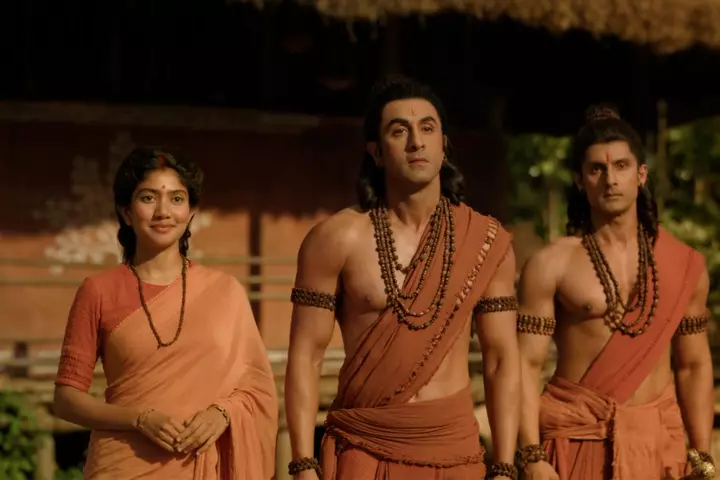
As “Ramayana Part 1” opens worldwide on Nov. 5, producer Namit Malhotra says the decision to adapt the Indian epic at this scale came once the talent, experience and filmmaking muscle needed to do the story justice were finally in place. Directed by Nitesh Tiwari (“Dangal,” “Chhichhore”), the first of two films stars Ranbir Kapoor as Rama, the prince sent into exile whose wife Sita (Sai Pallavi) is abducted by Ravana (Yash), the king of Lanka. Rahman and Hans Zimmer on an Indian film for the first time.
T-Series is the music label, and Amazon Music is the music streaming partner. Of course, that comes with a tremendous responsibility because of what Lord Ram means to so many people,” Malhotra tells Variety. Malhotra is the founder and CEO of DNEG, the visual effects company that has won eight Oscars, most recently for “Dune: Part Two.” DNEG and its sister company ReDefine are handling the visual effects on “Ramayana,” which Malhotra’s Prime Focus Studios produces with Yash’s Monster Mind Creations.
For the producer, any global reach has to start with staying faithful to the source. When he first met Zimmer, the composer’s immediate interest was in why the “Ramayana” still resonates with people thousands of years on. We have artists from across the world bringing their best to it, with the hope that Indian audiences feel proud and audiences discovering ‘Ramayana’ for the first time understand why it is so special to us,” Malhotra says.
Tiwari says the opportunity was to bring viewers closer to a story they already love, through intimate performances as well as cinematic scale. That is where my attention has been: the relationships, the difficult choices and the emotions within those moments,” he says. My responsibility is to make sure audiences feel connected to the people who inhabit it.” The characters and major events of the “Ramayana” are familiar to millions, which leaves the director with little room for plot surprises.
We return to stories we love because they continue to make us feel something, and sometimes our understanding of them changes as we grow older,” Tiwari says. If you are fully invested in that moment, knowing what comes next can actually make it more moving. My job is to make those moments feel immediate and truthful, so the audience experiences the journey rather than simply recognizes the events.” His earlier films, he says, showed him how hard audiences respond to the truth of a relationship – a small gesture between a parent and child, or a moment between friends.
They are what give the larger moments their emotional weight.” Music was central to Malhotra’s plan from day one, and it is also a personal passion. There was no plan B,” he says. Rahman that I wanted the emotional familiarity of the music we love, expressed in a melody of today.” The score was recorded with an orchestra at AIR Studios in London, where Malhotra watched Indian and Western musicians work on the story together and wished everyone could share the experience.
Extract — continue reading at the source.