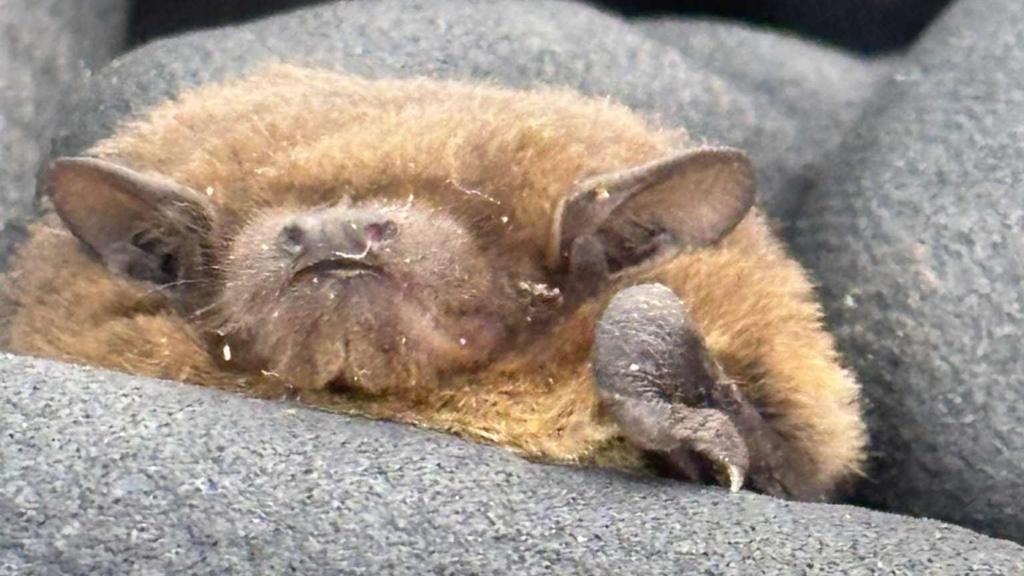
A rare species of breeding bat has been found roosting in woodland near a reservoir. The Nathusius' pipistrelle has been confirmed at a Yorkshire Water site near Sheffield, the first time it had been recorded in South Yorkshire. Environmental DNA (eDNA) collected from a bat box in March indicated the animal's presence, and in April one was physically spotted at another nearby bat box.
Lead ecologist at Yorkshire Water, Sean Davey, said: "The bat boxes on the Sheffield site were installed only nine months prior - so it's encouraging to see them being quickly adopted by multiple bat species." The bat boxes were funded by Yorkshire Water's species conservation programme and installed in 2025. They were designed to mimic the natural features bats used for roosting, enhancing their habitats and helping bat populations to thrive on its sites. Davey said DNA swabs were trialled by ecologists from Yorkshire Water and the South Yorkshire Bat Group.
He said: "Bat boxes and other known roost sites were swabbed to collect eDNA samples, revealing the presence of the rare migrant bat." The company said monitoring the bat boxes at the site helped confirm the conservation measures were working and could highlight "unexpected and valuable" results, like the Nathusius' pipistrelle. It said using eDNA swabs was a "potentially useful monitoring tool" for ecologists as data could be easily missed in 'one-off' surveys like a visual bat box check. These techniques could more widely increase knowledge of species' distributions, helping effective conservation to be targeted in the right place, it said.
Working alongside South Yorkshire Bat Group and Yorkshire Water, biodiversity intelligence company NatureMetrics analysed eDNA collected from bat boxes and detected Nathusius' pipistrelle – one of the UK's rarer rarest breeding bat species, which is known to migrate long distances between the UK and Europe. The finding was later confirmed in follow-up surveys, marking the first confirmed roost of the species in South Yorkshire. According to the Bat Conservation Trust, the species is similar in appearance to, but slightly larger than, the common bat but with longer fur on its back.
Product ecologist at Nature Metrics, Dr George Muscatt, said the eDNA was "tiny traces or fingerprints of DNA that species in that ecosystem have left behind". He said previously the team would have to climb the trees at night to "try to visually identify a species occupying a bat roost", which was time consuming. "By taking a surface swab approach, we've been able to monitor a far larger number of bat boxes in a very short space of time," he said.
Listen to highlights from South Yorkshire on BBC Sounds, catch up with the latest episode of Look North Rare bat discovery takes Jersey species total to 19 Bats turn former coal mines into breeding ground Turret repairs arranged around pregnant bats
Extract — continue reading at the source.