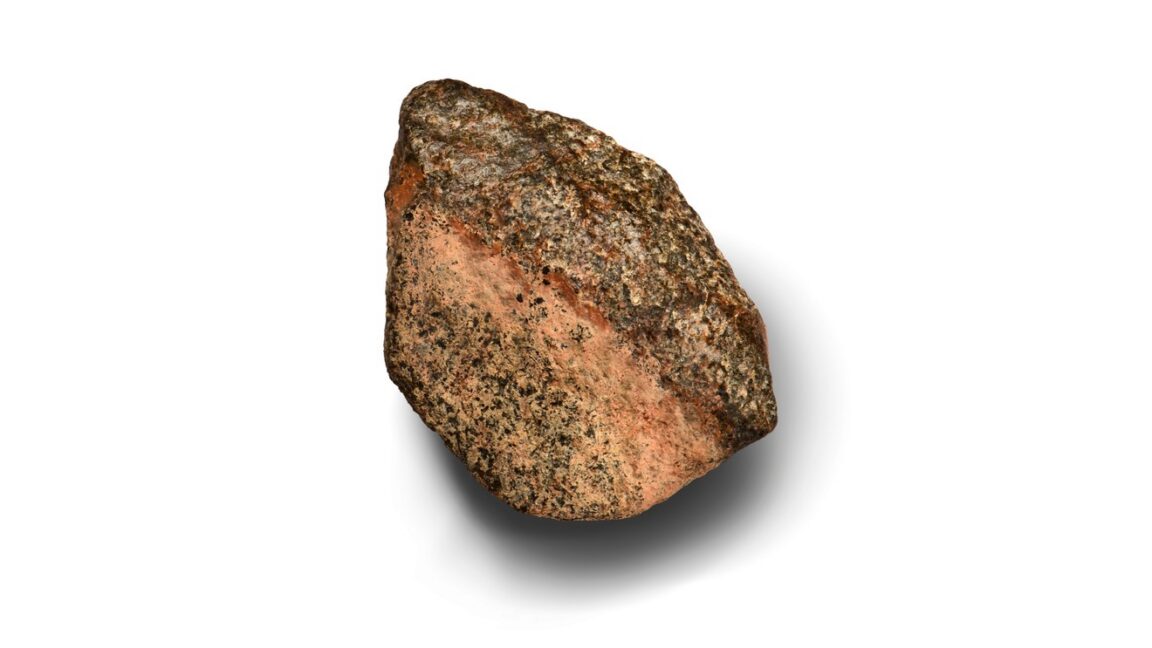
Crater counts tell us that most of the Martian surface is more than 3 billion years old, but pieces of Mars we have on Earth tell a different story. The three main classes of Martian meteorites—shergottites, nakhlites, and chassignites—are all 2.4 billion years old or younger. Until now, only two genuinely ancient Martian meteorites were known: Allan Hills 84001, found in Antarctica, and a jumbled rock from northwest Africa nicknamed Black Beauty.
A team led by Yang Liu, a planetary scientist at NASA’s Jet Propulsion Laboratory, has shown that a Martian meteorite called Teghaza 001, found in the Sahara Desert in Mali in 2022, formed at least 4.1 billion years ago. Part of the answer may lie in how a piece of Mars gets here. It takes a large impact to launch a rock off the planet, and not every rock can survive that.
Weak rocks do not make it off Mars.” That left scientists with a biased collection. The partial exception is Black Beauty, which has a bulk chemistry that matches orbital measurements. But Black Beauty is a mix of soil and many small rock fragments.
Teghaza 001 is a single, intact igneous rock.
Extract — continue reading at the source.