There are constant pressures acting upon a writer: juggling between responsibilities and work; prioritizing health; making and somehow slowing down time; even, perhaps, the arresting, infinite possibilities of the page. Not to mention, all the subconscious terrain, where one wrestles with memory, vulnerability, and presence. These five pieces, selected as the winners by novelist and short story writer Elizabeth McCracken for the 2026 Insider Prize, are awe-inspiring depictions of fortitude, honesty, and the power of narrative—all written under the difficult circumstances found within the carceral system.
Take, for example, Charles Hill’s winning story, “Prisoner’s Home”: where a protagonist returns after serving a lengthy sentence and struggles to adjust to societal conditions. Hill expresses, in earnest, the fears of being seen in public spaces, such as a grocery store, hounded by personal questions—an all-too relatable scenario, regardless of one’s background. (In an interesting turn of events, Charles Hill was discharged sometime after submitting for the prize; his whereabouts are currently unknown. Here’s hoping his personal odyssey leads him to safe harbors.) And Brian Steven’s runner-up story, “A Hairy Tale,” follows a character desperately seeking to rid his cell from his celly’s hair with vivid use of detail and a suspenseful ending.
Deanna Carney’s winning essay, “Sit. Stay.,” recounts heartbreaking events from childhood to parenthood, marked by the various pets that provided comfort in those moments. With prose akin to poetry, she delves into the layers of trauma and finds a way out through healing and support. (A notable event, too: Deanna will be released on parole in late September 2026.) And in a first for the Insider Prize, there are two runners-up in nonfiction, with thought-provoking insights of the system and a portrayal of yearning to reunite with family; Matthew Mendoza’s “Zen and the Art of Civil Commitment” reaches emotional depths through powerful reflections in search of redemption, while Steven Perez’s “Aunt Terry and Josiah King” transports the reader inside his bunker where he makes a call to his dying aunt.
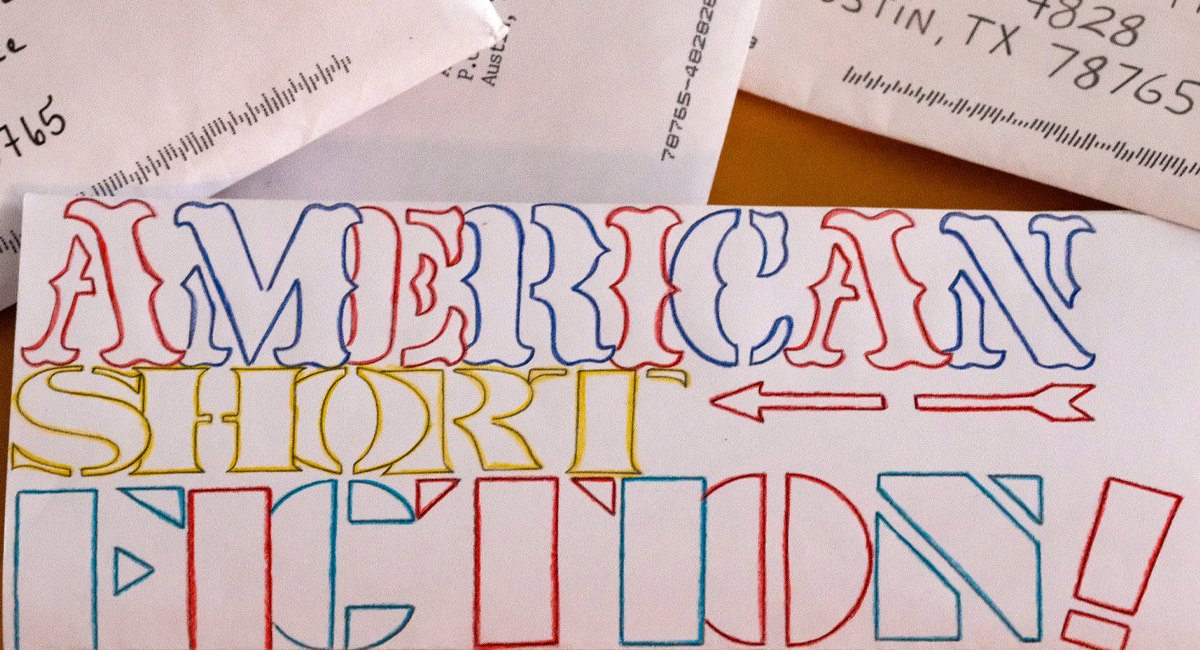
Each submission received for the prize—handwritten or typed out, then mailed in thick, delicate envelopes—examined the human condition through a diverse lens: the lack of justice, oppressive Texas heat in harsh living conditions, violence suffered by transgender women, and the struggle with addiction. Most moving, above all, are the correspondences with the writers themselves who reach out at their own expense—quite literally. A message to touch base and say hello, an eager inquiry on the next open window for the contest, a half-torn, crumbled page from someone asking for writing resources in penciled scribbles.
I can only imagine, through slivers of their reality depicted in their pieces, the limited spaces and time allotted; it serves us well to keep in mind the effort and length incarcerated writers undertake for the chance of expression and connection. With much gratitude from our Insider Prize Assistant Editors, our partners at Lit Hub and Huston-Tillotson University, and everyone at American Short Fiction, I hope these remarkable stories serve as beacons for hope, forgiveness, and redemption. A pause to reflect and a reminder of our privileges, the responsibility to uplift marginalized voices, and the opportunity to meet ourselves on the page—and each other—with the same strength, humility, and grace.
His given name is Chris, but in prison he calls himself “Crazy.” This complicated and heartfelt story is about how the lies you tell yourself about who you are will change you, but never in the way you hope: what you hope will save you might doom you instead. Chris went to prison at the young age of nineteen—he was in his second year of college. Photos of Chris on social media show him hunting, drinking, and dancing: all the things his parents never had the opportunity to do.
Extract — continue reading at the source.