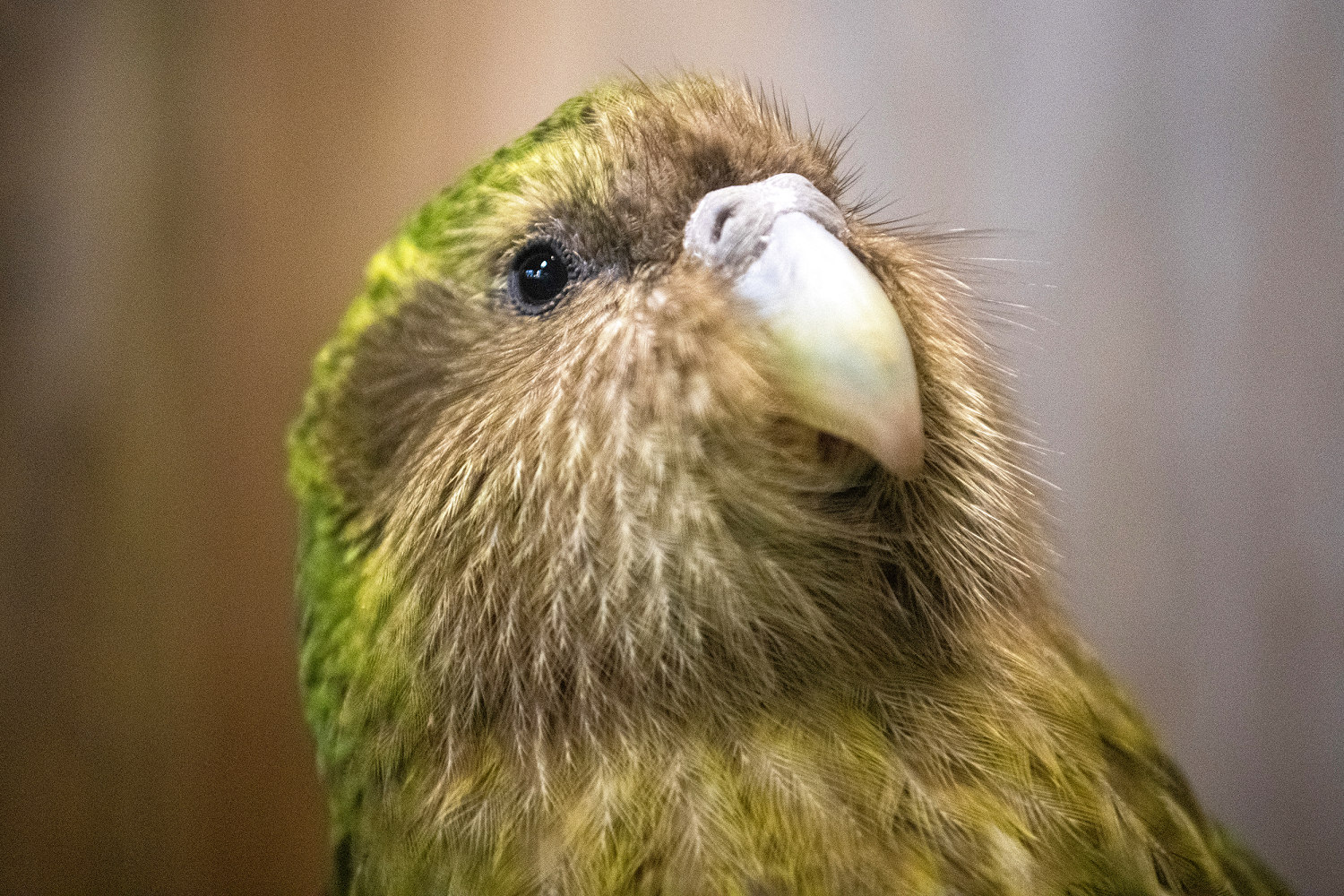
There’s been a baby boom among one of the world’s most endangered parrot species — and officials in New Zealand are squawking about it. A record 90 chicks have been added to the count of the endangered kakapo parrot, bringing the population to a record 325 birds, the New Zealand Conservation Department said in a statement Tuesday. The fledglings of the bird, which is native to New Zealand, were bred this year.
The youngest is now 150 days old, a milestone at which the baby birds are considered independent enough to be added to the tally. The green parrots do not fly and have a waddling gait, making them an easy target for ground predators. The kakapo is also the heaviest parrot species, with males weighing up to 9 pounds.
The bright birds, with finely blotched yellow-green plumage and large gray beaks, are also thought to be among the longest‑living bird species, reaching 60–90 years, the statement from the department said. The nocturnal parrots with their owl-like faces remain critically endangered, conservationists say. In the early years of recovery, it took 16 years to produce that many chicks,” said Deidre Vercoe, manager of the department’s kakapo recovery operations.
Since then, the species has been through 13 breeding seasons, with recovery efforts working to overcome challenges associated with low genetic diversity, including infertility and poor hatching success. The successful season also highlights the importance of creating more predator-free habitats for the species. Each kakapo in the program is fitted with a small backpack radio transmitter to help track its location and monitor its activity levels, conservationists say.
Once widespread across New Zealand, kakapo numbers plummeted after human arrival due to hunting, predators and habitat loss. Conservation efforts began in 1894 but the species nearly went extinct by the mid‑1900s. The bird is believed to have lost the ability to fly as it evolved because there were no ground level predators in the New Zealand environment to threaten the species.
But human colonization several hundred years ago introduced predators such as cats and rats that wiped out most of the kakapo. Today, surviving kakapos are kept on small protected offshore islands. They largely live off berries from native Rimu trees, which bear fruit every two to four years, impacting their mating and slow repopulation.
Extract — continue reading at the source.