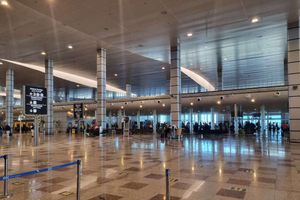
A vast floating ceiling ripples above the terminal like the waves of the Red Sea meeting the surrounding desert. Most airport terminals are designed simply to move travelers from one place to another. Terminal 1 at Hurghada International Airport attempts something more ambitious: turning the landscape outside into part of the building.
Opened in late 2014, the terminal covers approximately 92,600 square meters across three main levels. Its most distinctive feature is the enormous elevated ceiling, whose flowing underside was designed to echo both the undulating Red Sea and the desert terrain surrounding Hurghada. Glass façades and wide, uncluttered interior spaces allow the ceiling to appear as though it is floating above the passengers below.
The effect creates an architectural preview of the destination. Travelers arrive in the middle of an arid landscape, yet the shape of the sea is already waiting for them overhead. The terminal serves as a gateway to Hurghada and the wider Red Sea resort region, including El Gouna, Makadi Bay, Sahl Hasheesh, Soma Bay, and destinations farther south.
Get more unusual and extraordinary places each week with the Atlas Obscura Places newsletter. Your newsletter subscriptions with us are subject to Atlas Obscura's Privacy Policy and Terms of Use. Terminal 1 is the modern terminal used for many international and charter flights.
Travelers should verify their terminal with their airline or tour operator because flights may also operate through Terminal 2. The distinctive ceiling is best seen from inside the main public halls. Visitors should follow all airport security instructions and avoid photographing security checkpoints, officials, or restricted areas.
Hurghada-flughafen.de is an independent German-language airport guide and is not the official website of the airport authority. It provides practical information about the terminals, arrivals, departures, visas, ground transportation, and onward travel from Hurghada Airport. Inside the Wayne County airport is an amazing collection of lights and sounds.
Extract — continue reading at the source.