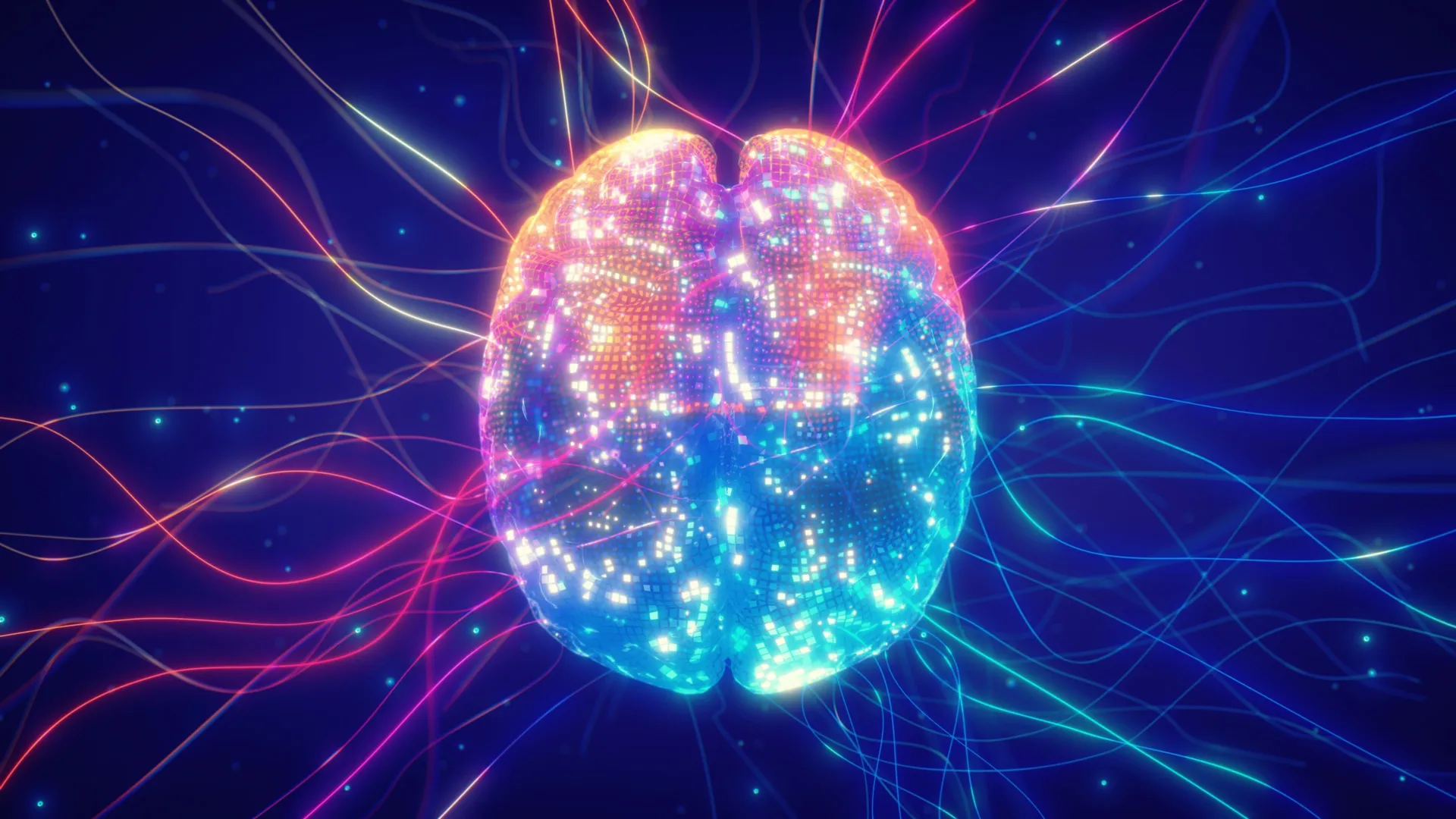
The human brain is continuously processing enormous amounts of information. Even something as familiar as driving requires several mental tasks at once. The brain must remember the route, recall how to control the vehicle, and respond to unexpected developments such as a road closure or shifting traffic conditions.
A brain network known as the frontoparietal cortex plays a major role in managing this flow of information. It receives signals from throughout the brain, determines which information is most important, and helps coordinate the appropriate response. New research from the University of Iowa offers a more detailed look at how this system works when people face uncertainty while making decisions.
The findings show how the frontoparietal cortex helps organize information and coordinate responses involving both the brain and the body. University of Iowa researchers have provided new insight into the brain's information hub, known as the frontoparietal cortex. In this illustration, colored areas identify frontoparietal regions that track uncertainty as participants encounter changes in associations they had previously learned.
Image courtesy of Kai Hwang lab, University of Iowa. Using experiments that combined computational modeling with brain imaging, the researchers found that the frontoparietal cortex does not communicate with the rest of the brain in a fixed way. Instead, its connections shift according to the type of information required during different stages of a decision.
The results could help guide future investigations into neurological and psychiatric conditions in which this information exchange may function differently, including attention-deficit/hyperactivity disorder (ADHD) and schizophrenia. "Our study shows in more detail how the frontoparietal cortex operates -- what kind of information it extracts from other systems and how it uses its connectivity pattern to integrate information that is coming in from different areas of the brain," says Kai Hwang, associate professor in the Department of Psychological and Brain Sciences and the study's corresponding author. "That's the main contribution." Scientists have long recognized the frontoparietal cortex as an important part of decision making.
Its role resembles that of an air traffic controller overseeing a crowded airport. It continually receives information from other brain regions, but it does more than simply collect those signals. Depending on the situation, it filters out some information while giving greater attention to signals that are more relevant.
Extract — continue reading at the source.


