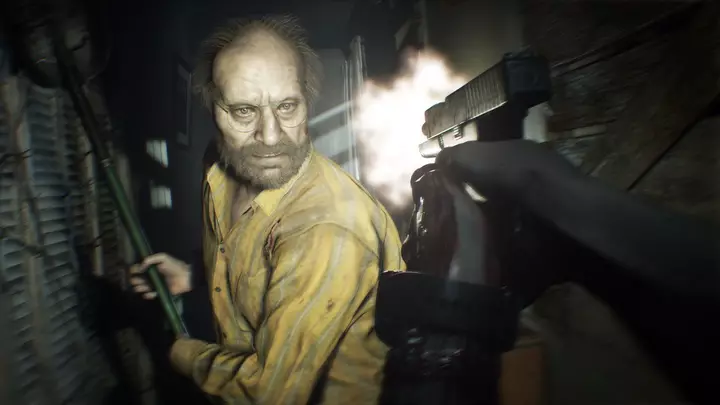
It's hard to believe that it has almost been a decade since Capcom reinvented Resident Evil with the seventh mainline game in the series. In the fallout of Resident Evil 6, it seemed like the once great horror franchise was done for good, but then the developer delivered something of a miracle with the soft reboot that is Resident Evil 7. That isn't to say the game doesn't have its flaws, something one developer has now revealed in detail was rooted in the tumultuous development cycle it went through.
In response to a long thread about Resident Evil 7: Biohazard, former Capcom manager Miguel Corti penned his own, even longer, thread about the behind-the-scenes story of how the bold reinvention of the series came to be. If you have the patience, you can read through the entire 66-post thread, which somehow touches on everything from Call of Duty and The Last of Us to more Leon Kennedy. According to Corti, the original concept for Resident Evil 7 wasn't as drastic as the final product.
Most importantly, it wouldn't be a soft reboot but would instead pick up after the events of the much-derided Resident Evil 6. "What was going to be the solution for RE7?" wrote Corti, "More Leon and more Umbrella connections!" There was apparently even talk at some point of Rebecca Chambers and Jill Valentine returning as well. As for why Capcom would even want to continue with Resident Evil 6's style, Corti stated that the game "sold like gangbusters" despite poor reviews.
A major point of inspiration for these early iterations was Naughty Dog's The Last of Us. While Capcom higher-ups were "more than happy with RE6," the developers wanted to gain critical acclaim, which they thought would be accomplished by making a more narrative-focused single-player experience. The continued connections to the ever-convoluted franchise lore eventually got the development team stuck in a rut, which was only ended when Capcom underwent a reorganization and "a mandate came down to redo RE7 from scratch." For the iteration of Resident Evil 7 that began following the reorganization, Capcom brought in a new team, director, and an external writer.
At this point, it was decided that the game would be a first-person shooter. "That was a bombshell of an idea for an RE game, but actually slots right into the gaming trends at the time." Elements such as a single house as the setting and the Baker family came into the picture around this time as well, according to Corti. A number of ideas that made their way into the game apparently survived despite not making "a lick of narrative sense." Corti sees this as one reason the game ultimately fails to have a cohesive narrative.
The dynamic between protagonist Ethan and his wife Mia was born out of yet another Last of Us inspiration, as that game begins with Joel losing his daughter. Capcom thought having Ethan look for his presumed-dead wife would have a similar effect. There were apparently many problems surrounding Mia's character, however, with Corti believing that the player had no real connection to her and that her backstory didn't make sense.
Extract — continue reading at the source.