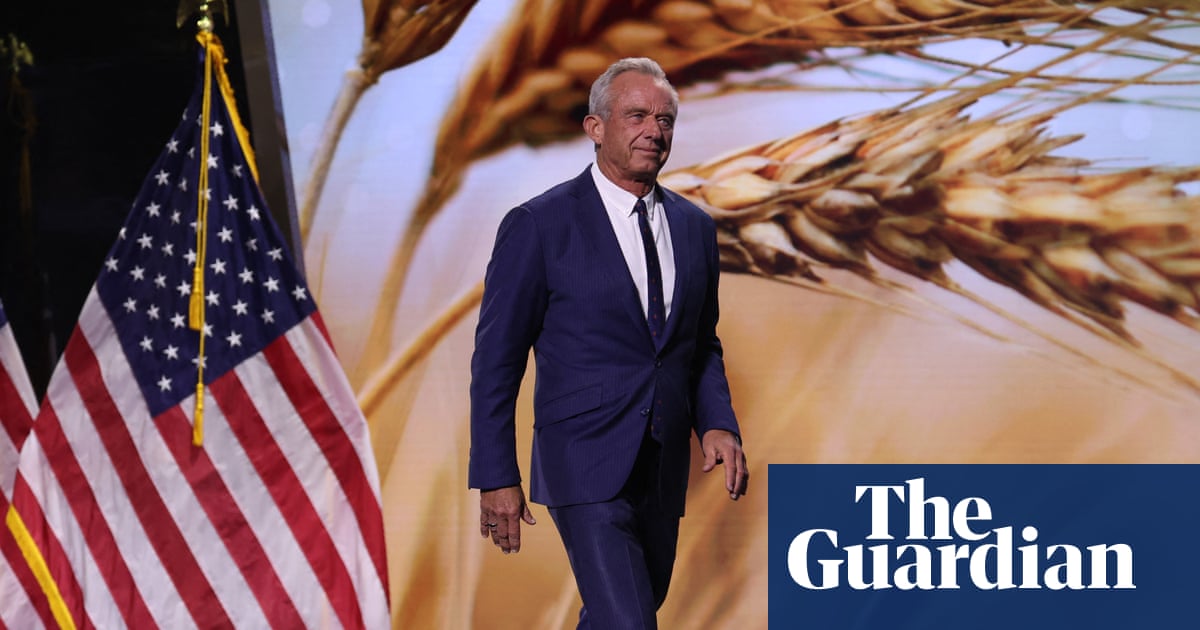
Robert F Kennedy Jr laid out an expansive vision for collecting, sharing and analyzing US health information at a Maha event hosted by a close ally and outspoken anti-vaccine activist. Medical and lifestyle data, from doctor’s visits to exercise, should be connected and shared with the government and independent researchers, where it can be searched by AI – including potential links between vaccines and health outcomes including autism and mortality, suggested Kennedy, the secretary of the US Department of Health and Human Services (HHS) and a longtime vaccine skeptic. The Maha Institute is headed by Mark Gorton, who called himself “the boldest anti-vaxxer in the anti-vax conference” two weeks ago.
The institute was co-founded by Tony Lyons, whose publishing house gave $4m to Kennedy through various Maha foundations with funding from political contributions and health-related corporations, according to reporting by the New York Times. Kennedy has focused on pulling together data from all of the agencies he oversees, including the Food and Drug Administration (FDA), the Centers for Disease Control and Prevention (CDC), and the Centers for Medicare and Medicaid Services (CMS). ”Your health information should follow you wherever you go,” Kennedy said. Providers, insurance and technology companies are creating apps for portable health records, for instance – making it easier for individuals to access their medical records, and also opening up the records for governmental and outside use.
The Trump administration is now tracking “exposures”, interventions and claim data in Medicaid, and “Medicare gives us enormous amounts of information on older Americans and people with disabilities,” he said. FDA monitoring systems can link claims data and electronic health records “to conduct active safety surveillance”, while commercial platforms, such as HealthVerity, can link insurance claims, prescriptions, laboratory results and electronic health records, he said. State-level datasets reported to the CDC were “unusable” because they often collect different data points, Kennedy said: “Too many of those systems remain siloed and cannot give us the real-time information we need to understand health at scale.” Yet wider access to state health data could allow officials and others to connect immunization records, clinical data, laboratory results, pharmacy information and insurance claims “to create a more complete picture of a patient’s health over a long period of time”, Kennedy said.
Federal officials are using AI to process the data, he said: “Studies that used to take years, you can do them literally in seconds. You can ask questions and you can get immediate answers, and that’s what we’re doing today.” Kennedy repeatedly touted the benefits of AI, which has been embraced by some in the anti-vaccine world for purportedly showing the dangers of vaccines. The OpenAI co-founder Sam Altman met with Kennedy this week and told him that HHS uses generative AI – Kennedy used the term “superintelligence” – more than any other federal agency, Kennedy said.
OpenAI agents hacked US government websites and the Australian Medicare website this summer, reporting recently revealed. Officials have created an autism registry despite widespread protest. The Trump administration has also launched studies on the roles of such factors as diet, electromagnetic fields, screen time and vaccines in the development of illness, Kennedy said.
He repeatedly returned to vaccines. At the CDC, officials are using the Vaccine Safety Datalink (VSD) to compare outcomes in healthcare for vaccinated and unvaccinated people, as well as examining the role of aluminum adjuvants in vaccines; the timing of the hepatitis B vaccine in infancy; comparing live and attenuated vaccines; and studying influenza, Covid and HPV vaccines in children, Kennedy said. Using Medicaid and “linked real-world data”, officials are also studying vaccination during pregnancy and subsequent childhood outcomes.
Extract — continue reading at the source.