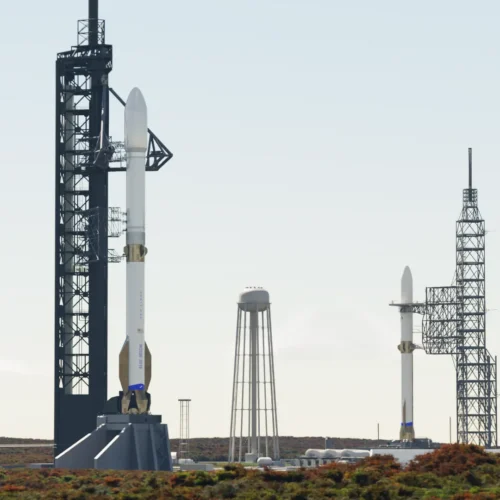
Rocket Lab made a lot of news this week with its quarterly update, and it is clear the company is making impressive progress as it becomes much more than a launch company. But at the end of the day, a lot of the company’s success is predicated on the Neutron vehicle, and I’m not thrilled with Rocket Lab’s ambiguity around its readiness. As a user on X noted, the company’s language on Stage 2 being ready to ship to the launch site has not changed much in 12 months.
As always, we welcome reader submissions, and if you don’t want to miss an issue, please subscribe using the box below (the form will not appear on AMP-enabled versions of the site). Each report will include information on small-, medium-, and heavy-lift rockets as well as a quick look ahead at the next three launches on the calendar. Rocket Lab decides to get flexible.
Rocket Lab plans to start launching its Electron vehicle even more frequently and flexibly, thanks to a new portable spaceport system called GHOST, Space.com reports. GHOST—short for “Global Hypersonic & Orbital Spaceport Technology”—turns the company’s “Electron and HASTE rockets into a launch-anywhere, launch-anytime capability for multi-launch flight campaigns and critical national security missions,” the company said this week. Onward to Alaska … Rocket Lab currently flies from two different launch sites—one on the North Island of company founder and chief executive Peter Beck’s native New Zealand and one at Wallops Island in Virginia.
But the company recently announced plans to fly out of Alaska’s Pacific Spaceport Complex as well, and GHOST will expand its launch footprint even further. The company was inspired to develop the portable spaceport system, he added, to meet the needs of a HASTE (a suborbital hypersonic test bed) customer, who expressed a desire for Rocket Lab to be “a little bit more mobile than we are.”
Extract — continue reading at the source.