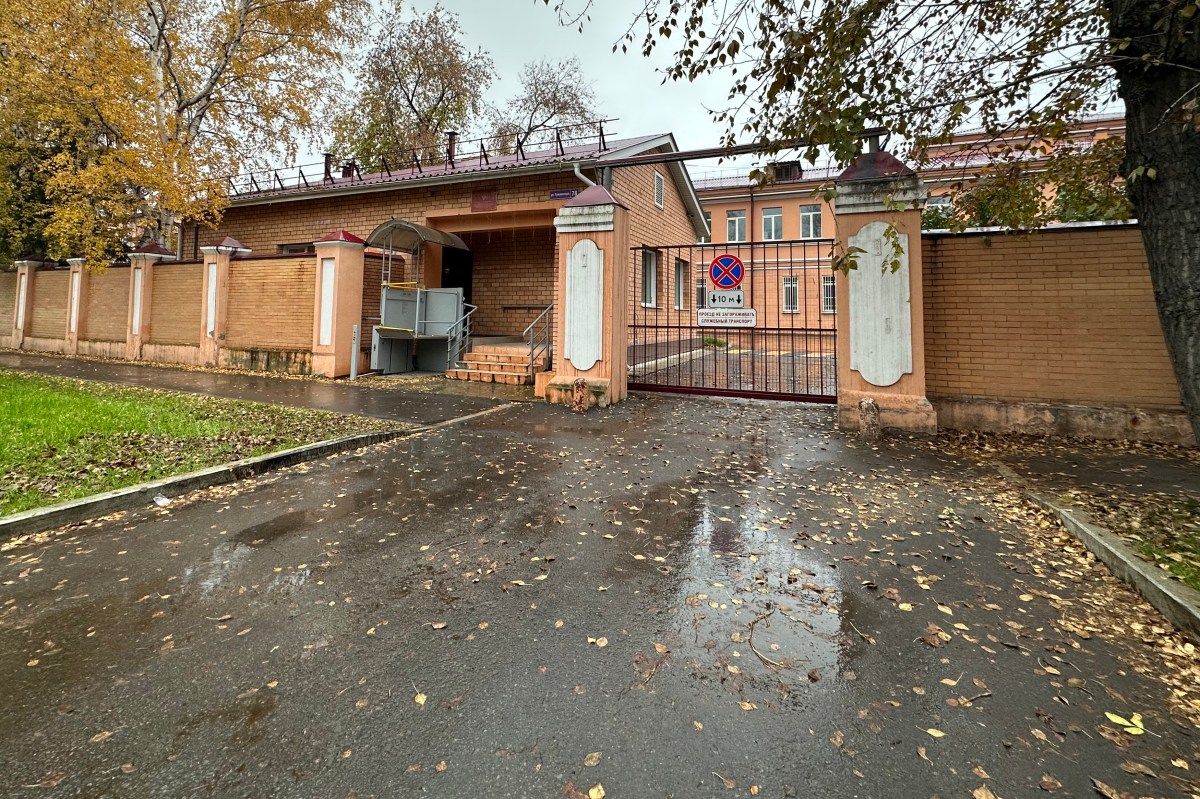
The death of Darya Shipilova, an employee of the Irkutsk Anti-Plague Institute in Russia, has raised public health fears about the prospect of an outbreak of the disease she researched as questions grow about the unexplained case. Russian authorities have identified those who were in contact with her and they are under medical supervision, according to the World Health Organization (WHO). However, U.S. officials have urged more transparency from Moscow and the demand for answers about the case comes amid reports of hospitals being quarantined.
Newsweek has contacted Russia’s health watchdog, Rospotrebnadzor, for comment. The death of Shipilova, 28, has prompted theories about her job at the Irkutsk Anti-Plague Research Institute of Siberia and the Far East, which researches dangerous infections. There are three main clinical forms of plague infection—bubonic, pneumonic, and septicemic, according to the WHO.
Pneumonic plague, which is caused by the bacterium Yersinia pestis, often found in small mammals and their fleas, was listed as a possible cause for her death according to reports. However, Rospotrebnadzor said Shipilova died from "pneumonia of unknown etiology.” It added that tests found no microorganisms linked to her work and there has been no release of laboratory evidence confirming that the death was due to Y. pestis. This means that Russia's official assessment of the case does not confirm the plague.
The WHO said Russian health officials had informed it that no case of plague has been recorded in Irkutsk and that the woman’s illness “initially presented as a typical acute respiratory viral infection.” Irkutsk’s governor, Igor Kobsev, has said no “microorganisms linked to the employee’s professional activities were detected” in her body. However, as of Tuesday, detailed test results have not been made public. This lack of public information about the case has raised questions, according to Amos Weiskopf, editor of Plague News.
On Sunday, Rospotrebnadzor refuted this claim, adding that a special commission had found no accidents involving pathogenic microorganisms at the institute. Siberia Realities, the Siberian version of U.S.-funded Radio Free Europe, reported that Shipilova's former colleagues were angered by claims she had violated regulations for working with a dangerous pathogen and tried to cover it up. One former classmate named Valentina said that all the regulations of the laboratory were extremely strict and “so all these accusations against Daria are a complete shock to us." Javier Pizarro-Cerda, head of the Yersinia Research Unit at the Institut Pasteur in Paris, said people working with plague normally wear a full body suit, masks and gloves, “so even if you break a tube, normally you should be protected.” Russian national and local media is tightly controlled by the Kremlin, so the official accounts of the incident have differed from reports in independent outlets.
Kremlin spokesman, Dmitry Peskov, said on Monday to focus on official statements from Rospotrebnadzor and not on "various rumors." Alexei Tsydenov, the head of Buryatia—a Russian republic that borders the Irkutsk region—was the first official to mention the plague. But he appeared to row back from his initial statement on social media that the patient had “died of the plague” to “may have died of the plague,” prompting confusion. However, one source told People of Baikal, an independent Telegram channel that is closely following the story, that doctors in Irkutsk are "already openly talking about the plague.” Russian state TV coverage mentioning the plague appears to have occurred only once, by the defense ministry channel Zvezda on October 2.
Extract — continue reading at the source.