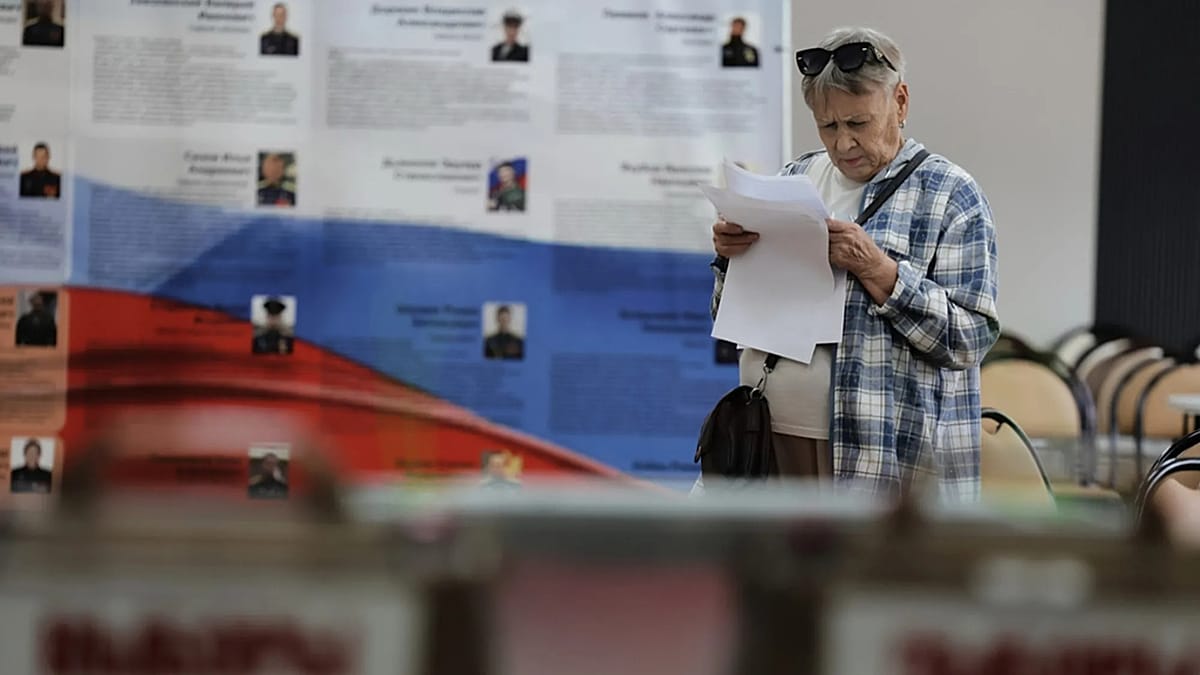
Russians began voting Friday in a tightly controlled three-day election that will likely see President Vladimir Putin tighten his grip on power after 26 years at the helm, as Russia's all-out war in Ukraine continues well into its fifth year. Only parties backing Putin and his war in Ukraine are on the ballot: the ruling United Russia, the Communist Party, A Just Russia, the nationalist LDPR and New People. Yabloko, Russia's only publicly anti-war party still operating inside the country, was barred from participating.
The party saw a surge in social media support, particularly among young people, after it was initially allowed to stand. An unnamed European diplomat said the elections were "pretty much a sham" but described them as "a ritual the Kremlin considers necessary," adding that it would seek to ensure a high turnout. Independent observers have previously documented the use of state resources to influence results, including bussing voters to polling stations, pressuring employees of state institutions to vote for the ruling party, and pushing online voting as it is easier to monitor and control.
"As in the Soviet era, elections must demonstrate the loyalty of citizens," Russian political scientist and Head of Analysis of Transformation Processes at the NEST Centre Nikolai Petrov said. The election will fill 450 State Duma seats and the governorships of 11 federal regions, with the country's only remaining anti-war party excluded from the ballot and fears of mobilisation overshadowing the vote. Running from 18 to 20 September, the election will also choose deputies to regional legislatures in 39 federal subjects.
Voters will choose eight of the 11 regional heads directly, while regional parliaments will elect the remaining three. Polling stations have been opened at Russian border crossings with Poland and the three Baltic states. Half of the 450 Duma seats will be allocated through nationwide party lists and the other half through single-member constituencies.
Voting in Russian elections is also taking place in parts of Ukraine occupied by Moscow's troops, a move that neither Kyiv nor the West recognises as legitimate. Almost 200 candidates in these elections have taken part in Russia's war in Ukraine, according to electoral commissions. The Kremlin has promoted them as part of Russia's "true elite," but the initiative is primarily a recruitment tool to boost Moscow's troops on the front lines, with few standing any real chance of being elected.
Ahead of the vote, Putin urged Russians to vote to show troops that "behind our fighters stand millions of people" and to deliver an "answer to those who want to weaken Russia". Meanwhile, Russians fear another wave of military mobilisation, despite Putin personally denying plans for a call-up twice in three days in September alone. Independent Russian media have counted 17 official denials of an imminent mobilisation.
Extract — continue reading at the source.