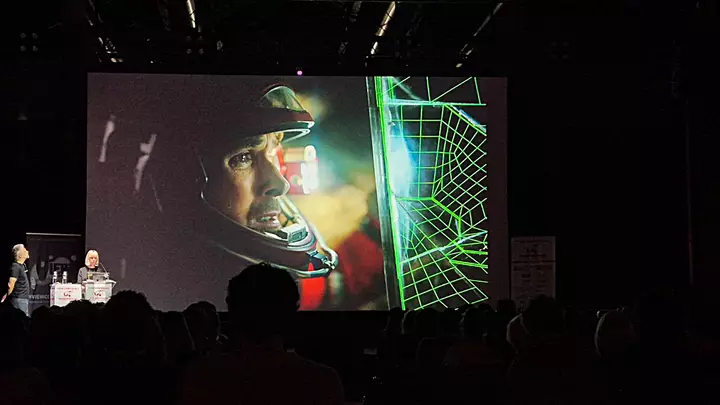
Oscar-winning supervisor Paul Lambert and co-supervisor Mag Sarnowska also talked at Turin’s View Conference about how ESA star maps, Greig Fraser’s cinematography and puppetry shaped the Ryan Gosling space epic For Oscar-winning VFX supervisor Paul Lambert Lambert, of all the huge challenges presented by Ryan Gosling space epic “Project Hail Mary,” the most daunting was creating convincing zero gravity. But the spacecraft sets were too elaborate to recreate onboard, so Gosling performed on wire rigs, including a rotating harness. Removing the wires was only the beginning.
When a suspended body still appeared to be hanging rather than floating, VFX artists adjusted the position of Gosling’s legs, arms or torso and added drifting objects to reinforce the illusion. Lambert said the actor was committed to performing his own stunt work, including demanding spacewalk material. Other experiments were deliberately hands-on.
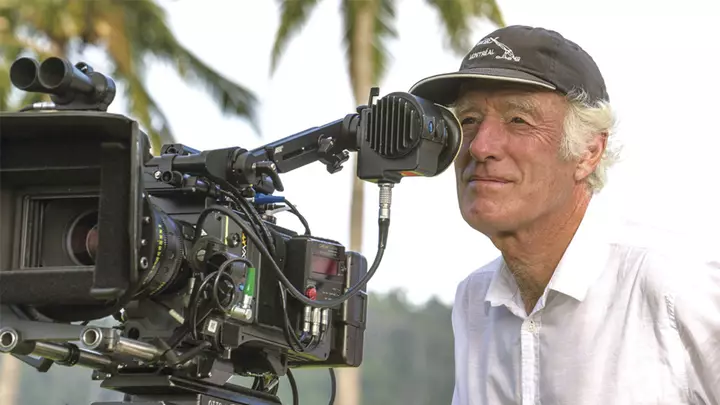
Fraser used an infrared-modified camera, programmable IR lights and water running in front of the lens to develop some of the film’s stranger imagery. Burning fireballs, liquids, lasers and ferrofluid were also filmed to provide starting points for the microscopic effects. The DP returned during postproduction to work with ILM’s Helios virtual-camera system on the sequence near Adrian.
Artists tracked Gosling’s on-set performance and recreated it within digital environments, allowing Fraser to choose new camera positions without discarding the original acting. Across those techniques, the supervisors’ ambition remained consistent: to make even the most elaborate effects obey a recognizable physical logic while ensuring Rocky felt as present beside Gosling as any human scene partner. The visual effects team behind “Project Hail Mary” started its journey through space, however, by making an unexpected discovery: much of the sky would look surprisingly familiar.
Rather than fill Ryan Gosling’s interstellar adventure with colorful nebulae, Lambert and co-supervisor Mag Sarnowska used astronomical data, practical puppetry and carefully controlled cinematography to keep its science-fiction imagery grounded in reality. The team drew on data from the European Space Agency’s Gaia mission to map the stars between Earth and Tau Ceti, some 11.9 light-years away, while studying NASA footage and raw images from the International Space Station to establish how cameras behave in orbit. Exposure became a guiding principle.
Near the brightly illuminated planet Adrian, background stars were therefore largely absent. Farther from Tau Ceti, where the light was weaker, a hypothetical high-sensitivity camera could reveal them. DP Greig Fraser extended that philosophy into the film’s texture.
Extract — continue reading at the source.