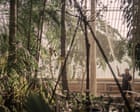
It will be a gut-wrenching moment for the horticulturalists at Kew Gardens when some of the magnificent trees in the Palm House have to be felled. But moving some of the 1,000 plants – and sacrificing others – is crucial as the botanists and horticulturalists at the world’s biggest plant collection, based in south-west London, race against time to renovate the Victorian-era glasshouse. The ornate ironwork is rusted and the 16,000 panes of glass it is comprised of are warped and damaged, making it difficult to maintain the hot, humid conditions its rare plants need.
Some plants grown within are critically endangered, and in some cases, Kew holds the only specimens. His team have already begun emptying out the beds around the Palm House, which will remain open throughout the renovation project, scheduled to start in 2027 subject to funds being raised in time. Sometimes, I go to where one of my favourite plants was and realise it’s gone!,” Spoelstra says.
The plants have been moved to a behind-the-scenes greenhouse, the tropical nursery, where they can get used to the conditions there before moving back into a renovated greenhouse. Kew’s scientists are working to collect seeds and cuttings to propagate new plants to fill the greenhouse. The tropical nursery currently looks like the Palm House in miniature, filled with saplings of the majestic trees they descend from.
The project has also given Kew’s workers an opportunity to do some groundbreaking conservation work. One of the trees that cannot be moved and needs to be cut down due to its size is the Ravenea Moorei, native to the Comoros islands near Madagascar. Scientists were concerned as it was thought to be the only one of its kind.
Kew’s specimen is male and cannot produce seed without a female. The researchers went on an expedition to the Comoros in the hope of finding a wild population – and succeeded. Due to its success, the specimen in the greenhouse could be propagated, and there are now 10 young plants in the tropical nursery.
Kew will also be helping the scientists in the Comoros protect and enhance the wild population. Some plants will be very perilous to move. The Aiphanes eggersii is covered in large spikes.
Extract — continue reading at the source.