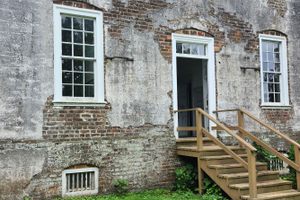
A rare example of pre-Revolutionary war Georgian-style architecture in Virginia's Piedmont region. Latin for "healthful" or "good health," Salubria, unlike James Madison's nearby home, Montpelier, is a lesser-known gem of the Piedmont region. Salubria, c 1757, is currently preserved though not restored- the house has not been repainted or re-furnished in period attire inside.
Much of the wood is original! The Germanna Historical Society owns the home as of 2000, and was recently awarded a substantial grant to continue reviving Salubria and sharing the home with the public. Like many manor homes from this era of history, Salubria has a storied and complicated past.
Enslaved people lived and worked here for the first century of the home's existence. The halls saw famous early American figures pass through and witnessed Civil War skirmishes. Woodrow Wilson's personal physician, Cary Grayson, was born at Salubria in 1878.
The house is almost the exact same floor plan as the George Wythe house in Williamsburg, Virginia, and if you look up the interior of the Wythe house you'll get a good sense of what Salubria would have looked like nearly 300 years ago. Get more unusual and extraordinary places each week with the Atlas Obscura Places newsletter. Your newsletter subscriptions with us are subject to Atlas Obscura's Privacy Policy and Terms of Use.
The home is open seasonally on certain days and visitors may also call Germanna Historical Society to schedule tours! Check the websitefor hours, tour, and contact information. Note if you are not visiting on an open house day or do not have a scheduled tour,the front gate to the house will be locked and Salubria is not accessible.
One of the last-standing and most prominent structures from a long-lost colonial port community. A "house to which to flee" for settlers in colonial Pennsylvania. The oldest continuously occupied public building in the United States.
Extract — continue reading at the source.