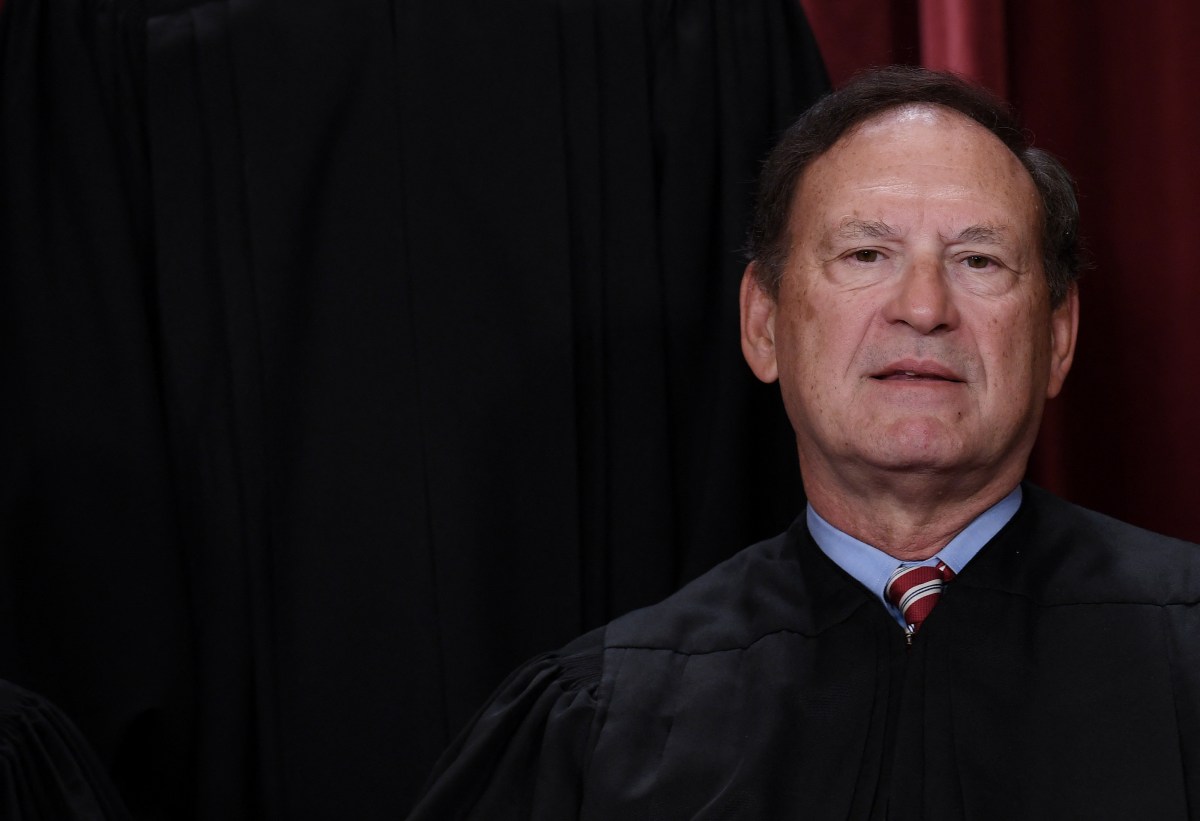
Supreme Court Justice Samuel Alito has revealed he lost friendships over decisions, and that overturning Roe v. Wade four years ago required courage for those in the majority because of its consequences. In an interview with CBS News, the President George W.
Bush-appointed justice, known for his conservative viewpoint, also spoke about his concerns over criticism from the two most recent United States Presidents, Joe Biden and Donald Trump. Speaking to CBS' Jan Crawford, the 76-year-old also opened up about his decision not to retire just yet, having been on the bench for 20 years, during which time he has been a key right-leaning voice on gun rights, executive power, and abortion. "There are cases that have resulted in the loss of old friendships," Alito said.
"That's something you have to live with." Alito authored the majority opinion in Dobbs v. Jackson Women's Health Organization, which overturned the federal constitutional right to abortion, and his role in that decision will likely be a defining moment in his Supreme Court run. That opinion was leaked before it could be officially released—something Alito said he and his fellow conservative justices did not expect to have to push forward with.
"We didn't know it when we produced the draft that was leaked, but it required courage to go ahead with that because of the implications," he told Crawford. In his opinion, Alito wrote that the authority to regulate abortion would be returned to the people, largely based on his view that "The Constitution makes no reference to abortion, and no such right is implicitly protected by any constitutional provision," he said. That decision was widely criticized by Democrats and those who had fought to keep the rights set forth in the 1970s in place.
Michele Goodwin, O'Neill professor for Constitutional Law and Global Health Policy at Georgetown University Law Center, told Newsweek that Alito's view that the court was sticking to the Constitution was "a bit ironic." "Because it's a decision wherein the court abandoned what was existing law, which was established by the court, and precedent that was nearly 50 years old, and not precedent that had been abandoned over time," Goodwin said. "So, across 50 years, not just one decision, which was Roe v. Wade, but across nearly a dozen or more cases that addressed reproductive health rights, freedom, and abortion, the court had affirmed Roe," she said.
"So, it's ironic that the justice would say that it took courage to do that, or maybe it did, in fact, take courage to overturn what had been so deeply instantiated, a precedent that was relied upon by millions upon millions of Americans." Alito was also asked about the criticism the court has faced from political leaders on both sides, including that justices are political actors seeking to deliver for one party or another. The justice said that criticism was damaging and that there had been "a great change" in how presidents voice their views on a decision, moving away from accepting that. "It's been bipartisan," Alito said, with Crawford asking if Trump had changed the rhetoric toward judges.
Extract — continue reading at the source.