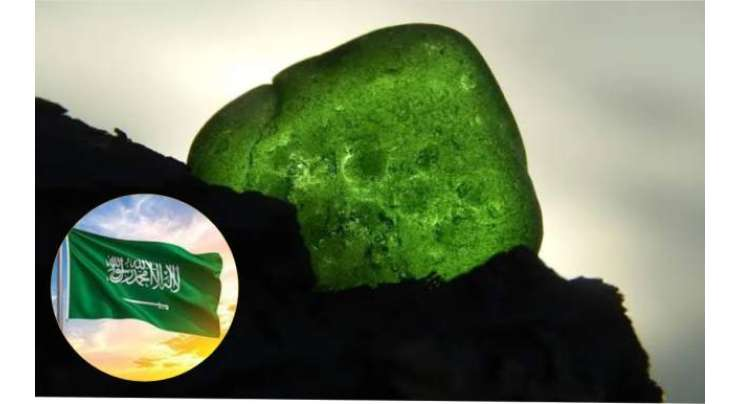
Saudi Arabia has announced the discovery of an estimated 110 million tonnes of ore containing high concentrations of rare earth elements and promising concentrations of uranium in the Madinah region, Energy Minister Prince Abdulaziz bin Salman said. The discovery was announced during the 70th Regular Session of the International Atomic Energy Agency (IAEA) General Conference and follows exploration and geological studies conducted at the Jabal Sayid project in Madinah. The announcement comes months after Washington and Riyadh formalized civil nuclear cooperation through an agreement signed by US Energy Secretary Chris Wright and Prince Abdulaziz on July 22.
The US Department of Energy said the agreements establish the legal framework for a decades-long, multibillion-dollar partnership and provide US companies with greater access to Saudi Arabia’s civilian nuclear energy program. Prince Abdulaziz said Saudi Arabia’s efforts in the critical minerals sector had gained momentum following Crown Prince Mohammed bin Salman’s visit to the United States in November 2025. During the visit, the two countries deepened cooperation on critical minerals, metals, uranium and supply chains, including through a partnership between Saudi state mining company Maaden and US-based MP Materials.
The visit resulted in a Strategic Framework for Cooperation on critical minerals, metals and uranium. Under the framework, the US Department of Defense agreed to finance 49 percent of a planned rare earth processing plant in Saudi Arabia, while Maaden would hold a controlling 51 percent stake alongside MP Materials. MP Materials operates the only integrated rare earth mine and processing facility in the United States.
Jabal Sayid is located around 350 kilometers northeast of Jeddah in the Madinah region and has been identified as a significant rare earth resource. An analysis by the Center for Strategic and International Studies (CSIS), citing estimates from Saudi Arabia’s Ministry of Industry and Mineral Resources and Maaden, places the site among the world’s largest deposits, with an estimated 552,000 tonnes of heavy rare earth elements, including dysprosium and terbium, and another 355,000 tonnes of light rare earth elements such as neodymium and praseodymium. The analysis also estimates that the site contains around 31,000 tonnes of uranium.
According to CSIS, the combination of rare earth and uranium resources could strengthen Saudi Arabia’s ability to develop a domestic nuclear fuel cycle while potentially creating opportunities to supply materials to the United States. Separately, the Saudi Press Agency reported that the estimated value of Saudi Arabia’s rare earth element discoveries reached $100 billion in November 2025, representing a 90 percent increase from 2018. Saudi Geological Survey studies have identified two advanced-stage exploration areas containing an estimated 644 million tonnes of mineral resources.
Here we are to serve you with news right now. It does not cost much, but worth your attention. Choose to support open, independent, quality journalism and subscribe on a monthly basis.
Extract — continue reading at the source.