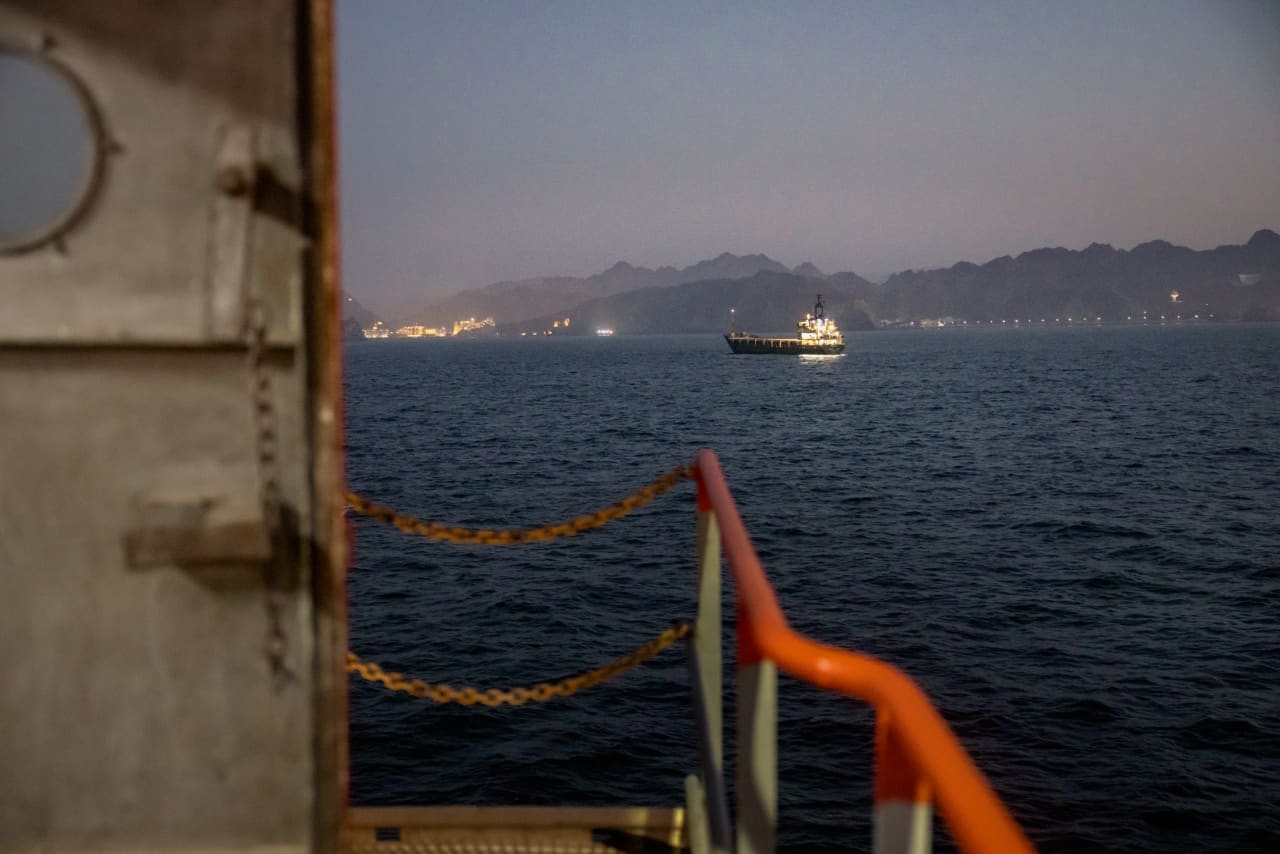
With its East-West pipeline shut down, the Straight of Hormuz is the best avenue available and its spigot has recently opened up. The closure of a key Saudi pipeline that the kingdom has recently relied upon to export oil via the Red Sea has turned the spotlight back on the Strait of Hormuz, as Saudi Arabia and other Persian Gulf exporters work to keep their crude oil flowing to global markets. The big question is how much oil will Saudi Arabia be able to export through the strait, where you still have “good days and bad days,” said Robin Mills, CEO of Qamar Energy, a consulting firm in the United Arab Emirates.
AstraZeneca's CFO on GLP-1 Drugs, AI, and More Play video: AstraZeneca's CFO on GLP-1 Drugs, AI, and More Before the war, the strait was the conduit for about 20 million barrels of oil exports, the vast majority headed to Asia. Energy Secretary Chris Wright told Fox News this week that with the help of U.S. Navy escorts about 18 million barrels a day made their way out through Hormuz recently.
The Energy Department has not returned a request for a seven-day average figure. Don’t Short Yourself offers weekly money tips to help you earn it, stack it and grow it. I would like to receive updates and special offers from Dow Jones and affiliates.
I can unsubscribe at any time. A number of factors make it hard to quantify precisely how much crude and crude products are finding their way out of the Persian Gulf through Hormuz, including “dark” crossings, or vessels attempting the passage with their GPS-like signals turned off in an attempt to evade Iranian attacks. Since the Iran war began, Saudi Arabia had dramatically expanded the use of its East-West pipeline to keep its exports going and to supply its own refineries.
The route meant that a material amount of Saudi’s oil exports could avoid the Hormuz battle zone. But Iran-backed militias in Iraq used drones last week to attack the pipeline, reducing to charred rubble key components of the 750-mile line, about the driving distance between New York City and Indianapolis. Saudi Arabia said it has temporarily shut the pipeline down for repairs.
Some market participants believe the Saudis can get the pipeline back to at least 50% capacity within days. Even if the kingdom is successful, however, the pipeline now appears to be in the battlefield and vulnerable to further attacks. That has shifted Saudi Arabia’s emphasis back to Hormuz, its traditional route for exporting much of its oil.
Extract — continue reading at the source.


