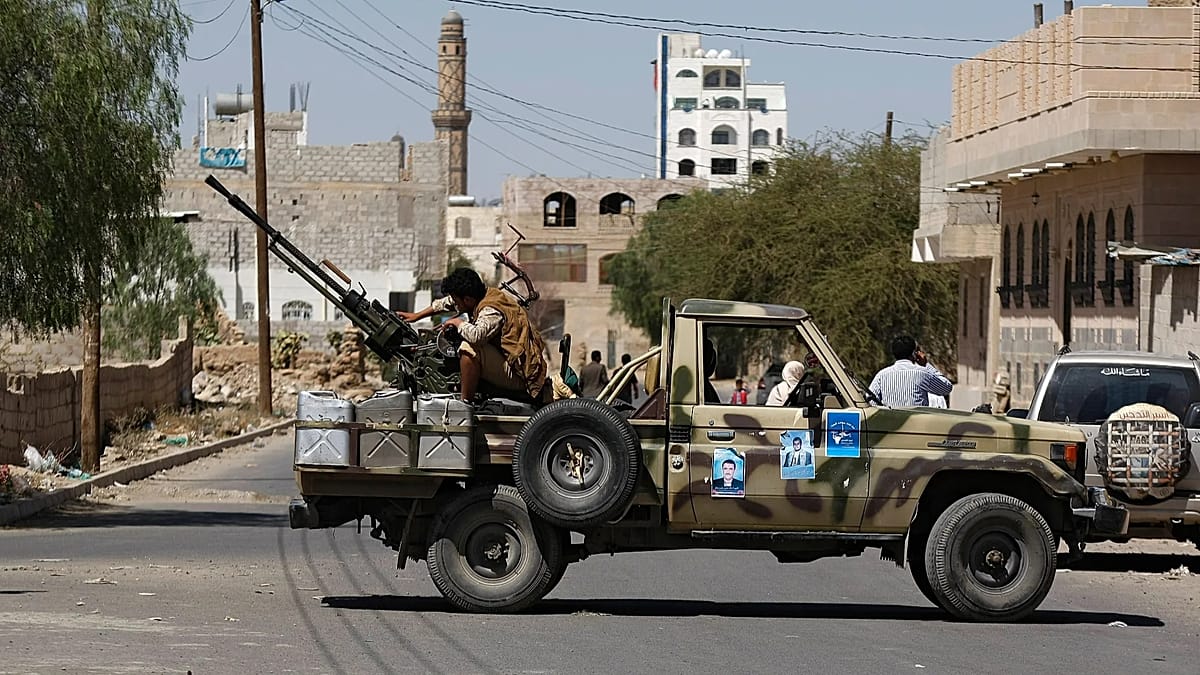
Saudi Arabia hit back with a series of strikes on Tuesday after the Iran-backed Houthis targeted oil facilities and other sites across the border in their heaviest attack in years. The rapid exchange of fire follows the unravelling of a four-year truce in July, months into the war between the United States and Iran. Saudi strikes hit Taiz province, where deadly fighting has raged for days, and Marib province, the Houthis' Almasirah TV station said.
There was no immediate comment from Riyadh. Overnight, Houthi attacks caused "temporary" shutdowns at oil sites and left 73 injured, authorities said. Saudi officials had vowed to respond.
The latest strikes add to a rapidly deteriorating situation in Yemen, where hundreds have died in recent days as the Houthis try to capture land at the mouth of the Red Sea from the forces of the internationally-recognised government. The Houthis, who control about one-third of Yemen's territory — albeit the most densely populated parts — are vying to seize the narrow Bab al-Mandeb strait, an increasingly important route for oil after Iran blockaded the Strait of Hormuz, slowing Gulf exports to a trickle. Houthi attacks on oil infrastructure and Saudi tankers have further contributed to a spike in oil prices, which leapt towards $100 a barrel on Tuesday.
The group accused Riyadh on Monday of an attack on a prison that killed 11 people and left 20 inmates missing, according to the Houthi-controlled Almasirah TV channel. The Houthis said they fired dozens of ballistic missiles, hitting Abha International Airport, King Khalid air base and facilities belonging to Saudi state oil giant Aramco in Abha and Jizan. An energy ministry source told the Saudi Press Agency that "several energy sector facilities and installations" in the south were targeted.
"The attacks caused fires at several locations, leading to a temporary halt in some operations" as well as several injuries, the source said. Jizan, on the Red Sea coast just north of Saudi's Yemen border, has one of the country's biggest oil refineries with a capacity of 400,000 barrels per day. According to maritime tracking company Kpler, it was out of action for several weeks until at least 20 August following earlier Houthi attacks.
Saudi Arabia's Foreign Minister Prince Faisal bin Farhan said the door to diplomacy was still open, but Riyadh was ready to defend itself. "The Kingdom will always support peace and diplomatic solutions," he said during a press conference in Moscow. "However, (Saudi Arabia) will not hesitate to defend itself, protect its interests, and support measures that secure the interests, security, and stability of brotherly Yemen." The Houthis triggered a return to hostilities in Yemen's civil war in July, when they let an Iranian plane land in defiance of Saudi control of Yemeni airspace.
Extract — continue reading at the source.