Some schoolchildren in Nepal have survived catastrophic floods by leaving their classrooms for lunch DHADING, Nepal -- In one of the areas worst hit by Wednesday’s catastrophic floods in Nepal, a group of schoolchildren managed to survive when they happened to leave their classroom for their lunch break. Children attending other classes at the school in Dhading also escaped because teachers told them to quickly evacuate their classrooms shortly before the waters came crashing in. The majority of the children at the school appeared to have survived the floods, the families said.
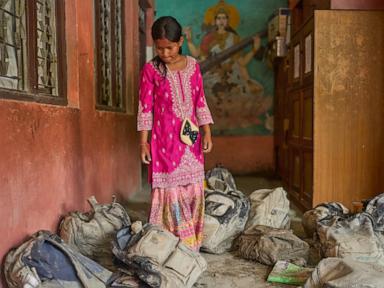
Thick brown and gray mud coated the surfaces of school benches, walls and notebooks while the school’s courtyard was filled with sediment. Lines on the walls showed how high the water rapidly rose. A pile of small mud-caked backpacks, some with colorful key chains, were on the benches and floors, waiting to be claimed.
Kopila Mizar, the mother of a student, was unable to find her son’s backpack, but remained positive. At least 69 schools in Nepal’s flood-devastated districts have been destroyed or damaged, putting education at risk for nearly 19,000 children, according to the nonprofit Save the Children. Those numbers are likely to rise as rescue teams reach more areas, they said.
The government ordered schools and universities to shut down for three days following torrential rains that triggered severe flash floods and landslides across parts of the country. University exams were also paused. With communities still receiving constant flood warnings advising them to move to higher, safer areas, it’s unclear when classes will be able to resume.
Nepal’s disaster agency said Sunday the death toll had climbed to 788 with 2,502 missing, while Chinese authorities reported 16 deaths and 546 missing on the Chinese side of the border. The missing include hundreds of people from over a dozen countries who were in the region to work, visit the mountains or make a pilgrimage to a sacred peak. On Sunday, Chinese state media said 261 foreigners were missing in Tibet, including over a hundred Nepalis and others from around the world. reporter Victoria Milko contributed to this report.
The ’ climate and environmental coverage receives financial support from multiple private foundations. AP is solely responsible for all content. Find AP’s standards for working with philanthropies, a list of supporters and funded coverage areas at AP.org. 24/7 coverage of breaking news and live events
Extract — continue reading at the source.