The headset goes on and I am transported from a central London meeting room to the centre circle of a match simulation. I have selected the role of holding midfielder. I grip a controller in each hand, thumb hovering over the pass button.
After a short countdown, a passage of build-up play begins at the feet of a virtual team-mate. My task is to receive the ball and choose the appropriate pass, all while every movement of my head, and every subsequent decision, is logged and analysed. The technology, created by Be Your Best, is designed to train scanning, those little glances from side to side made by players to gather information about their surroundings which can be used to inform their decisions when they receive the ball.
Mercifully, my first attempt is at 80 per cent speed, allowing me to find my bearings. I start slowly as I am tackled while dwelling on the ball but feel smugly satisfied as I am praised for a 'critical scan' before finding a team-mate with a pass through the lines. When the dial is turned up to 100 per cent, replicating the speed of a top-level game, I am given a reality check.
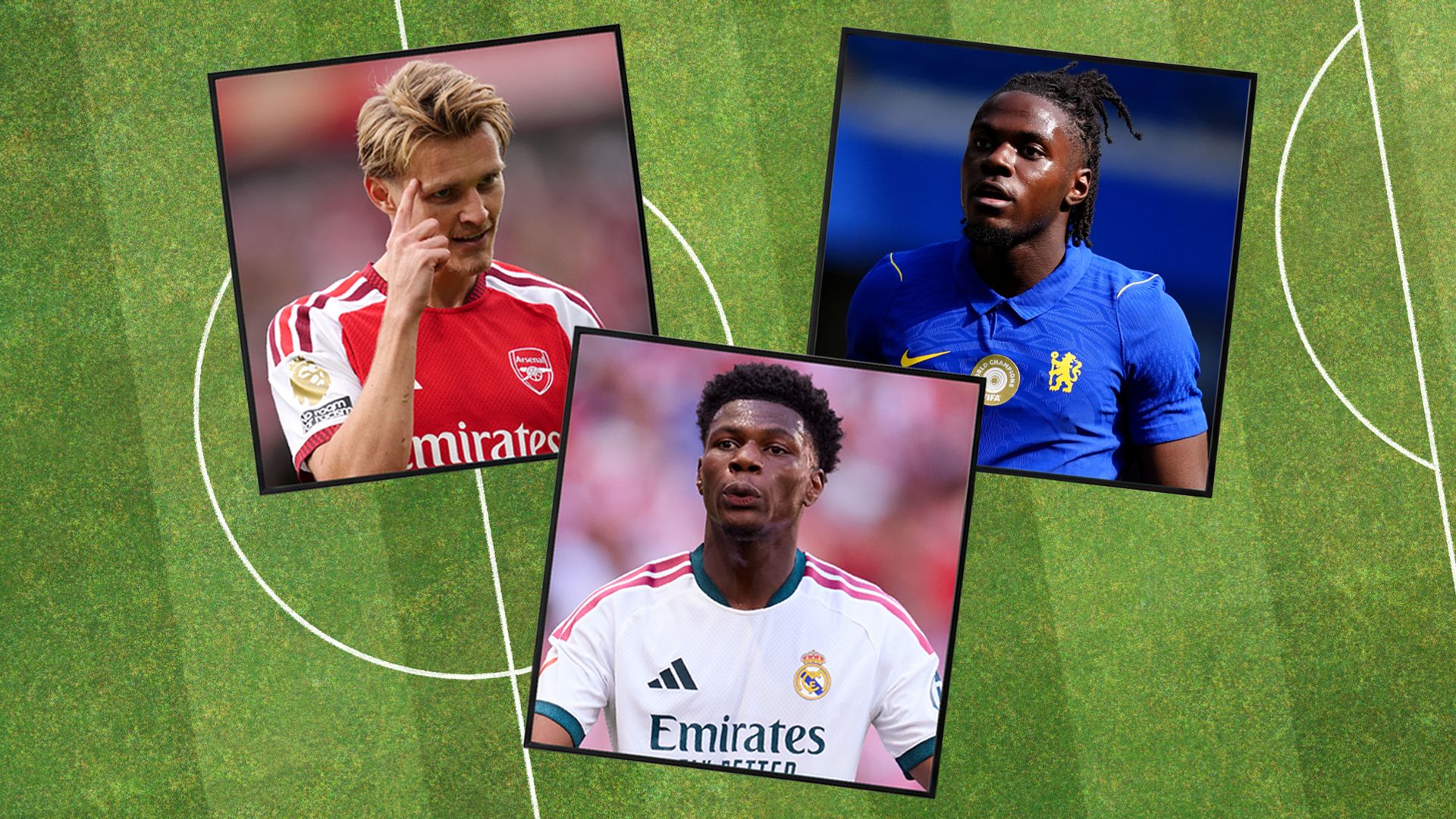
I think better of trying the 120 per cent setting incorporated after a request from Martin Odegaard when he used the headset for the first time. The Arsenal captain, renowned for his vision and speed of thought, is the type of player who fascinated Andreas Olsen, CEO of Be Your Best, when Olsen was an academy player at Viking FK in Norway. "It was mind-blowing to me how some players just seemed like they had eyes in the backs of their heads," he tells Sky Sports.
"When it came to that skill, I felt like I didn't have the vocabulary to understand or describe what it was. I just remember wishing I was as good as them at understanding where the opponent's pressure was coming from and where the next pass should go." Please use Chrome browser for a more accessible video player It was around the same time, in the late 1990s and early 2000s, that Norwegian professor Geir Jordet began studying what would come to be known as scanning. His research, focused on the period of 10 seconds before a player receives the ball, found that high scan rates were a defining feature of the world's best players.
"Those 10 seconds are critical," says Olsen. "It's all about making a decision before you get the ball. When you've already made that decision, you're not going to be surprised by what happens.
Extract — continue reading at the source.