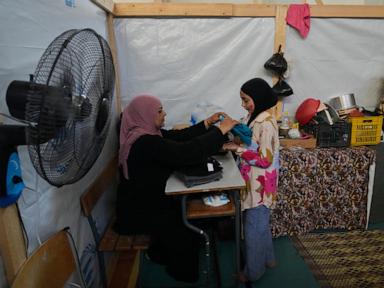
Families sheltering in a school in Lebanon's city of Tyre are some of the hundreds of thousands of people displaced by the latest conflict between Israel and Hezbollah TYRE, Lebanon -- Eleven-year-old Fatima Khashab helps her mother tidy the small area where their family sleeps, in a row of makeshift living quarters in a school gymnasium. About 200 families are sheltering in the school in Lebanon’s southern coastal city of Tyre. Most are from villages farther south that have been destroyed in the latest war between Israel and the Iran-backed Lebanese militant group Hezbollah or are occupied by Israeli forces, like Fatima’s hometown of Mansouri.
The school year will start on Sept. 15, but thousands of displaced people still shelter in public schools. With negotiations between Israel and Lebanon — and between the U.S. and Iran — stalled, there is no political solution in sight that would allow them to go home. Education officials say they have a plan to reopen the schools while maintaining shelters for families with nowhere to go.
Nobody except for God knows what’s going to happen," said Fatima’s mother, Randa al-Taki, 51. On top of that, she said, “Our children are deprived of school, and we don’t know if they are going to learn this year or not.” Lebanon has traditionally prided itself on its education system. Its economy relies on sending educated young people abroad to work.
They send remittances and make investments back home. Since 2019, Lebanon has been battered by an economic collapse, the COVID-19 pandemic, the 2020 Beirut port explosion and two wars. The current conflict has disrupted education for hundreds of thousands of children.
Nasser Yassin, the center’s director in Beirut and a former Lebanese government minister who was in charge of the crisis response during the 2024 war, said the government should have used other places for shelters whenever possible, not schools. The latest conflict between Israel and Hezbollah began on March 2, when the militant group fired rockets across the border two days after Israel and the U.S. launched a war on Iran. At the height of the war, some 1.2 million people were displaced in Lebanon.
Since late June, a shaky truce has allowed most to return home. In Beirut, the displacement crisis is no longer visible the way it was early in the war, when tents lined the seaside corniche and families slept in their cars along main thoroughfares. But the Israeli military still occupies large swaths of southern Lebanon and has said it won't withdraw before Hezbollah is fully disarmed, a prospect that appears unlikely.
Extract — continue reading at the source.