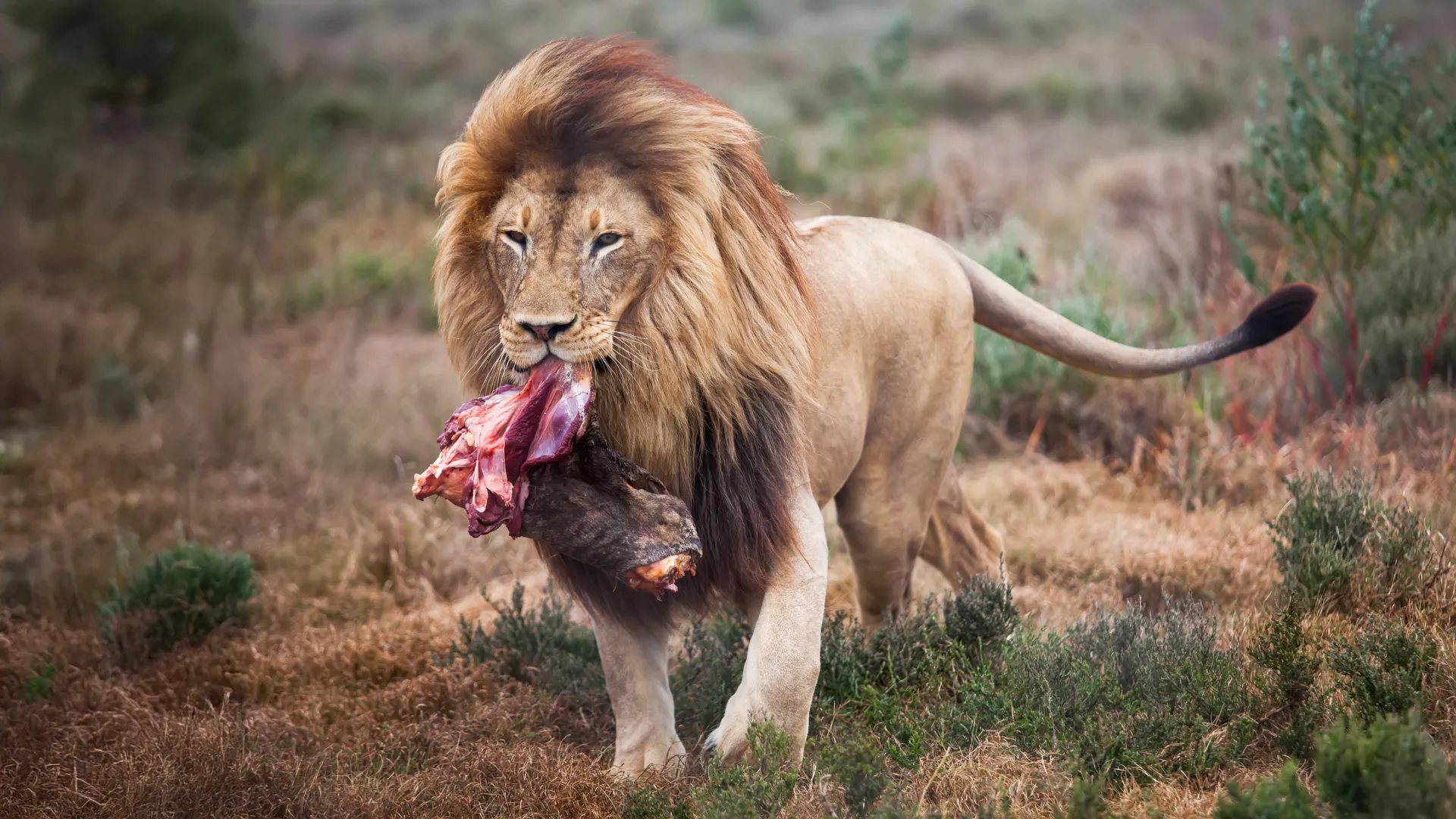
A new Australian study suggests that zoo lions behave more like their wild counterparts when they are given whole animal carcasses as part of a feast and fast feeding schedule. Published in Applied Animal Behaviour Science, the research was conducted by Adelaide University and Monarto Safari Park in South Australia. Scientists studied a group of adult male African lions after animal care staff added whole carcasses every nine days to an existing feeding routine designed around periods of eating and fasting.
Continuous video monitoring over three months showed that the lions spent much more time eating when carcasses were provided, rested for longer afterward, and gradually became more active as the fasting period continued. Together, these patterns more closely resembled the natural feeding cycles seen in wild lions. Lead author Lesia Hryhorenko from Adelaide University's School of Animal and Veterinary Sciences said the study provides new information about how feeding routines can shape the behavior of carnivores living in human care.
"Wild lions don't eat at the same time every day. They experience natural periods of feasting and fasting depending on hunting success," Hryhorenko said. "We wanted to understand how African lions in human care respond when feeding routines more closely resemble those natural patterns." The research team - which included visiting Belgium Masters student Florence Demoulin from the University of Liege - observed three adult male lions at Monarto Safari Park before and after whole carcasses were introduced.
During the experimental phase, the three lions received approximately 200 kilograms of carcasses. The food was left available for as long as three days, after which the lions entered a period of rest and digestion. Researchers used eight infrared cameras to record the animals continuously.
This produced one of the most detailed 24 hour datasets yet assembled for African lions in human care under a carcass feeding regime. The difference on carcass feeding days was substantial. The lions spent almost three times as long eating as they typically did.
They also fed more frequently and for longer stretches as they tore apart, pulled at, manipulated, and consumed the carcasses. These activities gave the animals more opportunities to perform the kinds of feeding behaviors that are part of life in the wild. Once the lions had finished feeding, they spent considerably more time lying down and resting.
Extract — continue reading at the source.


