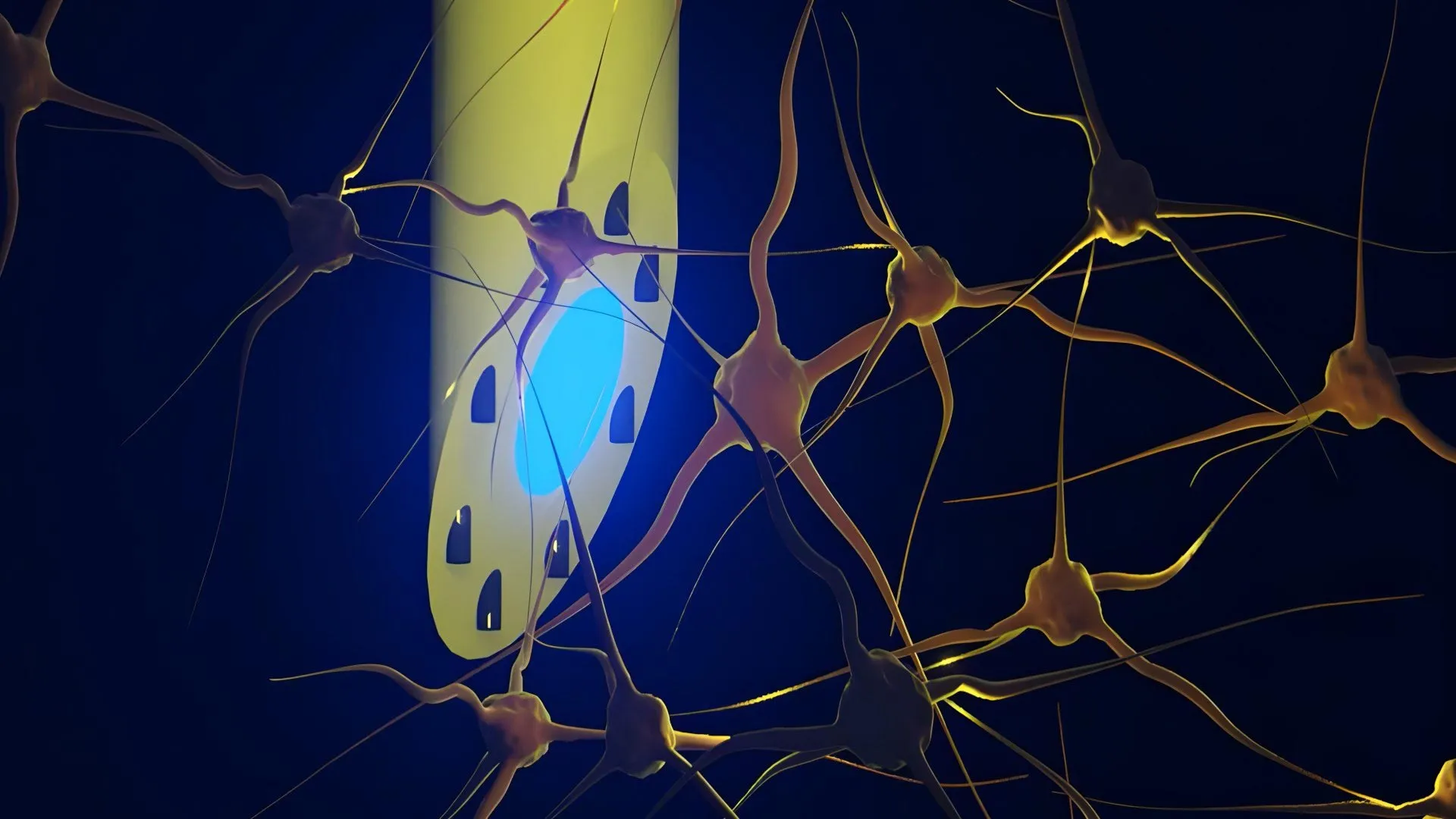
A new type of brain implant could give scientists a more precise way to study the brain and may eventually contribute to treatments for neurological conditions such as epilepsy. Researchers from DTU, the University of Copenhagen, University College London, and other institutions have developed a long, needle-thin brain electrode equipped with microscopic channels. Known as the microfluidic Axialtrode (mAxialtrode), the device is designed to provide multiple functional points along the length of the implant.
This allows researchers to record neural activity and deliver medication to specific locations across different parts of the brain. The findings were published in the journal Advanced Science. For now, the technology is primarily intended as a research tool.
Scientists could use it to investigate how signals travel through different layers of the brain during processes involving epilepsy, memory, and decision-making. Over the longer term, the researchers say the mAxialtrode could also have therapeutic applications. One possibility would be using the device to deliver drugs to precise locations while simultaneously applying electrical stimulation or light stimulation to selected areas of the brain.
Postdoc Kunyang Sui, who developed the mAxialtrode concept together with Associate Professor Christos Markos, says one of the main advantages is that several capabilities can be combined within a single implant. That could allow researchers to perform more precise experiments while reducing the need for multiple devices inserted into the brain. "Most current brain implants are based on hard materials such as silicon, which can irritate the brain and trigger inflammatory reactions in the tissue.
The new implant differs in that it is made of soft, plastic-like optical fibers and has a specially angled tip that makes it smaller and reduces the damage caused when it is placed in the brain," says Kunyang Sui. Sui cautions that the technology is still far from routine clinical use. Extensive testing, additional development, and regulatory approvals would be required before it could be used to treat patients.
Moving Beyond Conventional Optical Fibers Brain researchers currently use flat-ended optical fibers in many experiments. These thin fibers, made from glass or plastic, can carry light into deep regions of the brain. They are frequently used in optogenetics, a technique in which specific nerve cells are activated using light.
Extract — continue reading at the source.


