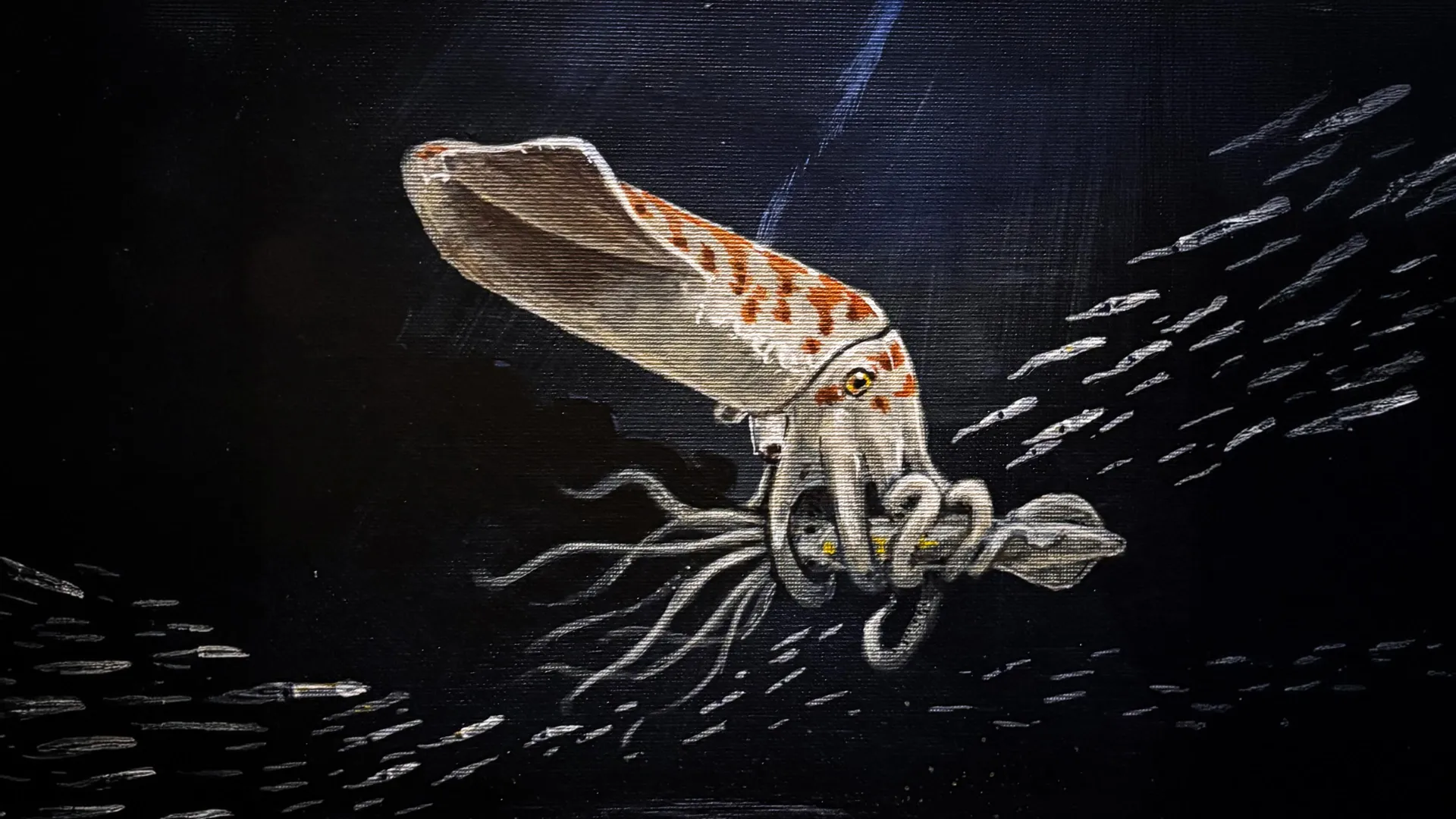
Two extraordinarily rare fossils found in Wyoming have revealed a strange new species of squid relative that lived approximately 160 million years ago, during the Jurassic Period. Named Wyoteuthis linsterorum, the prehistoric creature belonged to an extinct group of marine animals known as belemnites, which were related to modern squid and octopuses. What makes this species particularly remarkable is its unusually thick, barrel-shaped internal skeleton, earning it the distinction of being the "chunkiest" or "fattest" belemnite ever identified.
An international research team from the United States, United Kingdom, and New Zealand, including Dr. Dean Lomax, an Honorary Research Fellow at The University of Manchester, detailed the discovery in the scientific journal Papers in Palaeontology. An Unusually Thick Jurassic Squid Relative Belemnites are among the most frequently discovered fossils in the world.
They are best known for their distinctive, bullet-shaped internal skeletal structures, called rostra or guards, which are often the only parts of the animals that survive in the fossil record. Wyoming's Sundance Formation, which preserves evidence of an ancient inland sea that once stretched across much of the western United States, has yielded millions of these fossils. According to Wyoming paleontologist and study coauthor Jessica Lippincott, they are commonly nicknamed "squid butts" in the region.
Most belemnite fossils from Wyoming have a narrow, bullet-shaped appearance, typically measuring between 5 and 10 centimeters in length and just 1 to 2 centimeters across. The newly identified species is dramatically different. Its rostrum measures approximately 10 centimeters long but reaches an extraordinary 6 centimeters in width, making it the thickest known example of its kind.
Scientists estimate that the living animal, including its arms, could have reached a total length of approximately 60 centimeters, or about two feet. Rare Fossils Reveal a Surprising Evolutionary Secret Wyoming paleontologist Bill Wahl, who has devoted much of his career to searching for fossils across the state, recognized that the unusual specimen deserved closer examination. He said the belemnite "stuck out like a sore thumb" compared with the countless others found in the region.
Wahl assembled an international team to investigate the fossils, bringing in specialists including belemnite expert Alexey Ippolitov, a PhD student now based at Victoria University of Wellington in New Zealand. The researchers used computed tomography (CT) scanning to investigate the fossils' internal structures without damaging the specimens. These detailed scans revealed an unexpected connection to an ancient belemnite family that scientists had believed disappeared millions of years before this animal lived.
Extract — continue reading at the source.


