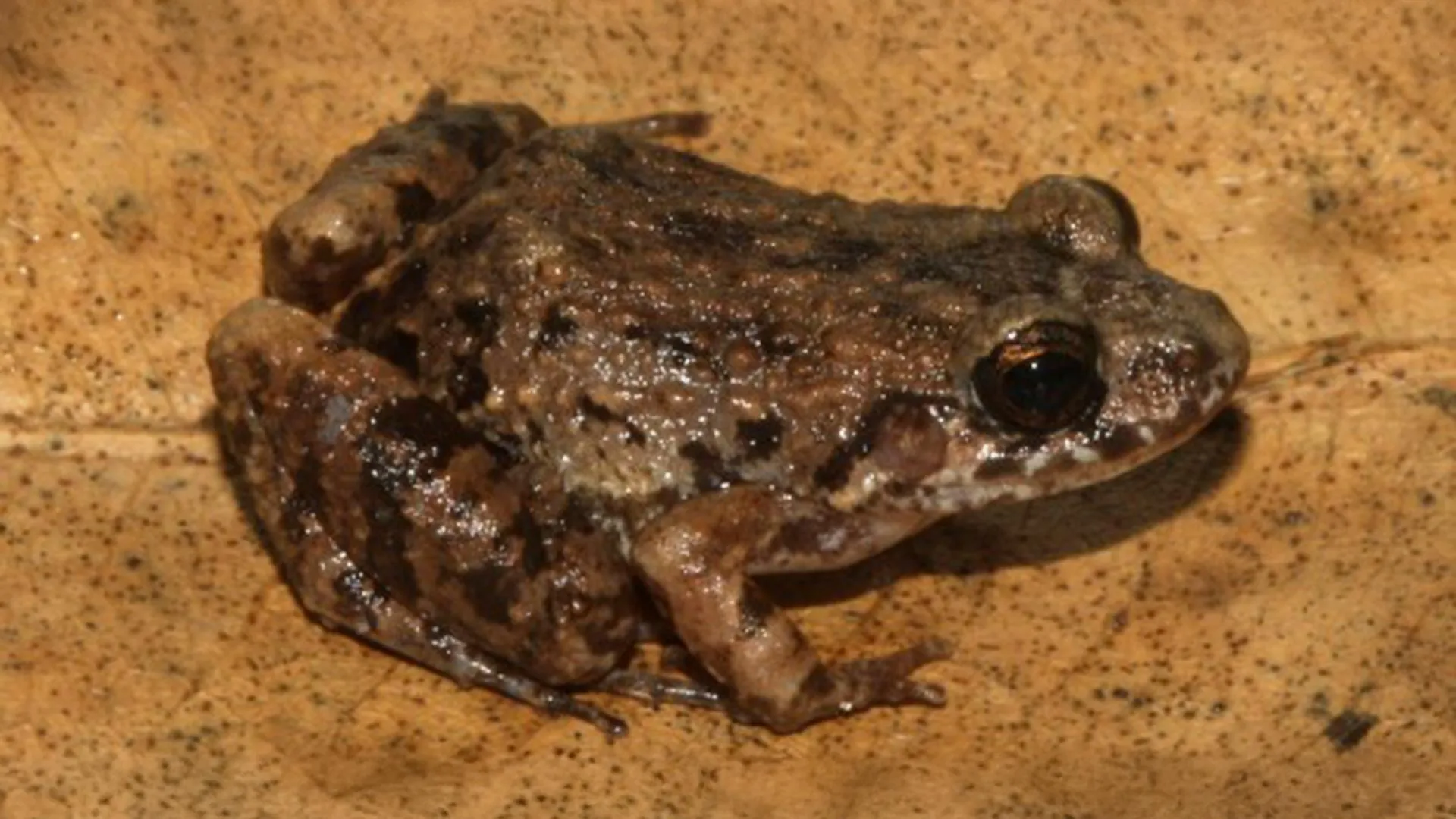
Scientists have identified a previously unknown frog species living in the seasonally flooded forests of the western Amazon. Named Adenomera varcena, the species adds to growing evidence that Amazonian biodiversity is even richer than it appears. The discovery also highlights the importance of cryptic diversity, in which animals that look nearly identical can actually belong to separate species.
Researchers distinguished the new frog by combining several lines of evidence, including its DNA and distinctive call. The findings were published in the journal Ichthyology & Herpetology. The research team includes Célio F.
Haddad, a professor at São Paulo State University (UNESP), and Thiago R. Carvalho, a professor at the Federal University of Minas Gerais (UFMG). Both are part of the Center for Research on Biodiversity Dynamics and Climate Change (CBioClima), a Research, Innovation, and Dissemination Center (RIDC) funded by FAPESP.
The discovery grew out of field expeditions in the Upper Juruá River region of western Acre. Scientists surveyed forest fragments near the Moa and Crôa rivers, close to Cruzeiro do Sul. Confirming that the frog represented a new species required far more than simply examining its appearance.
The team compared DNA data, recordings of its calls, body shape (morphology), habitat information, and specimens preserved in scientific collections. The name varcena refers specifically to Amazonian floodplain forests, ecosystems that are submerged during certain parts of the year. That is the environment where the newly described frog was found.
Its habitat is particularly notable because members of the genus Adenomera are generally associated with dryland forests. Finding Adenomera varcena in seasonally flooded forest therefore reveals a previously unknown habitat association for the genus. DNA and a Distinctive Call Reveal Its Identity Although Adenomera varcena closely resembles related frogs, researchers found physical and acoustic features that set it apart.
Extract — continue reading at the source.


