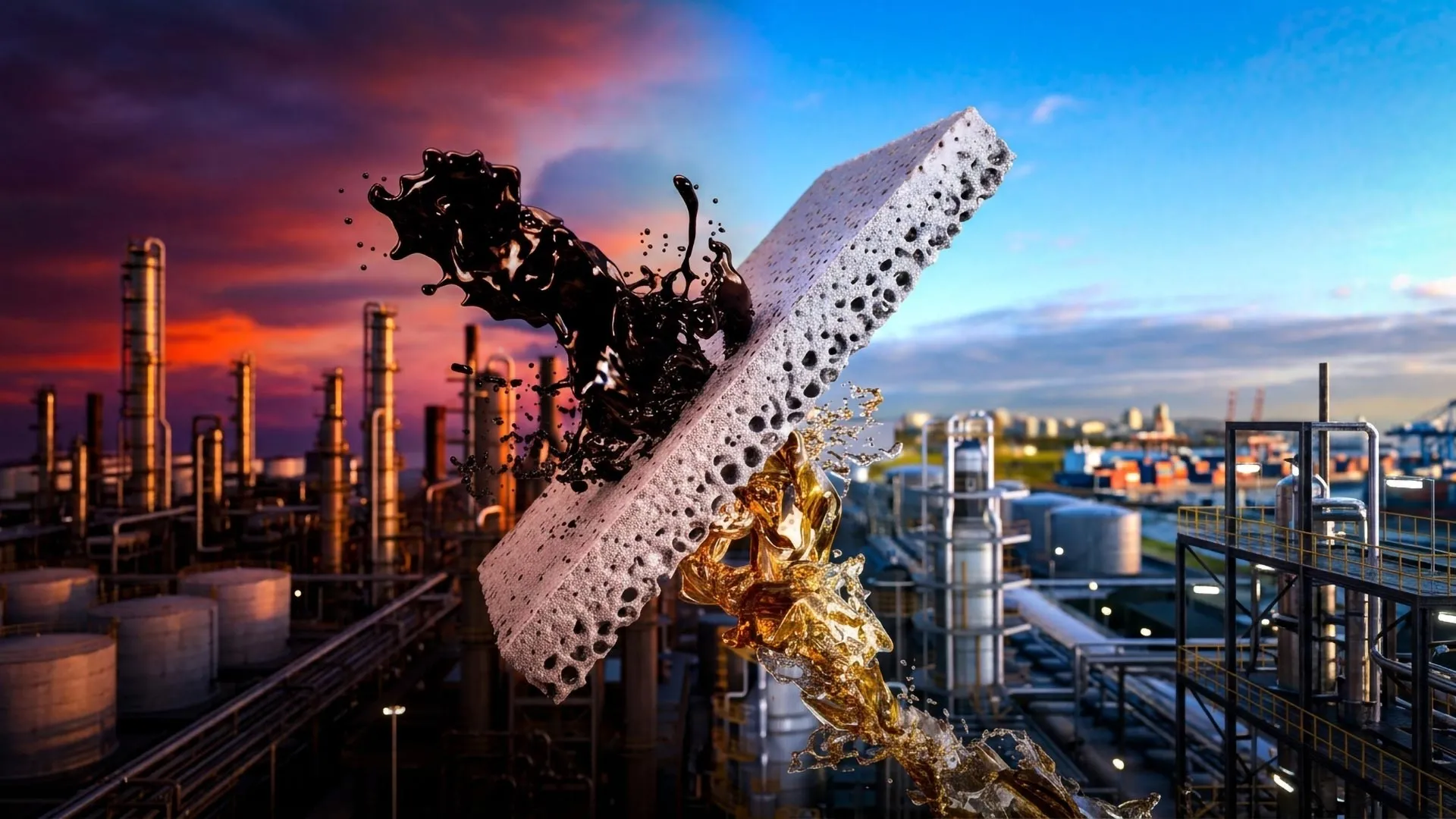
Researchers have developed a surprisingly simple way to separate crude oil without heating it, potentially transforming one of the world's most energy-intensive industrial processes. The breakthrough uses an inexpensive membrane that could significantly reduce the energy required for oil refining while lowering operating costs and carbon emissions. The international research effort was led by Professor Dong-Yeun Koh at the Korea Advanced Institute of Science and Technology, known as KAIST, in collaboration with Professor Ryan Lively's research group at Georgia Tech.
KAIST(President Kwang Hyung Lee) announced that the team had successfully demonstrated a membrane capable of separating crude oil at room temperature. The findings were published in Nature, one of the world's leading scientific journals. Crude oil is essential for far more than gasoline and other transportation fuels.
It also supplies the raw materials used to manufacture plastics, packaging, clothing, and numerous everyday products. Because refining costs affect the prices of these materials, making the process more efficient could have widespread economic and environmental benefits. Why Traditional Crude Oil Refining Requires So Much Energy For more than a century, oil refineries have relied heavily on distillation to separate crude oil into useful components.
The process involves heating oil to temperatures above 350 °C, turning portions of it into vapor, and then cooling those vapors to collect different fractions. This approach requires an enormous amount of energy. Worldwide, crude oil distillation consumes approximately 1,100 terawatt-hours (TWh) annually.
That is comparable to the combined yearly electricity production of roughly 130 continuously operating nuclear power plants, each with a capacity of about one gigawatt. The massive energy demand makes distillation a major contributor to both fuel consumption and greenhouse gas emissions within the refining industry. Meanwhile, growing economic pressures across global petrochemical markets have increased interest in technologies that can separate oil more efficiently.
Membranes have emerged as a promising alternative because they can separate substances without requiring the extreme temperatures used in conventional distillation. However, previous designs have faced significant obstacles. Traditionally, researchers have assumed that effective molecular separation requires a membrane covered with an extremely thin, specialized coating.
Extract — continue reading at the source.


