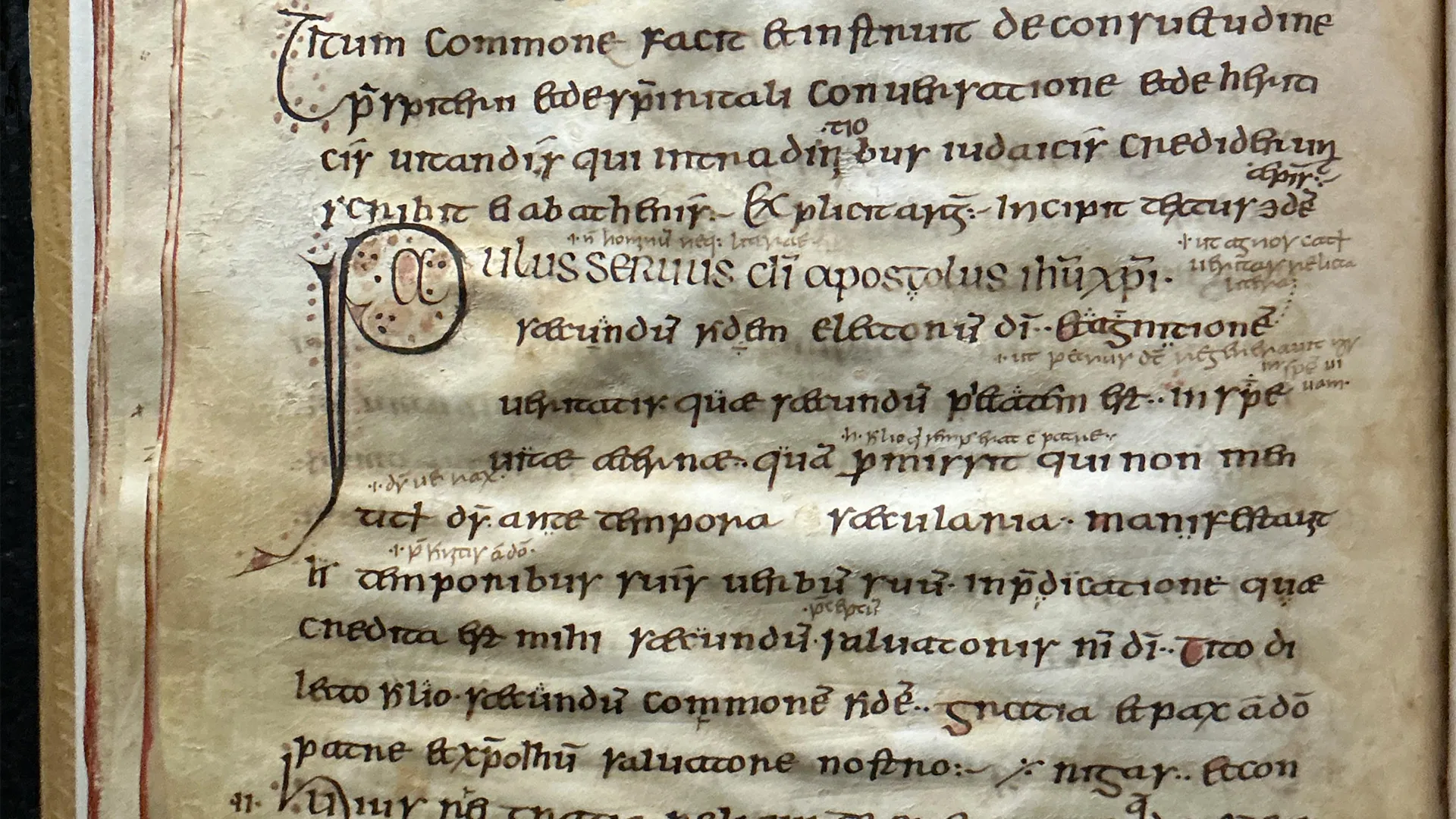
Some of Europe's most famous medieval manuscripts, including the York Gospels, have revealed an extraordinary secret hidden in their pages. Scientists have discovered ancient viral DNA preserved in the animal skins used to make parchment, opening a new window into the 3,500-year history of sheeppox virus (SPPV). The discovery was made by an international research team led by University College Dublin (UCD).
By analyzing parchment from centuries-old documents, the researchers uncovered the first genetic evidence that this destructive disease was spreading through European sheep flocks long before modern times. Sheeppox is highly contagious and can spread through a flock with alarming speed. It can kill large numbers of infected animals, particularly young sheep, while also causing major economic losses by reducing wool, meat, and milk production.
Ancient Manuscripts Preserve the DNA of Deadly Viruses Published in Science Advances, the new study reconstructs more than 3,500 years of sheeppox virus evolution. Researchers identified viral DNA in several historically important medieval manuscripts, revealing that documents preserved for their cultural significance can also contain valuable biological evidence. Among the manuscripts examined was the 1,000-year-old York Gospels, considered one of the finest surviving illuminated manuscripts from the early Anglo-Saxon period.
The researchers also studied older works, including the Corpus Glossary at Corpus Christi College Cambridge, one of the earliest English dictionaries, along with other medieval manuscripts from Britain and continental Europe. The secret lies in the parchment itself. Before paper became widely available, manuscripts were often produced using carefully prepared animal hides, including skins from sheep, goats, and cattle.
These materials can preserve traces of an animal's biological history, including evidence of infections present when it died. In several manuscripts, the researchers detected sheeppox virus DNA on multiple pages. These findings indicate that infected animals had supplied some of the skins used to produce the documents.
An especially surprising discovery involved viral DNA found on parchment made from calfskin and goatskin. Because sheeppox primarily infects sheep, the results raise two possibilities: the virus may occasionally have infected other livestock species, or viral material may have contaminated the skins during parchment production. Historic Books Become Unexpected Disease Archives "The recording of ancient DNA of pathogens has completely changed our understanding of infectious disease in the past, and here we show that parchment can also preserve animal pathogen DNA.
Extract — continue reading at the source.


