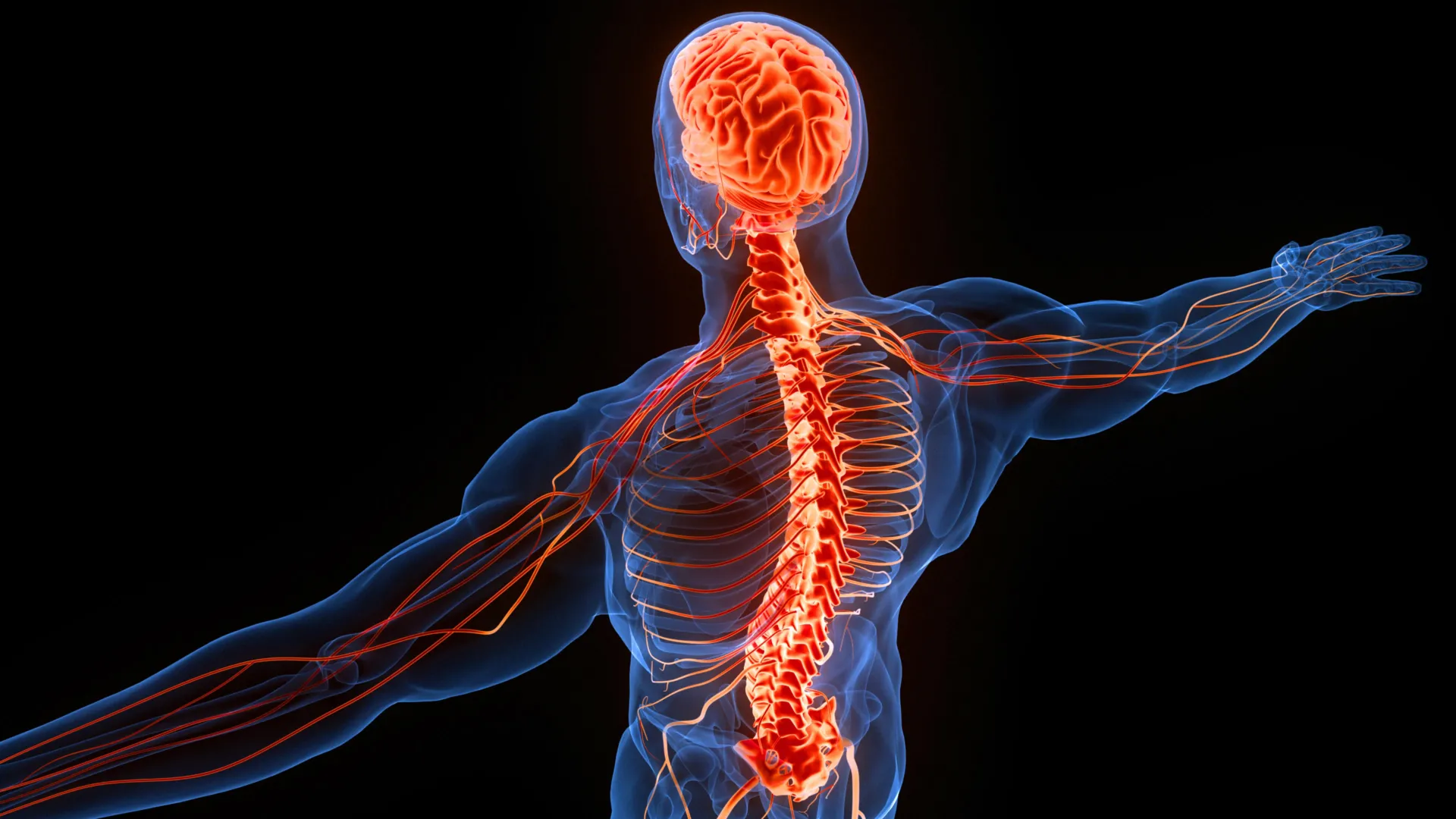
Why does the left side of the brain control the right side of the body, while the right side controls the left? This unusual arrangement is one of the most intriguing features of the nervous system, and scientists have proposed a new explanation that reaches back hundreds of millions of years. Martin Wessendorf, a neuroscientist and associate professor emeritus at the University of Minnesota, studies how the brainstem regulates neurons in the spinal cord.
Daniel Wang specializes in cognitive neuroscience and neurodegenerative diseases. Together, they have examined the evolutionary origins of the brain's crossed connections. In a study published in Frontiers in Neuroanatomy, the researchers explore several neural circuits in four-limbed animals that are cross-wired (meaning one side of the brain connects with the opposite side of the body).
Their hypothesis suggests that these connections may have developed because evolution built new brain circuits around an ancient visual system. The brain contains numerous pathways that cross from one side of the central nervous system to the other. Understanding why these contralateral (midline-crossing) connections exist requires examining how different sensory and movement circuits developed over evolutionary time.
How the Brain Processes Visual Information One possible explanation begins with the eyes. When light passes through the eye's lens, the image projected onto the retina is reversed. Objects appearing to our right are projected onto the left side of the retina, while objects on our left are projected onto the right.
Visual information travels along the optic nerve to a structure called the optic chiasm. Here, nerve fibers are organized so that information from the right visual field reaches the left side of the brain, while information from the left visual field is directed to the right side. Some of these signals reach an ancient brain structure called the optic tectum (which in mammals is called the superior colliculus).
Located in the midbrain, this region helps produce fast reactions to visual events, such as suddenly noticing something moving nearby. Each side of the optic tectum contains a representation of the opposite visual field. Deeper within the structure, information about physical sensations (somatosensory information) is also organized into corresponding maps.
Extract — continue reading at the source.