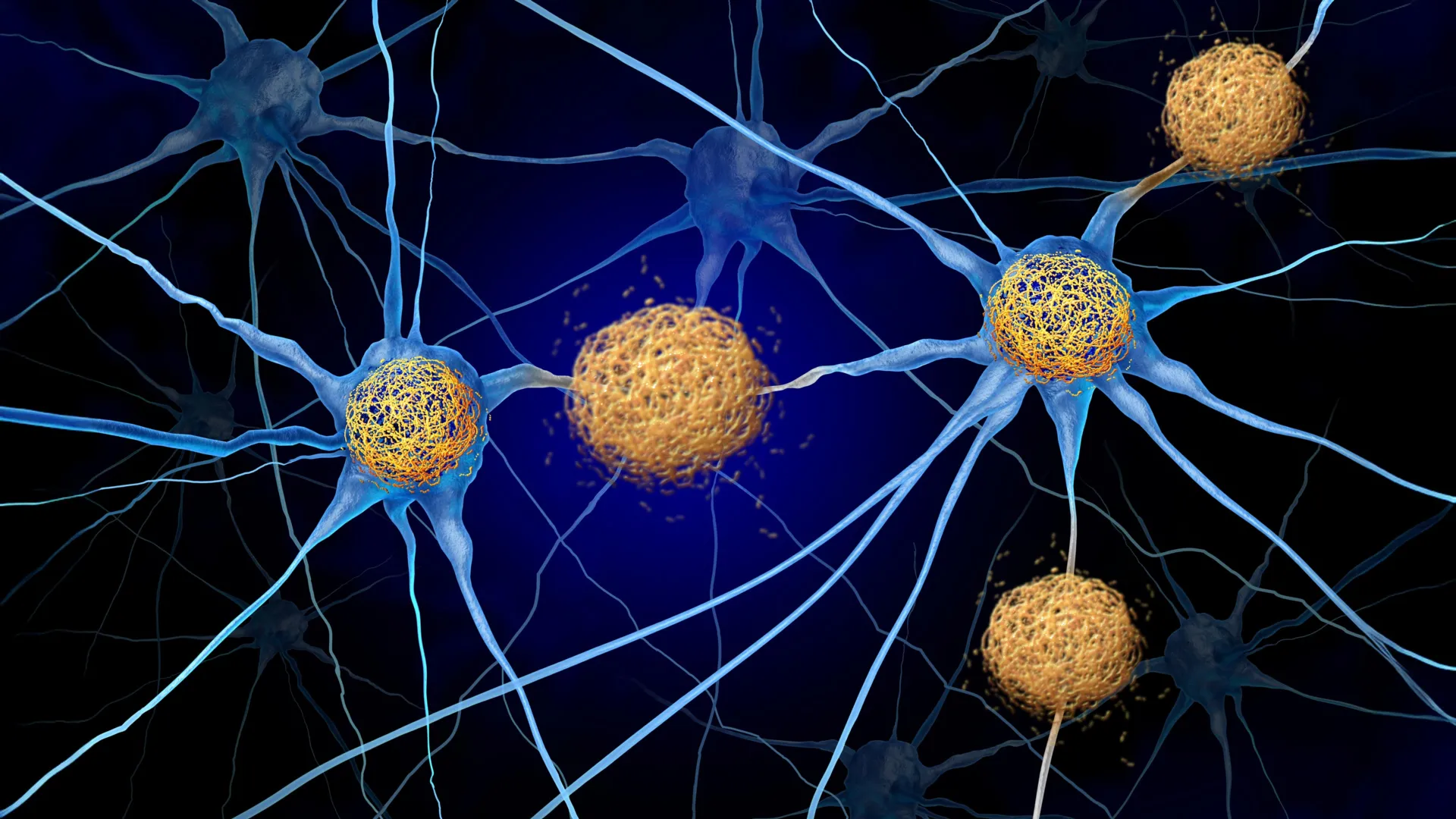
For decades, researchers have invested billions of dollars in Alzheimer's treatments designed to target amyloid beta, a peptide that forms harmful deposits in the brain. But a biochemist at the University of California, Santa Cruz, believes scientists may have overlooked another potential contributor to the disease: a smaller, closely related peptide that was long considered harmless. In a new commentary published in ChemBioChem, UC Santa Cruz professor Jevgenij Raskatov highlights research suggesting that this lesser-known peptide, called P3, can form microscopic clumps and threadlike structures known as fibrils.
Evidence also suggests that P3 may interact with amyloid beta (Aβ), potentially influencing how it accumulates in the brain and how toxic it becomes. These findings raise the possibility that P3 contributes to the nerve cell damage associated with Alzheimer's disease. "The P3 peptide is, most likely, not the innocent bystander it was commonly thought to be.
There's still more research to be done. But this could turn Alzheimer's research on its head," said Raskatov, whose laboratory investigates amyloid peptides in hopes of identifying ways to prevent their harmful effects and develop better Alzheimer's treatments. "P3 is a distinct aggregating peptide that is itself potentially neurotoxic and may be contributing to Alzheimer's disease." Why Alzheimer's Treatments Have Had Limited Success Alzheimer's is the most widespread neurodegenerative disease, affecting approximately 35 million people worldwide and generating annual costs exceeding $800 billion.
The number of people living with the condition is expected to double by 2050. Despite decades of intensive research, developing effective treatments has proved extraordinarily difficult. More than 400 clinical trials have investigated potential Alzheimer's drugs, with most focusing on amyloid beta.
Many of these efforts have failed, while others have produced only modest benefits. Some treatments have also been associated with serious complications, including brain hemorrhages and strokes. Amyloid beta originates from a much larger protein embedded in cell membranes called the Amyloid Precursor Protein (APP).
Two enzymes, β-secretase and γ-secretase, cut this protein in sequence, releasing amyloid beta peptides of different lengths. Researchers have concentrated particularly on two versions, Aβ40 and Aβ42, which contain 40 and 42 amino acids, respectively. Aβ42 has attracted the greatest attention because it is especially prone to sticking together and forming toxic aggregates.
Extract — continue reading at the source.


