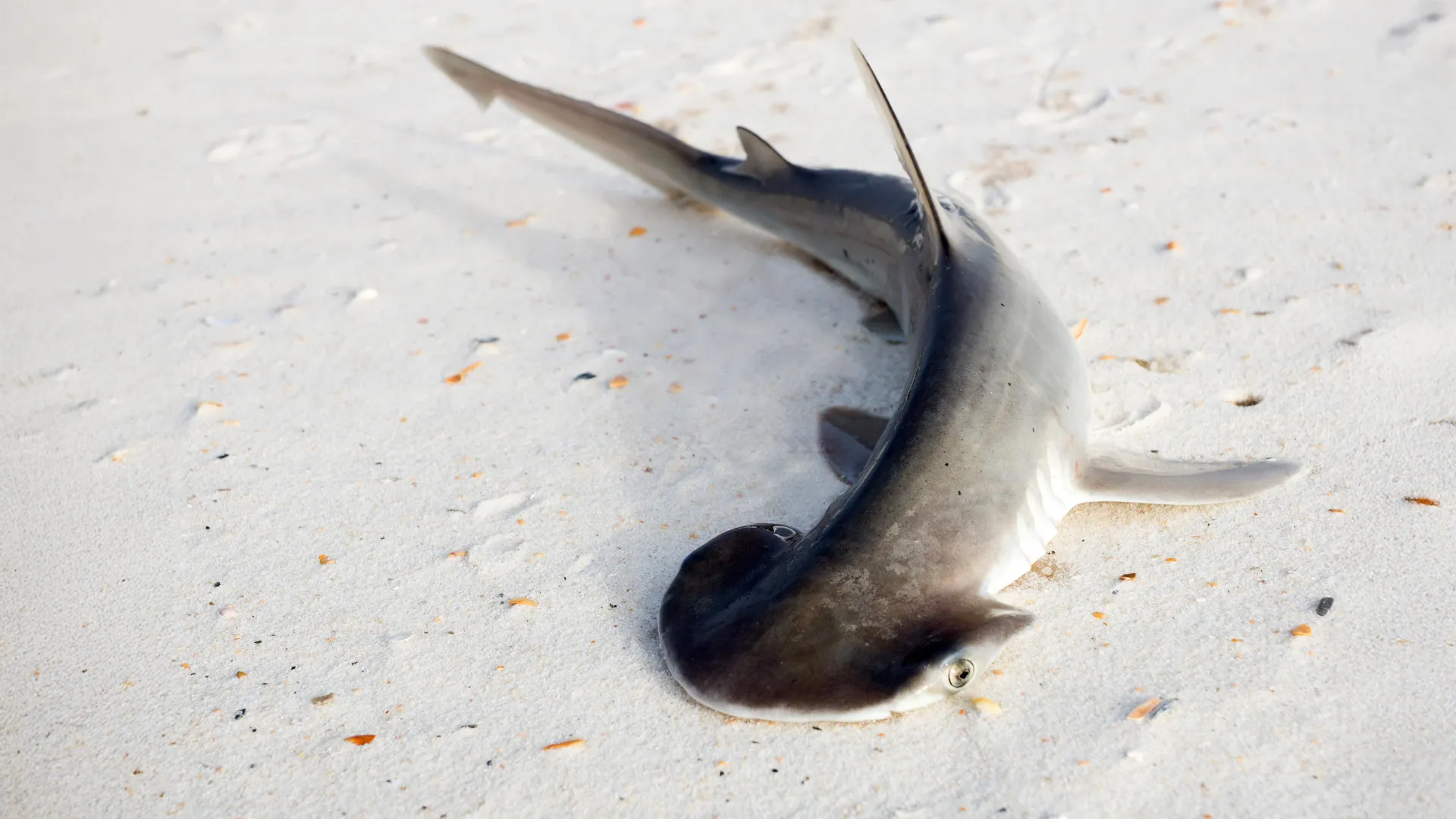
A new study of bonnethead sharks (Sphyrna tiburo) in Florida is challenging a previous explanation for how males and females develop their distinctively different head shapes. Researchers from the University of Miami Rosenstiel School of Marine, Atmospheric, and Earth Science and collaborating institutions found that the sharks' shovel shaped heads become more rounded as both males and females grow older, with the change especially pronounced in females. Earlier research had suggested that males developed their more pointed snouts when they reached sexual maturity.
The research is the first detailed investigation of both head shape and diet in bonnethead sharks from Biscayne Bay. Scientists also included sharks from Tampa Bay to see whether the same developmental patterns appeared in populations living on opposite sides of Florida. Bonnetheads are small relatives of hammerhead sharks and are the only shark species known to show clear sex based differences in head shape.
Males usually have a more noticeable point along the front edge of the head, while females tend to have a smoother and more rounded outline. Scientists describe this type of physical difference between males and females as sexual dimorphism. "Our findings show that the pointed head shape is not a feature that develops in males when they reach maturity," said Kathy Liu, lead author of the study, which she conducted while earning her master's degree at the Rosenstiel School.
"Younger males and females both had more pointed heads, but the head became rounder as the sharks matured. That change was much greater in females." The researchers also tested whether males and females might develop different head shapes because they eat different foods or forage in different ways. Their results showed that bonnetheads in Biscayne Bay and Tampa Bay occupied distinct food webs and experienced dietary changes as they grew.
However, males and females living within the same bay depended on many of the same local food sources. "Our findings provided no evidence that differences in diet or foraging were driving the development of the sharks' sex-specific head shapes," said Liu. "This study helps narrow the drivers of a biological trait that has puzzled scientists," said Catherine Macdonald, a co-author of the study and an associate professor in the Department of Environmental Science and Policy and the director of the Shark Research and Conservation Program at the Rosenstiel School.
"By examining body shape and diet in the same animals, we were able to assess whether diet and morphological changes co-occur. Our results suggest there is another cause behind the differences in head shape between male and female bonnetheads." Between May 2022 and May 2023, the team sampled 105 bonnethead sharks in Biscayne Bay and another 39 in the Tampa Bay region. Scientists used research longlines to capture sharks in Biscayne Bay, while sharks in Tampa Bay were collected primarily with scientific gillnets.
Extract — continue reading at the source.