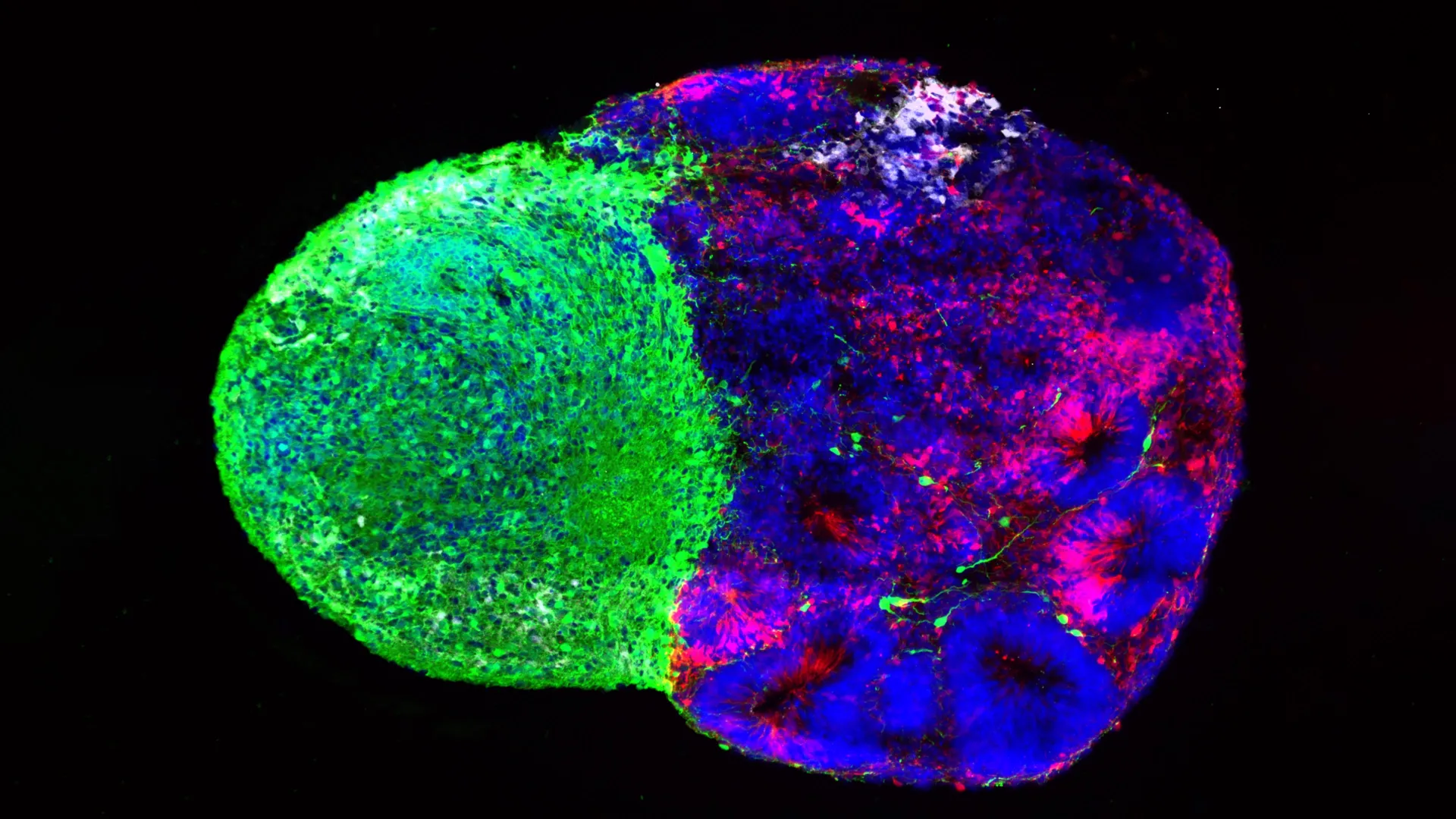
Before birth, the human brain is assembled through an enormous series of cellular choices. At the center of this process are radial glia, a special type of stem cell that helps create many of the features that distinguish the human brain. These cells produce large numbers of the neurons and support cells that make up the cerebral cortex, the brain region involved in thought, memory, and language.
Radial glia are also believed to contribute to the unusually large expansion of the human cortex compared with that of other species. Although most disappear before birth, similar cells can later appear again in brain cancers for reasons scientists still do not fully understand. "Radial glia are the coolest cells that have ever existed," said Aparna Bhaduri, an assistant professor of biological chemistry at the David Geffen School of Medicine at UCLA.
"They're really key to making us human. But they're also at the center of many neurodevelopmental and neuropsychiatric disorders, as well as cancer -- so understanding how they make their decisions is one way to start understanding how those conditions arise." Two new studies published in Cell and Science now provide a closer look at how radial glia make those developmental choices. Bhaduri and her colleagues found that the cells respond to two very different kinds of information: the way they process nutrients and direct physical signals from another part of the developing brain.
Together, these findings offer new insight into how the human cortex produces its remarkable variety of cell types. Metabolism helps direct brain stem cells In the Cell study, researchers built a detailed map of metabolism in the developing human cortex. The project was a collaboration between Bhaduri's lab and Heather Christofk's lab and was led by co-first authors Jessenya Mil and Jose Soto.
To create the atlas, the team analyzed donated human tissue along with brain organoids grown from stem cells. Their results pointed to an unexpected conclusion: metabolism does not simply support brain development in the background. It can actively influence which kinds of cells are produced.
The researchers found that radial glia depend heavily on the pentose phosphate pathway, a metabolic process that uses glucose to make materials needed by cells that are dividing rapidly. When the scientists lowered the amount of available glucose or interfered with this pathway, the stem cells changed what they produced. They began generating more inhibitory neurons and other cell types that normally appear later in development.
Extract — continue reading at the source.


