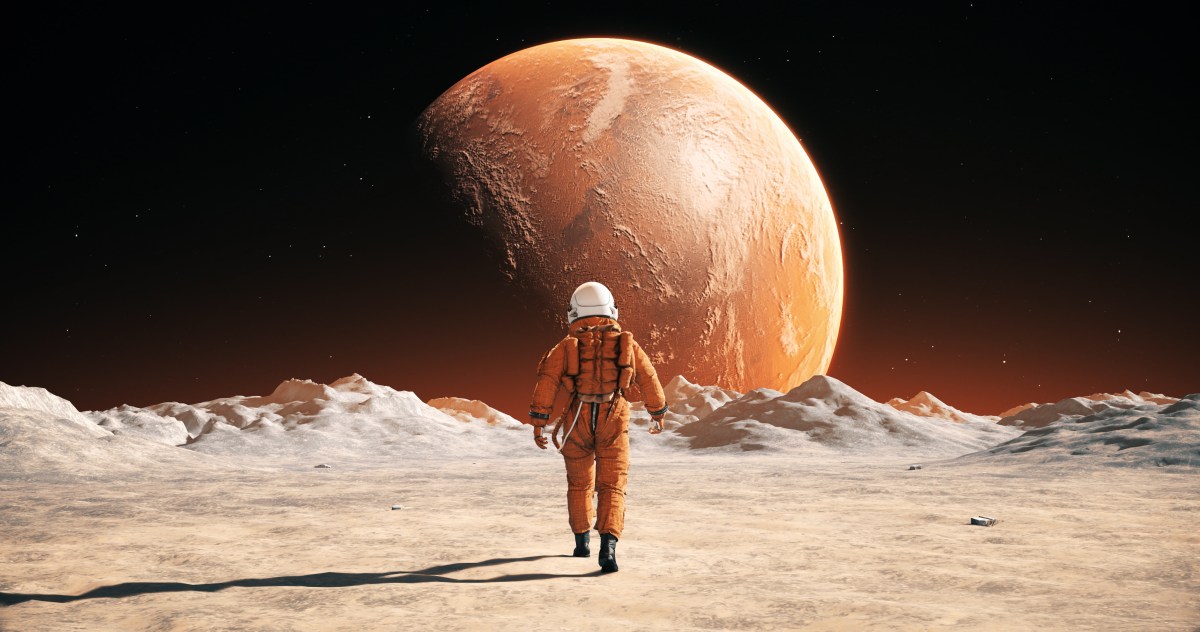
Ambitious visions of sprawling cities on the moon could face a fundamental obstacle—water. A new study published in Frontiers in Space Technologies suggests that while there may be enough water ice on the moon to support a small settlement for centuries, the available supply is unlikely to sustain a city of hundreds of thousands or millions of people over the long term. The findings come as interest in permanent lunar habitation continues to grow.
Earlier this year, NASA unveiled its phased strategy for establishing a sustained human presence on the Moon by 2032. The discovery of water trapped in permanently shadowed craters near the lunar poles has fueled hopes of creating lunar bases and eventually larger settlements. George Sowers, a professor in the Space Resources Program at the Colorado School of Mines who previously served on the NASA Advisory Council's Human Exploration and Operations Committee, told Newsweek that “developing water ice is probably one of the very first economically viable uses of moon resources.” According to the recent study, energy generation may not be the main barrier to long-term habitation.
Elvis said the rims of polar craters receive nearly constant sunlight, making them ideal locations for large solar power installations. He noted that kilometer-high (around 3,281 feet) towers covered with photovoltaic arrays could potentially generate around three gigawatts of electricity. Because the Moon contains abundant silicon, solar panels could eventually be manufactured locally, creating opportunities for industries ranging from fuel production to AI data centers.
Water availability, however, presents a far greater challenge. Researchers examined whether the estimated water reserves trapped within permanently shadowed regions near the lunar poles could support large populations. They found that roughly one billion tons of water, a generous upper-end estimate, would still be insufficient to sustain a city of one million people using current International Space Station (ISS)-level recycling technology for more than about a century.
The importance of water extends well beyond drinking supplies. Sowers explained that lunar water ice is preserved inside permanently shadowed polar craters that never receive sunlight. Because the moon has almost no axial tilt, sunlight remains close to the horizon at the poles, allowing crater bottoms to remain in darkness for billions of years.
Water exposed to sunlight on the Moon is unstable and “the water will just boil or sublimate immediately” due to the vacuum environment, Sowers told Newsweek. He said water will likely become the moon's most valuable early resource because it can be split into hydrogen and oxygen through electrolysis and used as rocket fuel. Elvis said the outlook becomes even more challenging when considering current estimates for lunar water reserves.
Extract — continue reading at the source.