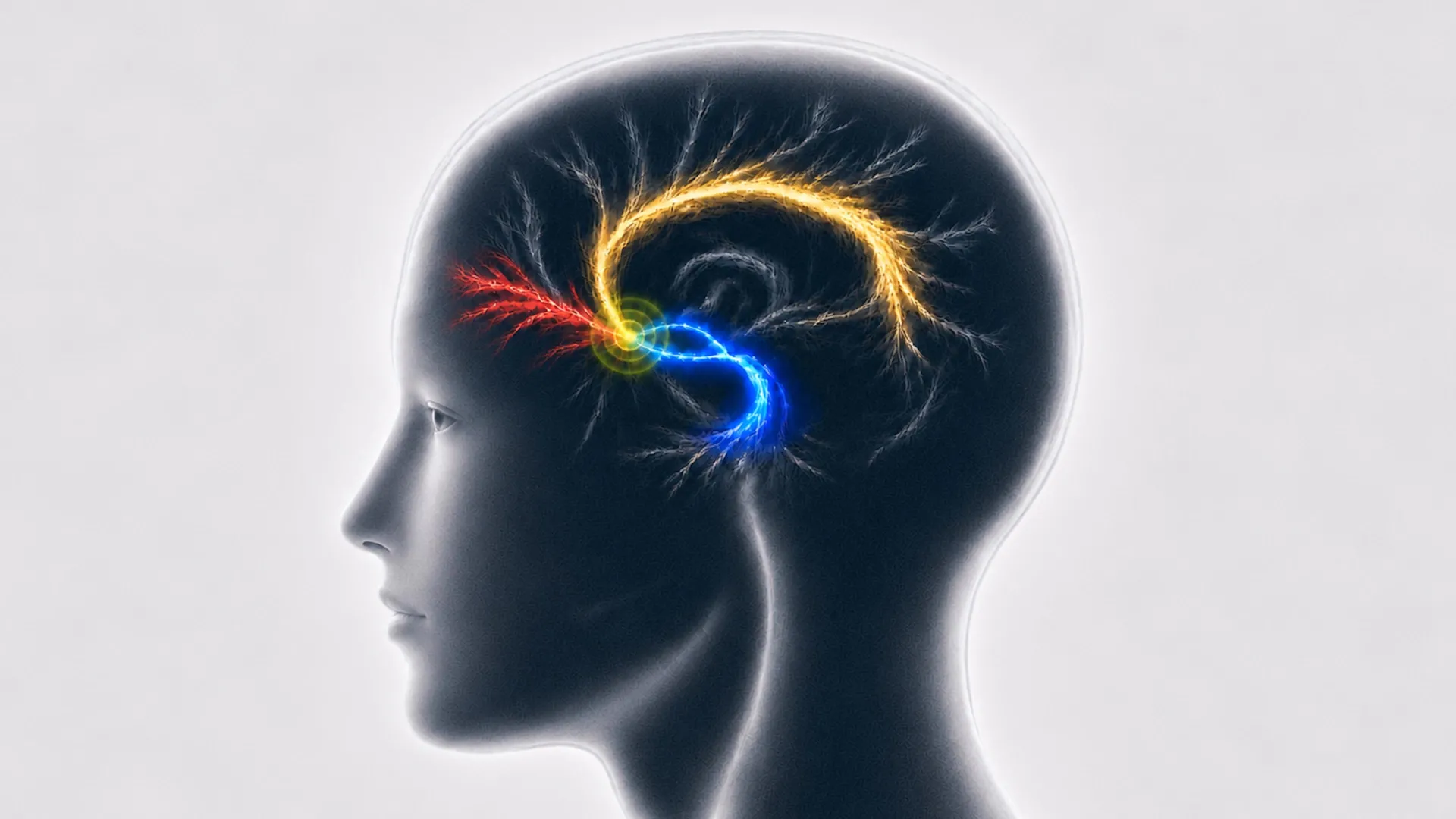
Scientists at Mount Sinai have identified three important brain connections associated with long-term improvement in patients receiving deep brain stimulation (DBS) for severe depression that has not responded to conventional treatments. The discovery could help researchers make this experimental therapy more precise and effective. Published October 1 in the American Journal of Psychiatry, the research examined the largest group of patients assembled across multiple independent cohorts to date who had received subcallosal cingulate deep brain stimulation (SCC DBS) for treatment-resistant depression.
The researchers found that lasting improvements were consistently associated with electrical stimulation reaching three specific white matter pathways: the cingulum bundle, forceps minor, and medial uncinate fasciculus/ventral amygdalofugal pathways. These findings strengthen the case for using detailed maps of the brain's connections to determine exactly where electrodes should be implanted, rather than choosing their positions based primarily on anatomical landmarks. Known as connectome-based targeting, this strategy has already helped shape the ongoing Abbott TRANSCEND clinical trial, a randomized, controlled study that uses individualized brain connectivity maps to guide SCC DBS treatment.
"This study underscores the importance of individualized surgical targeting for achieving optimal outcomes with deep brain stimulation for depression," said Helen Mayberg, MD, Mount Sinai Professor in Neurotherapeutics and founding Director of the Nash Family Center for Advanced Circuit Therapeutics at the Icahn School of Medicine at Mount Sinai. "In any randomized controlled trial of a neuromodulation treatment, precise lead placement and confirmation that the intended brain target has been engaged are essential first steps. We still have much to learn about which patients are most likely to benefit from stimulation of this particular target, but developing imaging-based signatures that can match patients to their optimal treatment remains a central goal of our research." How Deep Brain Stimulation Targets Severe Depression For people with treatment-resistant depression, standard therapies have failed to provide adequate relief.
Researchers are investigating deep brain stimulation as a possible treatment for individuals living with severe, persistent symptoms. The procedure involves surgically placing electrodes inside the brain to deliver controlled electrical signals to circuits involved in depression. However, positioning the electrodes correctly remains one of the greatest challenges.
Electrical stimulation does not simply affect the brain tissue closest to an implanted electrode. It can also influence larger networks through the white matter pathways that connect different brain regions. As a result, two patients with electrodes implanted in nearly identical locations may experience very different outcomes depending on which connections are actually stimulated.
Earlier research from Mount Sinai and Emory University helped establish the importance of these networks. In studies published between 2014 and 2023 in Biological Psychiatry, Molecular Psychiatry, and Nature, the teams identified white matter pathways associated with successful SCC DBS treatment and developed a method for planning electrode placement using brain connectivity maps. The latest investigation sought to determine whether those connections were also important in patients treated at other research centers.
Extract — continue reading at the source.