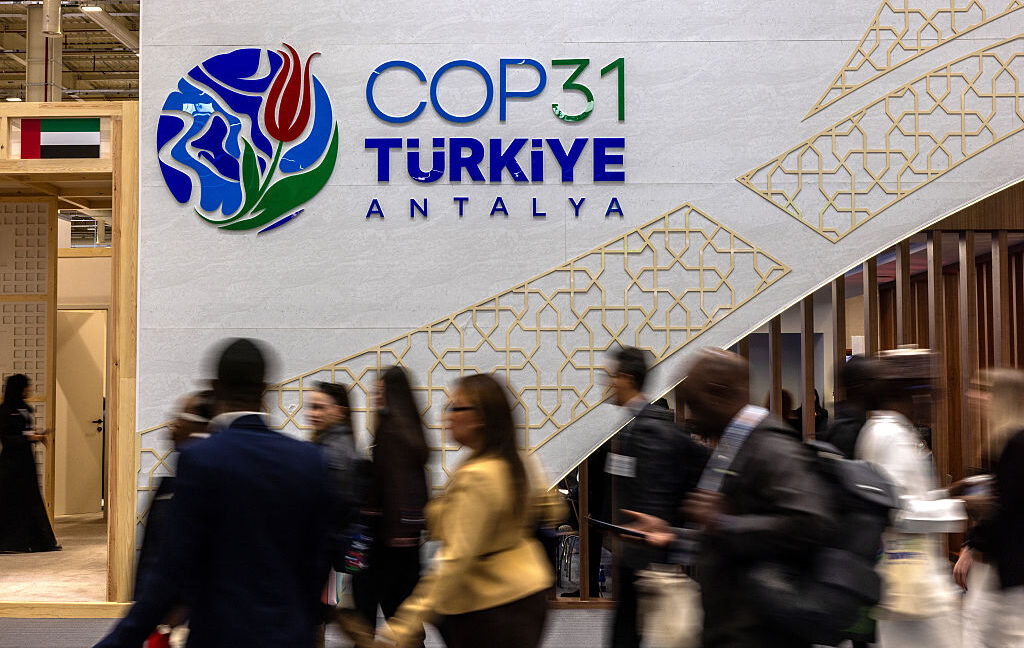
ANTALYA, Turkey—Amid upbeat green-tech pep talks and notices for happy hours at the annual United Nations COP31 climate change conference on Thursday, two new reports offered a stark reminder of how far the world remains from containing global warming. Climate Action Tracker, a nonprofit group that analyzes climate policies, found that the planet is still on track to warm nearly 5 degrees Fahrenheit by 2100, a rise that would devastate coral reefs, disrupt agriculture and forests and melt most of the world’s ice. In a separate bulletin, the European Union’s Copernicusclimate change service reported that global warming has accelerated significantly since the 2015 Paris climate agreement.
When the Paris agreement was adopted, the average global temperature was projected to surpass the pact’s long-term threshold of 2.7 degrees Fahrenheit above the preindustrial average around 2045. After another decade of global climate summits, warming is now projected to cross that benchmark as soon as 2029, according to Copernicus. Even without understanding every aspect of the recent rapid global temperature increase, “It is clear that the ever-growing concentrations of greenhouse gases emitted by human activity in the atmosphere remain the main driver of this trend.” The current level of warming has already triggered deadly and destructive floods, wildfires and catastrophic glacier collapses, said Swedish activist Greta Thunberg, who is attending the U.N.
As we speak, we are losing priceless lives, ecosystems and species that we will never get back.” Sarah Heck, a climate policy analyst with Climate Analytics, an international climate science and policy institute, said governments have failed to meaningfully improve the outlook for end-of-century warming.
Extract — continue reading at the source.