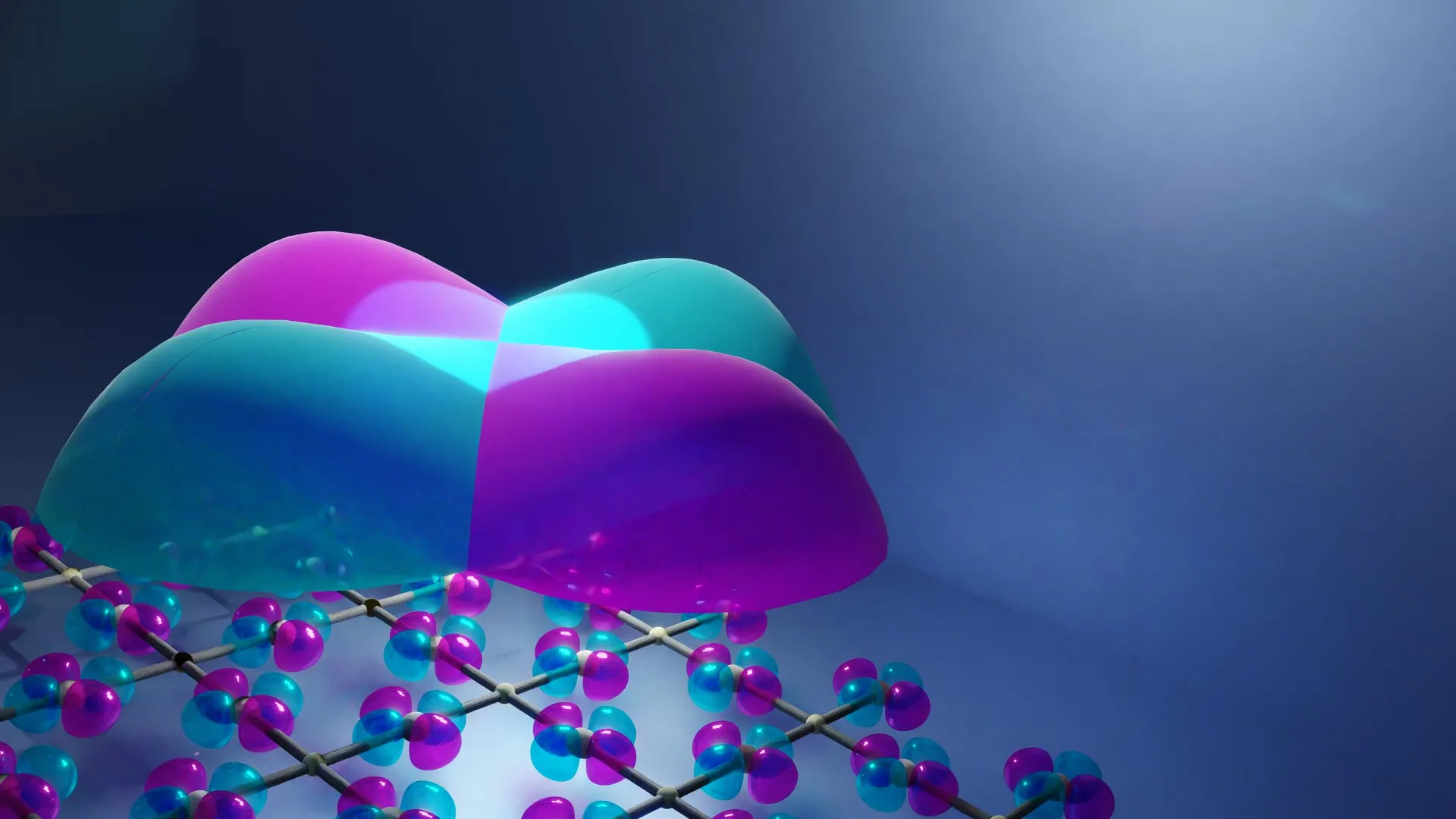
Scientists have uncovered a previously unknown form of magnetism, overturning an understanding of magnetic behavior that had stood for more than a century. The discovery, known as altermagnetism, has revealed a third fundamental category of collinear magnetism and opened new possibilities for quantum materials, advanced electronics, and future computing technologies. Three physicists responsible for the breakthrough have been named recipients of the 2026 Europhysics Prize, one of Europe's most prestigious honors in condensed matter physics.
The European Physical Society (EPS) Condensed Matter Division selected Professor Jairo Sinova of Johannes Gutenberg University Mainz (JGU), Dr. Libor Šmejkal, and Professor Tomas Jungwirth for their work establishing altermagnetism as a distinct form of magnetic order alongside ferromagnetism and antiferromagnetism. "This award recognizes a fundamental discovery that challenged one of the most established paradigms in condensed matter physics," said Professor Jairo Sinova, Director of the Spin Phenomena Interdisciplinary Center (SPICE) at Mainz University.
"Discovering that an entirely new magnetic phase had remained hidden for more than one hundred years demonstrates that even the most mature scientific fields can still hold fundamental surprises." The breakthrough emerged from years of collaboration between Sinova's research group at Mainz University and Jungwirth's team at the Institute of Physics of the Czech Academy of Sciences in Prague. Šmejkal, who also maintained an affiliation in Prague, spent eight years at Mainz between 2016 and 2024, first pursuing doctoral research and later working as a postdoctoral scientist in Sinova's group. During that period, Šmejkal played a leading role in developing the theoretical framework behind altermagnetism.
By combining advanced mathematical approaches to symmetry with spintronics, which studies how electron spin can be used in electronic devices, the researchers identified a previously unrecognized pattern of magnetic behavior. Their predictions soon attracted experimental teams around the world. Measurements of electronic properties and electrical transport in multiple materials provided evidence supporting the new magnetic classification.
Altermagnetism has since grown into one of the most active areas of condensed matter physics, with research efforts expanding across Europe, North America, and Asia. A Third Form of Magnetism Rewrites Physics For more than 100 years, physicists generally divided collinear magnets into two fundamental categories: ferromagnets and antiferromagnets. Ferromagnets have an overall magnetic alignment that produces a net magnetization.
These materials are essential to many magnetic memory technologies used today. In conventional antiferromagnets, opposing magnetic moments cancel one another, leaving no overall magnetization and producing electronic behavior very different from that of ferromagnets. Altermagnetism introduces a surprising third possibility.
Extract — continue reading at the source.