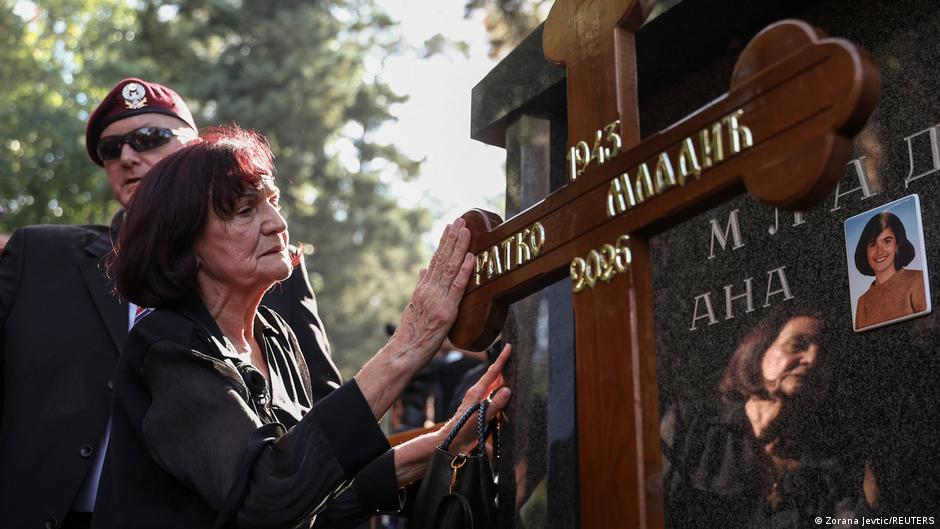
The state-supported funeral of Ratko Mladic in Belgrade this week has raised a pressing question in Brussels: Can a country seek EU membership while giving a hero's farewell to a convicted war criminal? For many, the event has shown that Serbia's accession process has not merely stalled. It has largely lost its political drive.
"For too long, the EU has kept treating Serbia as a normal candidate country," Engjellushe Morina of the European Council on Foreign Relations told DW, despite Belgrade's continued backsliding on democracy and the rule of law. Naim Leo Besiri of Serbia's Institute for European Affairs adds: "The ruling majority in Serbia has not performed anything that was promised on the reform agenda during the last five years." Both experts point out that Belgrade has refused to join EU sanctions against Russia. Democratic standards have deteriorated under nationalist President Aleksandar Vucic, while relations with Kosovo remain tense.
Despite having been sentenced to life imprisonment by a UN court for genocide, crimes against humanity and war crimes, Ratko Mladic was buried in Belgrade on Monday with military honors and the participation of government representatives. President Vucic stayed away, but facilitated and defended the public mourning. To view this video please enable JavaScript, and consider upgrading to a web browser that supports HTML5 video Brussels reacted unusually strongly.
European Commission President Ursula von der Leyen called the images shocking. European Council President Antonio Costa condemned the glorification of war criminals. Enlargement Commissioner Marta Kos canceled a visit to Serbia.
But both Morina and Besiri say that this is not enough. They believe Vucic has been given too much room to maneuver for too long. In their perception, he has been treated as an indispensable partner who could secure stability in the Western Balkans and keep Serbia anchored to the West, despite disregarding basic European values.
Besiri says Serbian civil society had warned Brussels for years about attacks on media freedom, the rule of law and democratic institutions. But, he adds, the EU largely turned a blind eye. Economic relations demonstrate the strong ties between the EU and Serbia.
Extract — continue reading at the source.