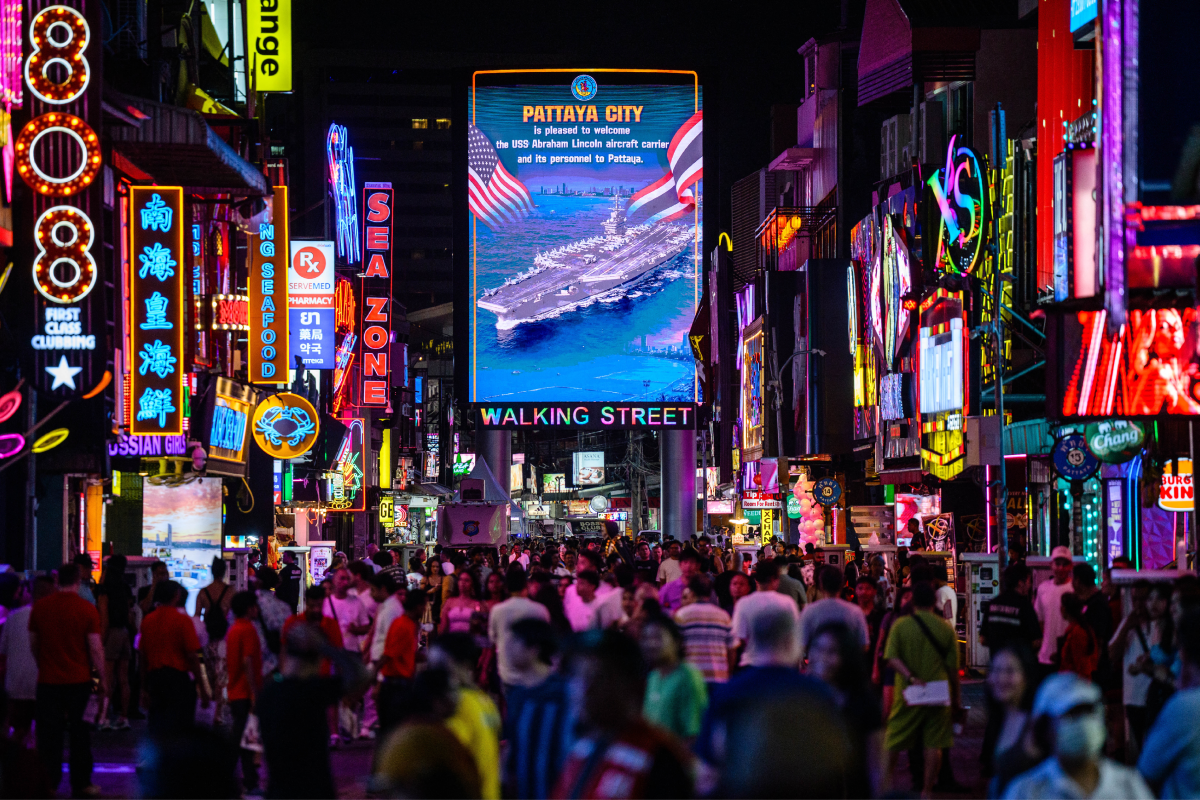
Before several thousand sailors from the USS Abraham Lincoln descended on Pattaya, Thailand, the Navy issued a reminder: paying for sex is against the rules. The crew had spent 286 days at sea, much of it supporting what President Donald Trump sold as a brief foreign adventure against Iran, and Pattaya has spent years trying to shed its “Sin City” image. Some commentators were clearly fearing—or perhaps hoping for—the worst.
Yet Newsweek’s account of their shore leave was a far cry from bacchanalian revelry. Sailors drank and danced, were welcomed by businesses, and two Americans got into a scuffle before being sent back to the ship. Yet 24 percent of readers who used our Fairness Meter judged the article right-leaning.
I read it again, looking for the conservative argument, but couldn’t find it. Perhaps it was hiding behind the now-rusting hull of the aircraft carrier. More likely, readers were judging the merits of the war itself.
But Pattaya raises another curious angle, one many online commenters were quick to leap on, often in less than politically correct language. Thailand has long occupied a place in the Western imagination as shorthand for sexual permissiveness, particularly Pattaya, which was transformed by U.S. servicemen on R&R during the Vietnam War. Transgender sex workers have become a cultural signifier of that permissiveness.
Part of the reason is visibility: medical transition is common in Thailand. A 2020 survey of 401 transgender people there found that 37 percent had undergone gender-affirming surgery. This is where things get strange: consider Iran.
The Lincoln, after all, had just come from fighting the Islamic Republic. If your instinct is that the equivalent figure for Iran must be near zero, it was mine too. In fact, a study of 200 transgender people found that 17 percent had completed gender reassignment—substantially lower than Thailand’s figure, but not wildly different.
Extract — continue reading at the source.