Many self-made billionaires conceal their humble beginnings. CJ Wang has put his front and center of his penthouse Hong Kong office: a small stone mill for grinding soybeans. Mao Zedong’s tumultuous Cultural Revolution was just winding down when Wang started school in what is today Yantai city of China’s eastern Shandong province. (Where, incidentally, TIME founder Henry Luce was born in 1898.) Like most neighborhood kids, Wang was obliged to help with household chores after class, especially churning soymilk by endlessly hauling his uncle’s giant stone mill around.
It was labor that made the young Wang’s arms ache, though the eventual payoff would be a business empire worth tens of billions of dollars. After graduating in electrical engineering from Beijing Jiaotong University, Wang became a teacher like his parents. That same year Wang founded Joyoung, which soon became a household name in China for low-cost, dependable consumer products from blenders to rice cookers.
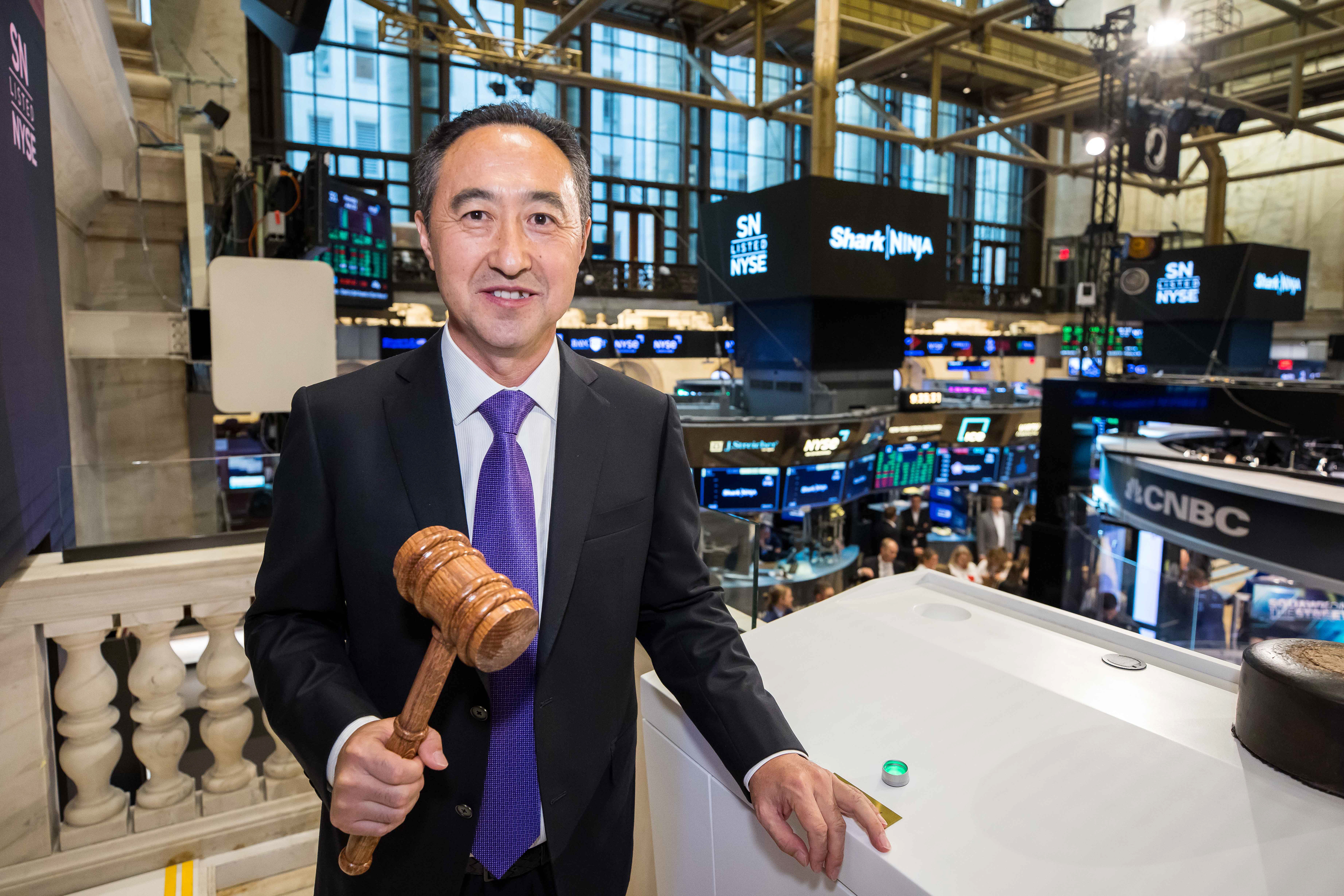
While Americans may not recognize Joyoung, they are probably familiar with Wang’s other major venture: SharkNinja, which he acquired in 2017 and today serves as chairman, having transformed the Massachusetts-based firm into a $26 billion trailblazer for disruptive household appliances. He is, he confesses, a very private person, whose few passions outside of work include Macallan whisky and golf. (He has a 15 handicap). So why has he decided to chat today?
The elephant in the room is the dire state of U.S.-China relations, with tariffs and export restrictions casting a pall on what had once been a synergistic business climate. Chinese investment into the U.S. grew steadily until peaking at $46.5 billion in 2016, with Chinese investors hoovering up everything from Smithfield Foods and AMC Theatres to New York City’s Waldorf Astoria hotel. However, re-tightened capital controls in China and expanded CFIUS regulatory reviews in the U.S. dovetailed to bring the honeymoon to an end.
Last year, Chinese foreign direct investment into the U.S. was just $2.5 billion—down 94% from its peak—with the investment climate further chastened by ongoing geopolitical friction, supply chain reshoring, and tit-for-tat import duties. U.S. lawmakers from both sides of the aisle have increasingly framed capital flows from China into U.S. farmland, manufacturing, and technology as national security vulnerabilities rather than economic opportunities. Last year, President Donald Trump promised “new rules” to “stop China from buying up America.” In today’s febrile political environment, the risk Wang faces is that his Chinese background and natural introversion could be misinterpreted as shadowy or even sinister—a notion he is at pains to dispel.
I want people to know who I am and my motivations for the good of the company, so there's no speculation about that.” If today’s political climate is problematic, popular culture hasn’t been much kinder. The 2019 Netflix documentary American Factory relished in the culture-clash antagonisms between American workers and Chinese managers of the Fuyao auto-glass factory in Dayton, Oh., which took over a long-shuttered GM plant. Then there is Chinese fast-fashion phenomenon Shein, whose direct-to-consumer sales have been blamed for decimating high streets and sparked protests and legal objections across Europe and North America over its alleged labor abuses and environmental footprint.
Extract — continue reading at the source.


