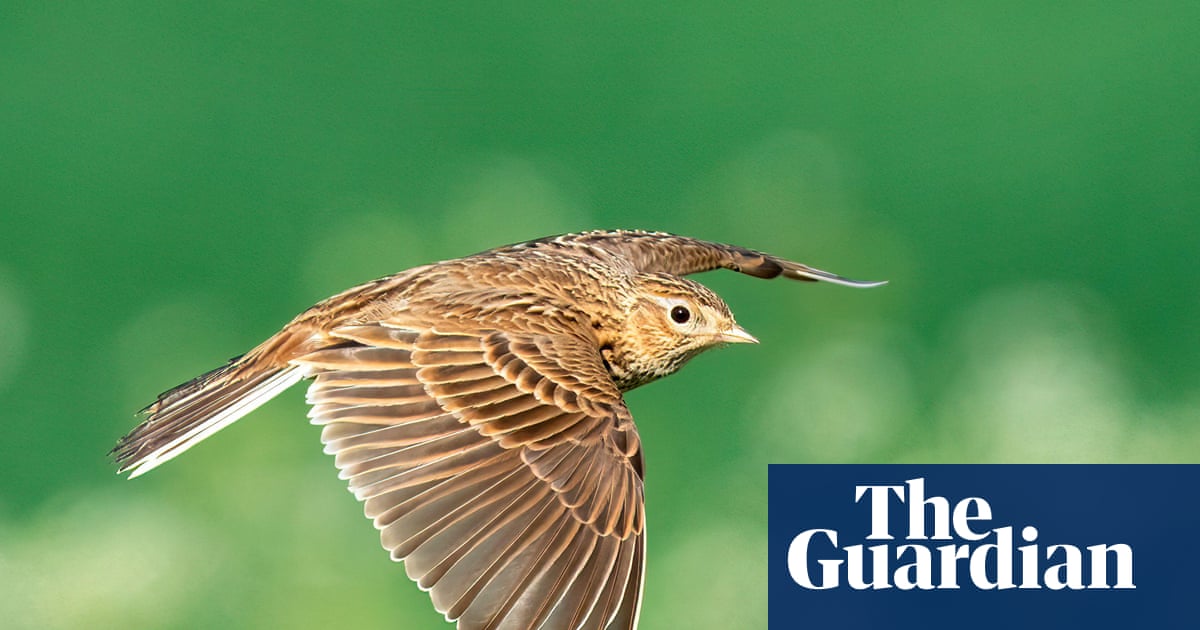
Wild bird populations in the UK have fallen to their lowest level since records began, figures show, with nearly half of species in decline. Figures produced by leading nature conservation bodies for the government show that average populations across 132 native breeding species fell by 19% between 1970 and 2025, with farmland birds and seabirds the worst hit in recent years. Prof Richard Gregory, the head of monitoring at the RSPB, called the overall findings “shocking and sobering”.
Tree sparrows, wood warblers and capercaillie were among the birds that saw the next biggest average annual decreases between 2019 and 2024. Swifts, whose arrival for many marks the beginning of summer, have declined by about 25% in five years, an average of nearly 6% a year across the UK. Bullfinches fell at a similar rate nationally, and by an average of 11% a year in England.
Of the 132 native breeding species tracked, 45% have declined over the past five years, while just 27% have increased. In England, 55% of monitored species have declined. Seabirds are the worst hit group, down by more than a fifth over the past five years.
Dr Ailidh Barnes, who helps build the index at the British Trust for Ornithology, said avian flu had “decimated” species such as Arctic skuas and terns. The disease spread quickly, she said, because seabirds nested shoulder to shoulder, and each year a different species appeared to suffer. Farmland bird populations have decreased by 63% since 1970 and 12% since 2020.
Defra attributes the long-term decline to changes in farming since the 1950s, including the loss of mixed farming (crops and livestock), increased pesticide and fertiliser use, and the removal of hedgerows. Gregory said if the trend continued, the songs of farm birds such as skylarks and yellowhammers would become only “memories” of what the countryside used to be like. We need to do more there to get nature-friendly farming right and help support farmers.” Despite the general decline, some populations are booming.
Red kite populations have risen by 48% since 2019, and firecrests are up 300% over the same period. Gregory also highlighted the number of cranes “really coming back from extinction in the UK”, rising to 87 pairs nationally. Gregory said these examples proved concerted efforts to save species work.
Extract — continue reading at the source.