The Six Flags theme park company announced on Tuesday that it would permanently close the X2 roller coaster at its Magic Mountain park in Valencia, Calif., following allegations of serious brain injuries linked to the ride. The closure has renewed questions about how the intense forces generated by extreme roller coasters can affect the brain. Experts told TIME that abrupt acceleration, twisting, and changes in direction can stretch brain tissue and blood vessels, potentially increasing the risk of concussions and bleeding.
Three lawsuits filed in late September allege that riders suffered brain injuries after riding X2, and attorneys told CNN that more than 100 people have contacted them with similar allegations. The suits came in the wake of a CNN investigation published in August about the ride's long history of incidents, including at least two deaths. "After almost 20 years, we have decided to permanently retire X2," wrote Magic Mountain president Brian Oerding in a blog post.
"While X2 consistently passed a multitude of safety tests, we have decided to close the ride because we believe it’s the right thing to do. Ride safety is a cornerstone of our business, and when we see guest confidence affected, we take it seriously." X2 was a two-minute thrill ride that reached a top speed of 76 miles per hour and opened in 2002, according to a Six Flags webpage about X2, which is no longer online. In July 2026, two women—six days apart—were hospitalized after riding X2, CNN reported.
Both suffered from a subdural hematoma, or bleeding on the brain. The first woman, who was 40, had emergency surgery and was unconscious for two weeks. Upon awakening, she had to relearn how to walk and talk.
She is “very lucky to be alive,” one of her surgeons told CNN in August. The second woman, 26, underwent similar surgery and is still in a coma, the news outlet reports. On July 12, Six Flags closed X2 indefinitely—a closure made permanent at the end of September.
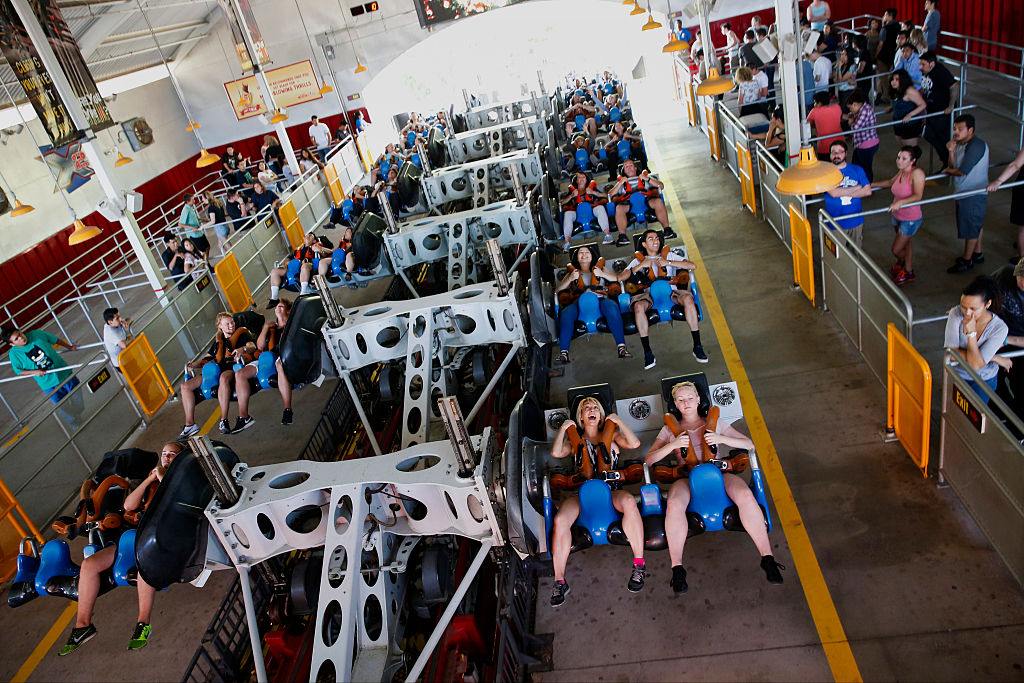
Billed by Six Flags as a “fifth-dimension wing roller coaster,” X2 ran along 3,610 feet of track. Its seats did not sit directly on the track. Rather they were mounted on wings on either side of the track—essentially suspending riders in space—and rotated 360 degrees.
Extract — continue reading at the source.