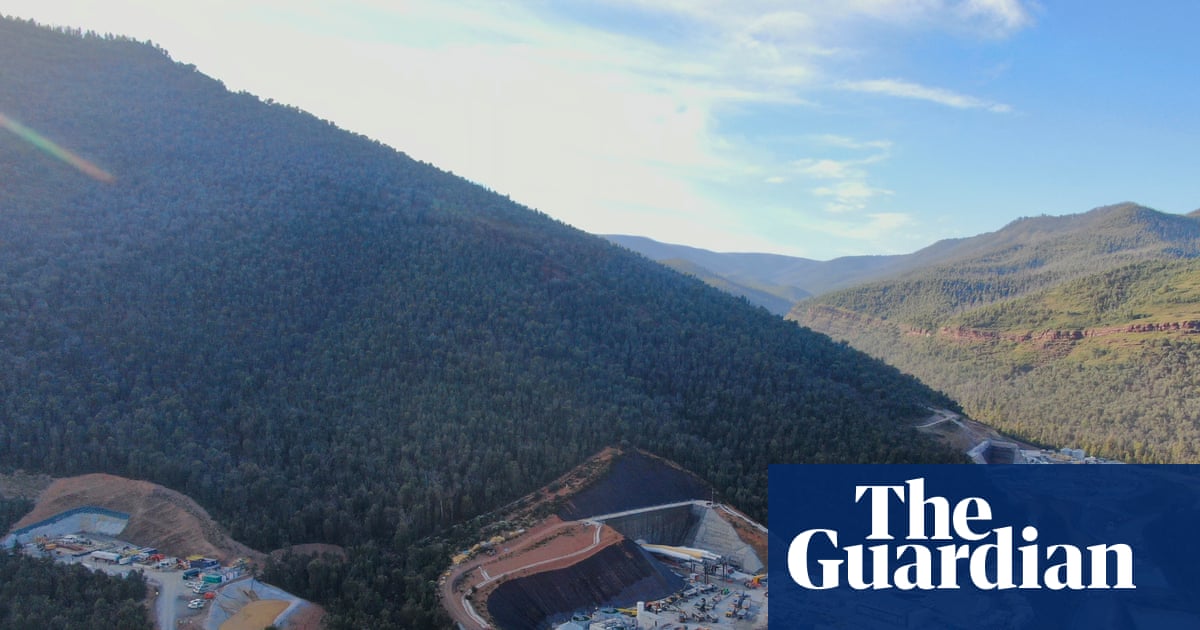
The cost of Snowy Hydro 2.0 has blown out to as much as $25bn, with a major reassessment finding the long-delayed renewable energy project will not be completed until the end of the decade. First touted by the Turnbull government in 2017 with a price tag of $2bn, the cost of the project in the Kosciuszko national park has increased dramatically over time. In 2023 it was revised to almost $13bn, with construction due to completed by the end of 2028.
But new projections by the Snowy Hydro company, released on Thursday night, shows it will now cost at least $22.2bn, with contingency for a further increase to $25bn. Machine tunnelling is now 65% complete, and major excavations are in their final stages. Work to build the new underground power station is under way, with about 5,000 people at work on the project.
But the project reset shows Snowy 2.0 won’t be completed and fully commissioned until 2029. The Albanese government plans to announce additional project oversight and financing structures for Snowy 2.0 in coming weeks. Another injection of taxpayer funds is expected, along with possible private financing components.
Beset by challenges – including major delays when a specialist boring machine became bogged and wedged in hard rock – the project’s timeline and extraordinary cost overruns have been blamed on its unique nature, significant risk and technical complexity. The boring machine, known as Florence, is still not yet at the halfway point of its 15km tunnel work. Principal contractor, Future Generation Joint Venture (FGJV), also faced “cost estimation challenges”, according to the company.
Since the project was signed off on in late 2018, more detailed technical analysis has been required, while FGJV has missed productivity targets and failed on cost and planning performance. Global price rises for construction equipment, services and staff have all exceeded early estimates. The project aims to link two existing Snowy reservoirs with tunnels up to 27km long.
Once completed, it will be able to generate 2,200 megawatts of power and provide 350,000 megawatt-hours of storage. Despite the soaring cost and repeatedly delays, Snowy Hydro chief executive, Dennis Barnes, said the situation could have been worse. The thing I’m pleased about is that if it wasn’t for the reset, if it wasn’t for the collaborative relationship we now have with the contractor, I think this would have been worse.
Extract — continue reading at the source.